
 Caspar David Friedrich
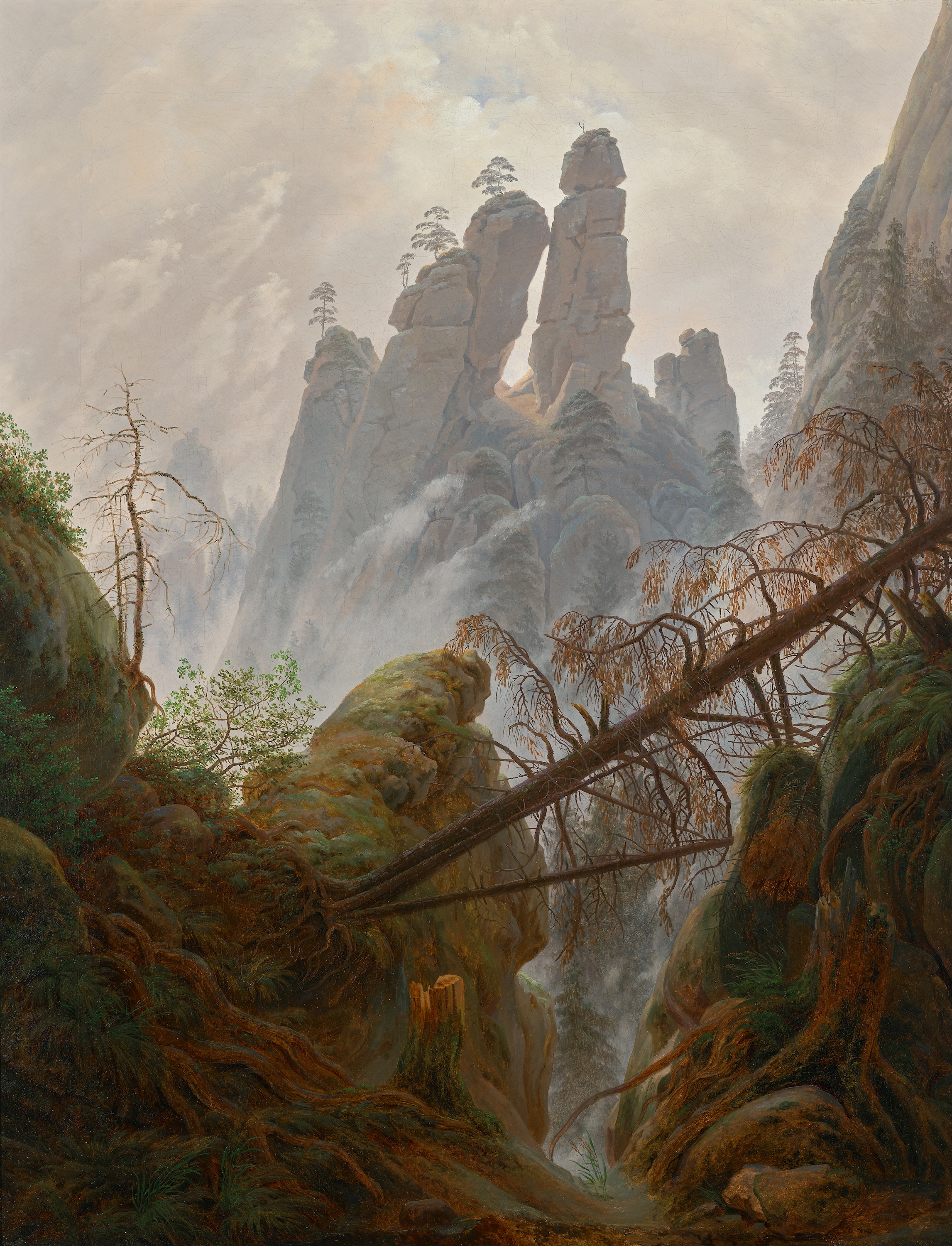
Caspar David Friedrich is famous for being one of the greatest painters of German Romanticism, and one of the most iconic landscape painters in Western art. He often painted a solitary figure seen from behind (the Rückenfigur)—someone standing before vast mountains, the sea, or dramatic skies—inviting the viewer to enter the scene and feel the same awe. But today's painting is different.
The rocks forming the gate at Neurathen in the Elbe Sandstone Mountains southeast of Dresden rise almost vertically. In front of them, the view plunges into a gorge. Trees cling to the steep slopes, some in fresh green, others dead. A massive uprooted tree cuts diagonally across the picture plane. It creates a division, separating the view into the abyss from the ascent toward the stone gate. All of this carries symbolic meaning: trees, gorge, and rocky peaks stand for the coming into being and passing away of all earthly things; they are symbols of the divine as well as of death. Hiking trails had already opened up the Elbe Sandstone Mountains by around 1820, and a footbridge led up to the gate at Neurathen. Friedrich shows neither.
P.S. Explore the art of Caspar David Friedrich in 10 paintings! Some of them will surely be familiar to you, but a few might still surprise you.
P.P.S. Love landscapes that stir the soul? Our Landscapes 50 Postcards Set brings together stunning views from across art history—perfect for dreamers, hikers, and Romantic souls alike.