
 María Blanchard
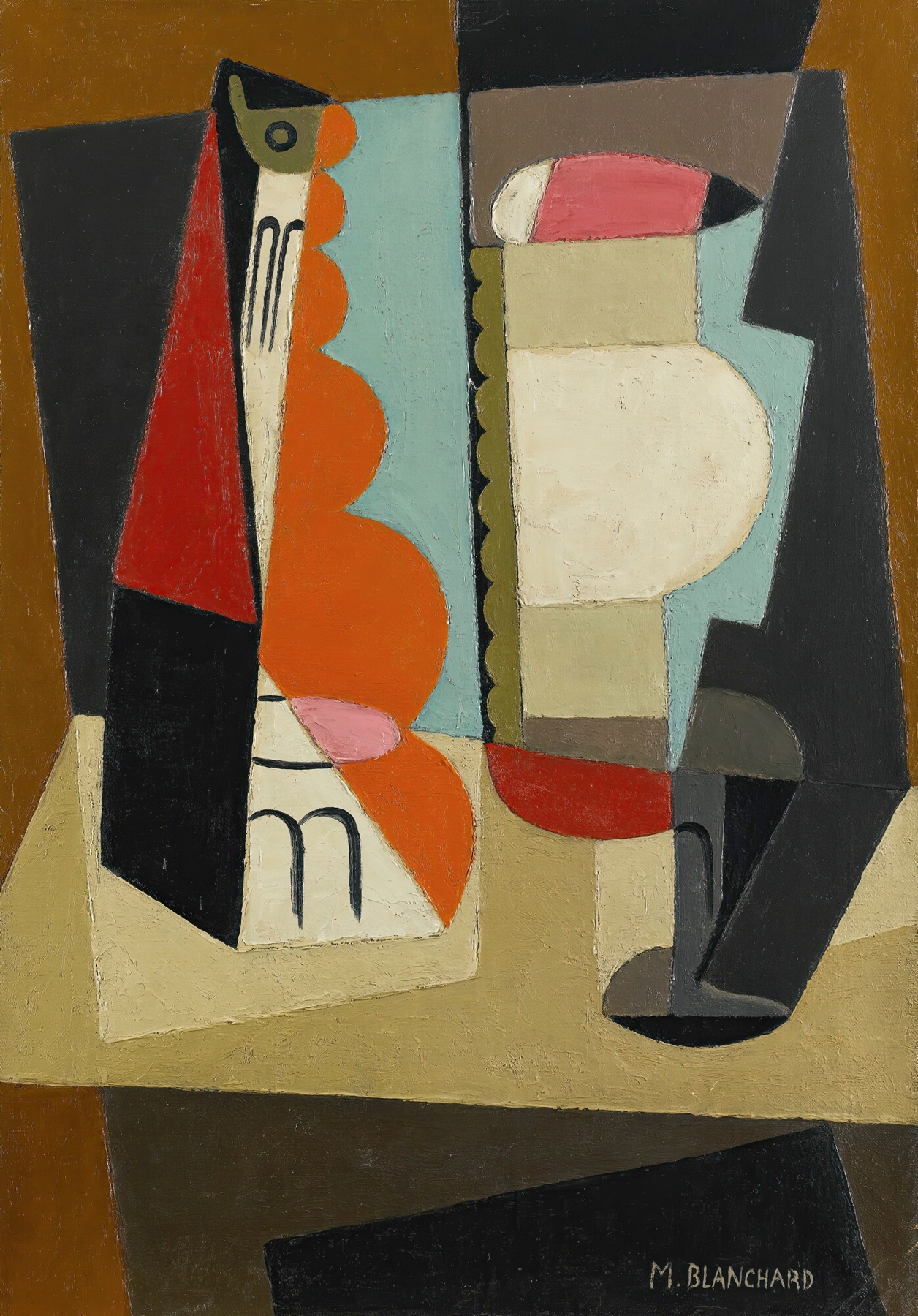
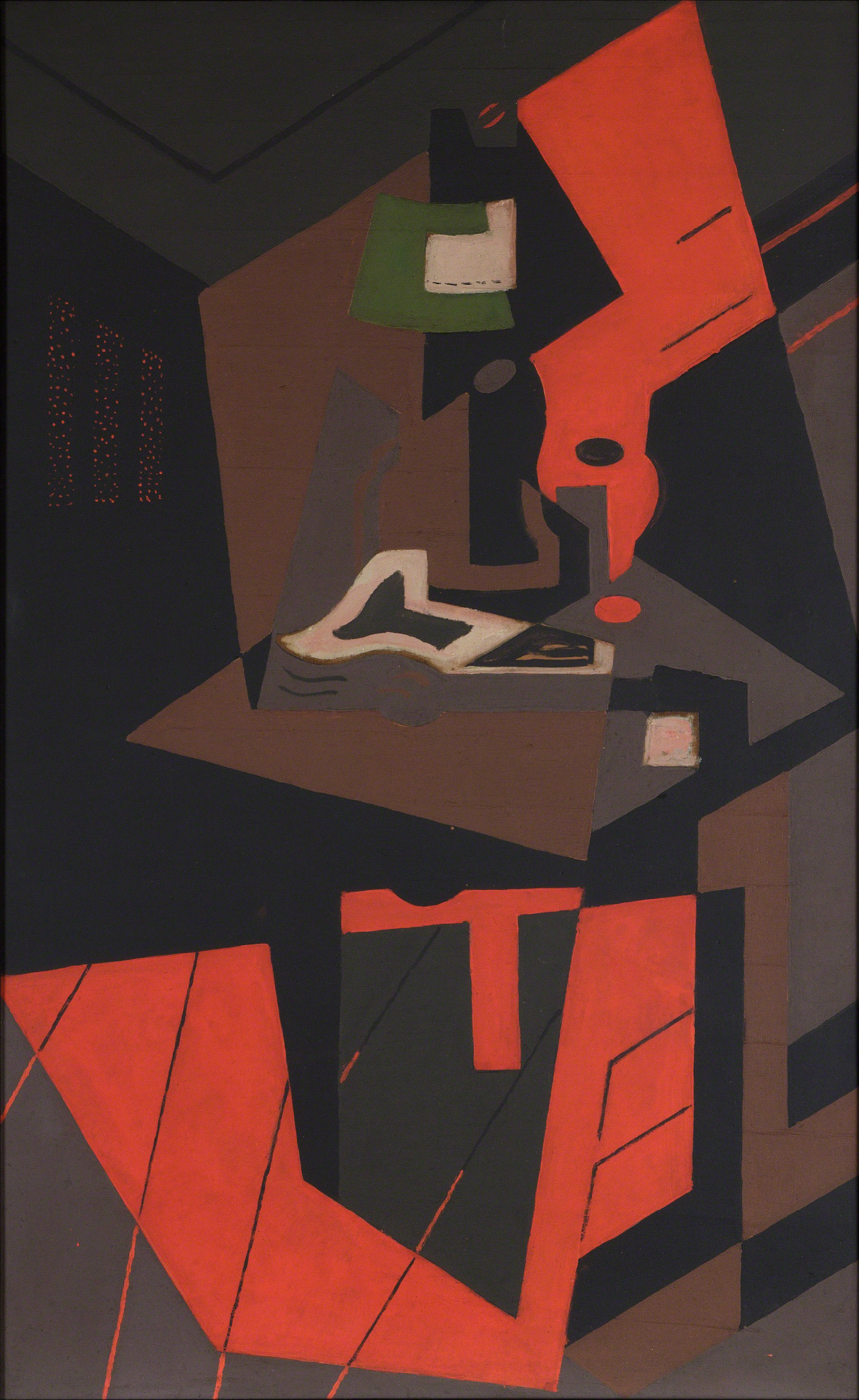
María Blanchard was a Spanish painter best known for developing a unique version of Cubism.
From birth, Blanchard suffered from several physical deformities, including kyphoscoliosis and bilateral hip disarticulation. Her growth was stunted, and she walked with a limp, which made her the target of mockery at school, where classmates cruelly called her “the witch.” The emotional wounds of these experiences later resonated in the themes of her paintings. Painting became her outlet for sadness; her father, who strongly encouraged her artistic pursuits, remained an important influence throughout her early years.
From 1918 onward, Blanchard lived permanently in Paris. Immersed in the Cubist circle, she became close to Juan Gris, whose friendship and artistic influence were pivotal in her career. She joined the Section d’Or, a group of Cubist artists, and developed her own approach to the style. Her early works display interlocked, flattened forms, while later paintings grew more figurative, emotionally charged, and marked by bold, often clashing colors. Her canvases conveyed both intensity and melancholy, making them powerfully expressive.
Her reputation rose quickly after exhibitions in France and Belgium in 1920. Though she connected with important dealers, the economic downturn of the 1920s limited sales. During this period she relied financially on her close friend Frank Flausch until his death in 1926. Afterward, she continued to sell works through Parisian galleries and private collectors, though with difficulty.
The death of Juan Gris in 1927 devastated Blanchard and led her into depression. Her sister Carmen and her nephews came to live with her in Paris, easing her solitude but straining her finances further. As her health declined, she grew increasingly devout and even considered entering a convent, though she never followed through. Despite illness, she continued to paint to support her family.
Blanchard’s health worsened in the early 1930s when she contracted tuberculosis, which eventually prevented her from working. She died in Paris on 5 April 1932, at the age of 51.
P.S. Want to learn more about Blanchard and other women artists in Cubism? You’ll find them in our Cubism 101 online course, where we explore not only Picasso and Braque but also the overlooked artists who helped define the movement. Today we're giving you early access to Black Friday promos: enroll now with 25% off!
P.P.S. Need a break on Monday? See if you can guess the art movement in our quiz!