
 Sakai Hōitsu
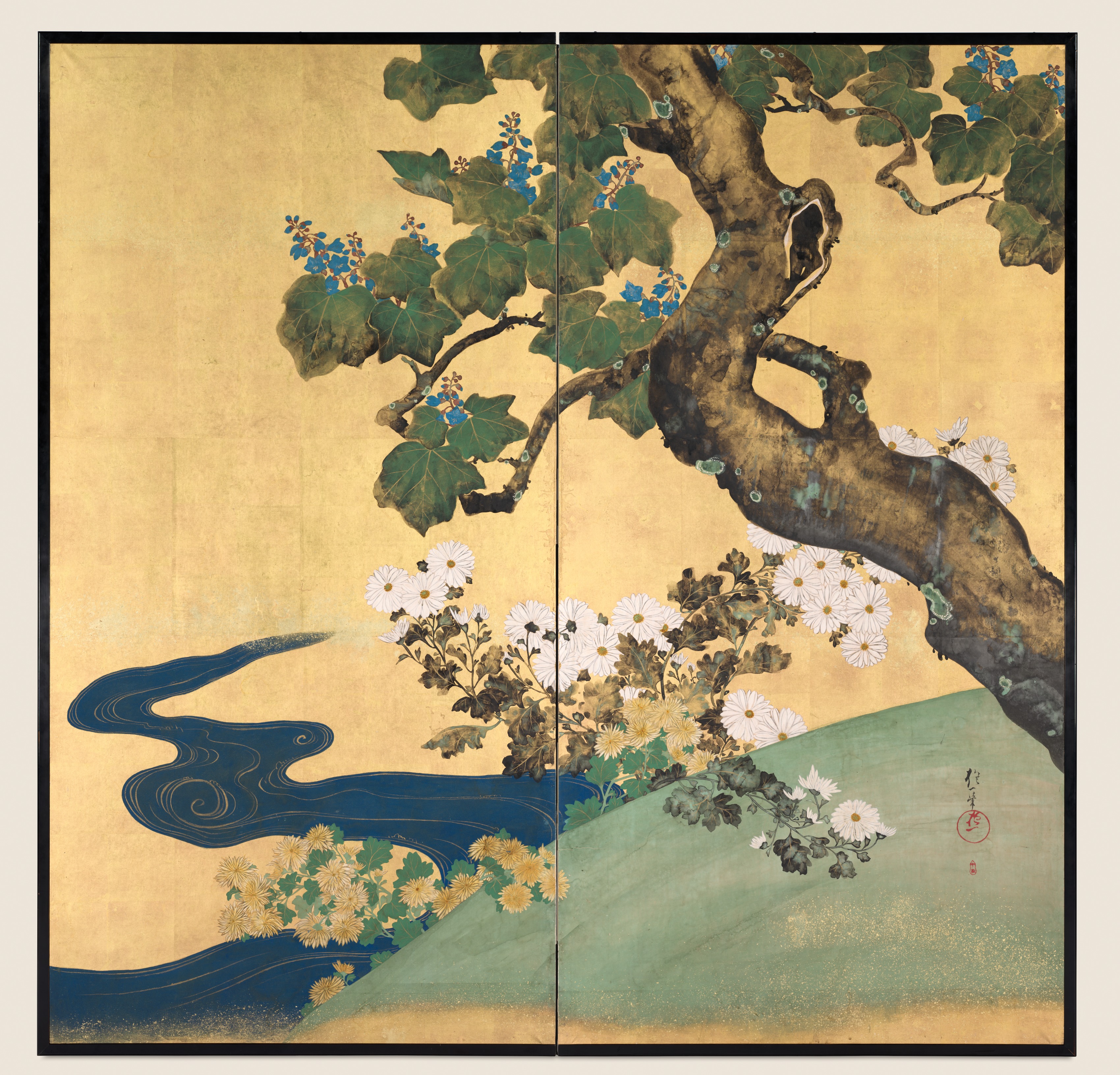
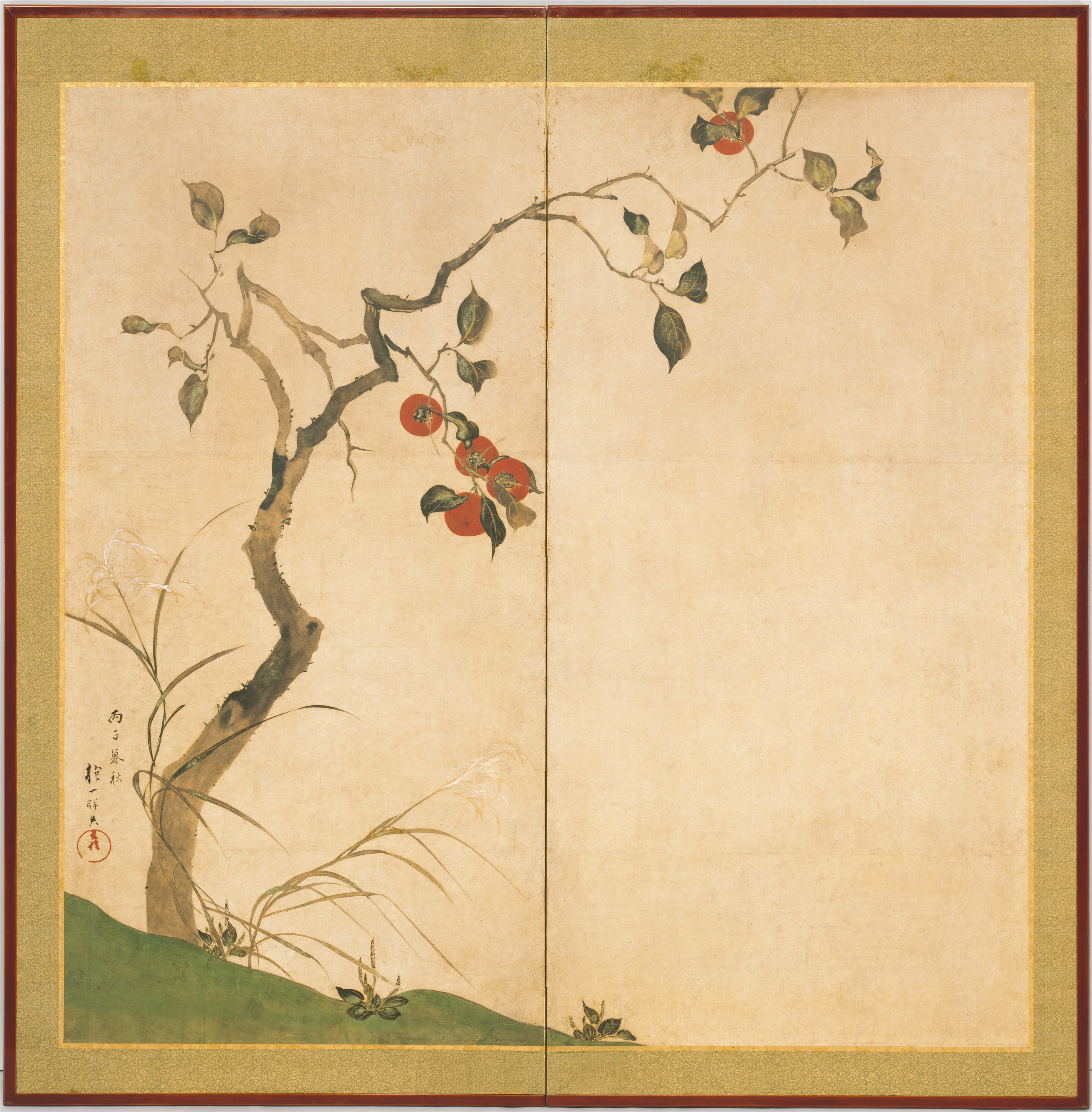
Sakai Hōitsu was a Japanese painter of the Rinpa school (one of the major historical schools of Japanese painting, created in the 17th century). He is known for having revived the style and popularity of Ogata Kōrin (we need to present his works in DailyArt soon), and for having created a number of reproductions of Kōrin's work.
Hōitsu frequently created two-panel folding screens for urban patrons living in smaller quarters. In this screen, Hōitsu masterfully employs the tarashikomi (“dripping-in”) technique, in which ink and color are allowed to pool on the surface, producing the mottled textures of lichen-covered bark and the curling forms of chrysanthemum leaves. The pairing of paulownia and chrysanthemum evokes the turning of the seasons from late spring to early autumn and carries imperial resonance. Paulownia, valued for its medicinal qualities, also connotes resilience, while chrysanthemum has long symbolized virtuous rule.
This wonderful artwork is featured in our Japanese Art 50 Postcards Set. :)
P.S. Discover the stunning beauty of Japanese folding screens!