
 Fernand Léger
Dear DailyArt users, whether 2025 treated you well or it was difficult, we hope that it was full of amazing art and that we were able to enable some of that amazement. We want to end this year on a truly joyful note. Have a great celebration tonight! :)
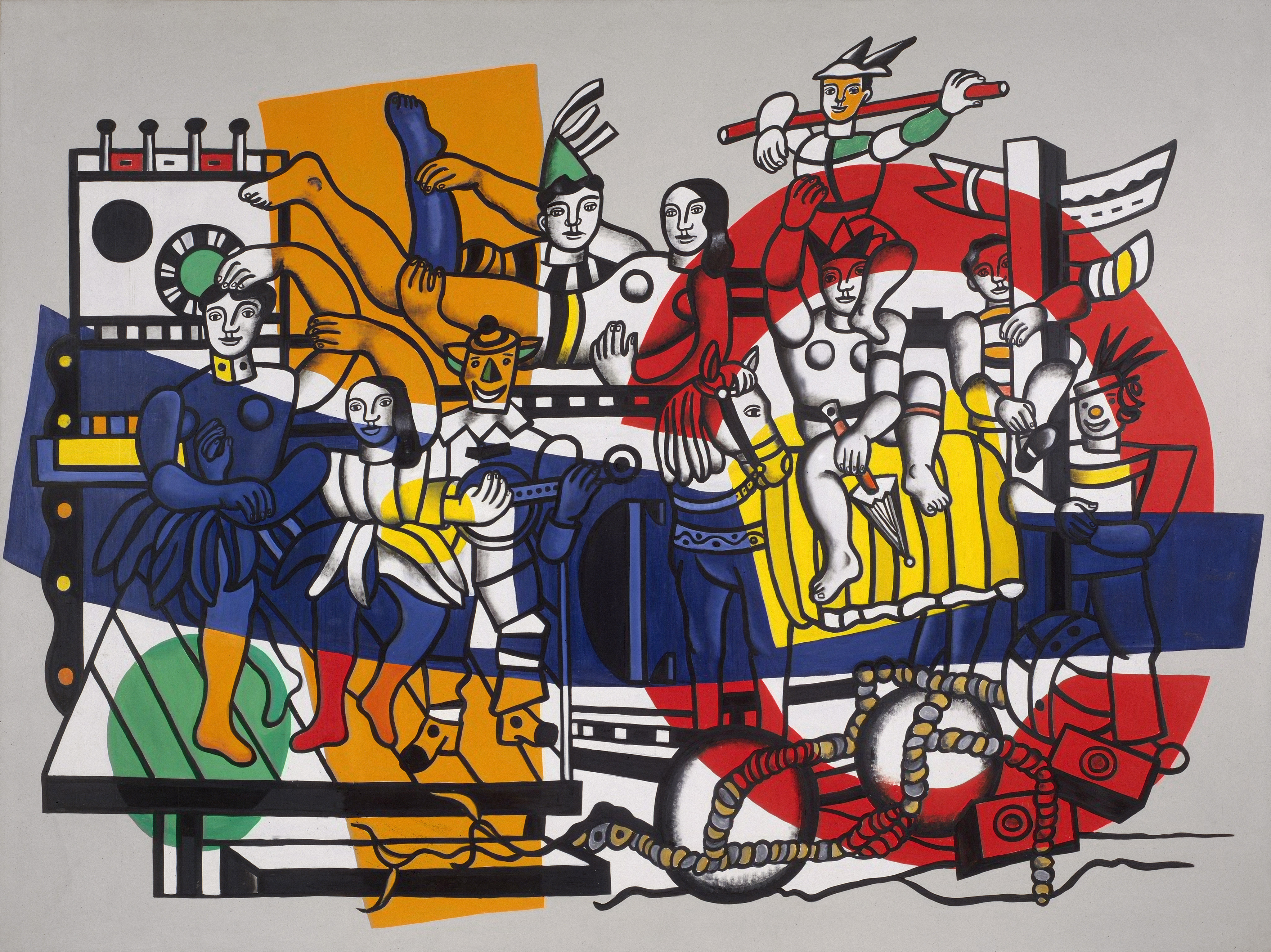
Fernand Léger’s fascination with the machine and its sleek, rhythmic forms began during World War I, when he served in the French army. Surrounded by soldiers and the gleaming metal of military equipment, he developed a visual language drawn from mechanical imagery—a “machine aesthetic” that reflected both his admiration for modern industry and his solidarity with the common man. After the war, Léger moved away from the pure abstraction of his earlier years and sought to create a more accessible art, one that captured the vitality of modern life.
His monumental The Great Parade, the product of more than a hundred preparatory studies begun in 1947, stands as the culmination of his lifelong artistic pursuit. The joyous procession, inspired by the circus and popular entertainment, celebrates the spirit of the working class—their play, laughter, and shared humanity. In this vast, mural-like composition, acrobats and clowns perform across a vivid blue band punctuated by a large red “C” for cirque. Painted just a year before his death, The Great Parade shows Léger’s continuous dream: to create a vibrant, human art for everyone, not just for the elite circle of art connoisseurs.
P.S. Fancy an art quiz? Guess when these artworks were made!