
 Claude Monet
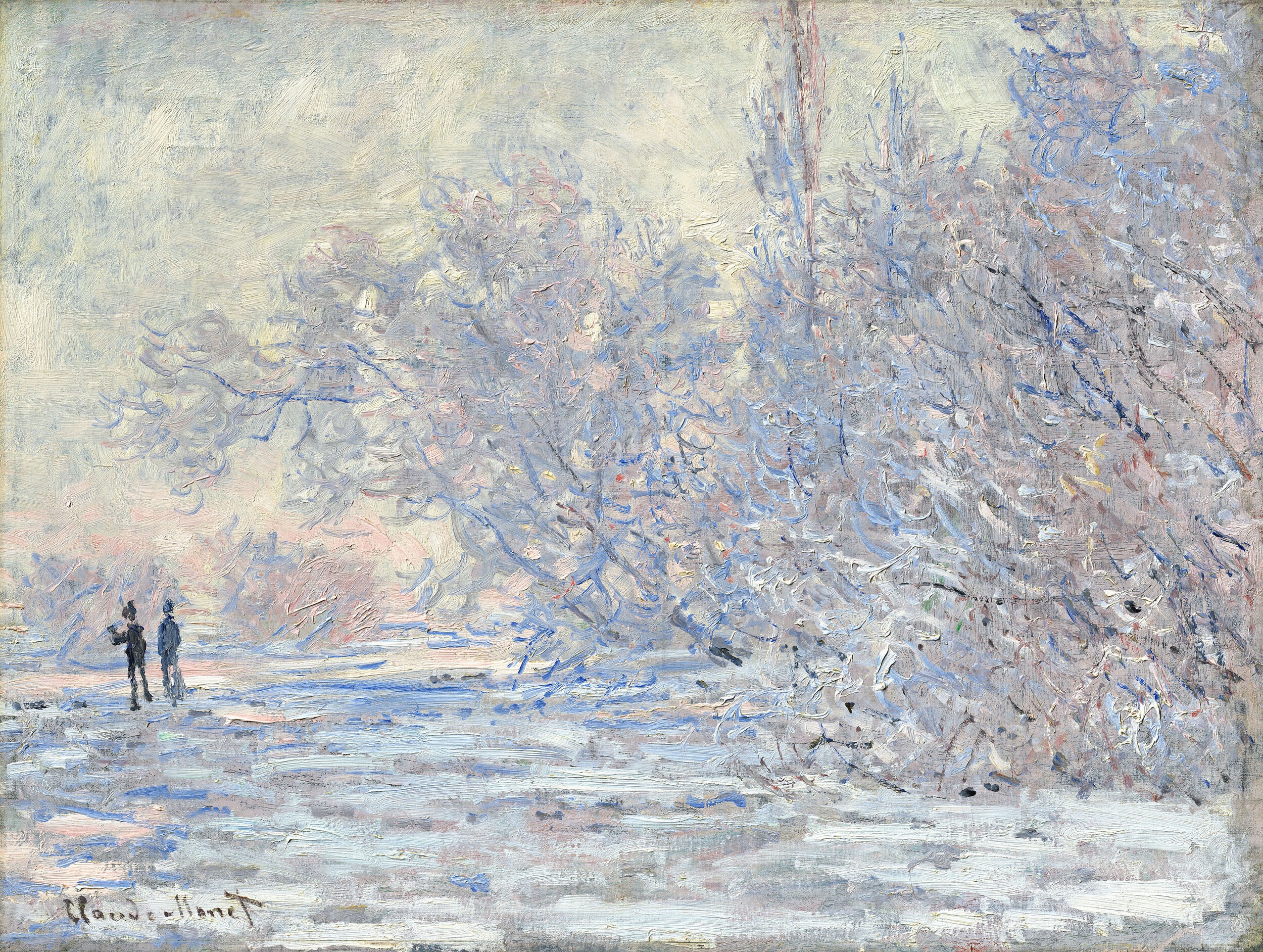
Claude Monet had a lifelong fascination with winter ... its shifting light, muted tones, and quiet transformations. Far from seeing snow as absence or emptiness, he treated it as a luminous surface that reflected the full range of color. In his winter scenes, white is never truly white; it’s infused with violets, blues, pinks, and soft yellows, capturing the play of sunlight and atmosphere unique to the season.
Monet painted dozens of winter landscapes, often working outdoors despite freezing temperatures. He loved to explore how light changes across frost, fog, and ice, turning ordinary villages or riverbanks into shimmering studies of perception. For him, winter stripped nature to its essentials—light, air, and texture—allowing him to paint pure sensation. His snowscapes stand as meditations on stillness and impermanence, moments of silence rendered in radiant color.
In today's painting, Monet divided the landscape into ground, trees, and sky through varied brushstrokes and subtle touches of white, pink, and blue. These elements blend seamlessly, their forms suggested with a loose, sketch-like freedom. Only the two figures on the left introduce a sense of depth, while the energetic brushwork draws attention to the very act of painting itself.
P.S. Celebrate the quiet beauty of winter all year long—our Weekly Desk Calendar features Monet’s luminous snowscapes and other masterpieces, perfect for your desk or as a thoughtful gift. But hurry, we've only got a few left in stock!
P.P.S. Here's the story of probably the most famous winter painting by Claude Monet! If you're interested in his Water Lilies paintings, here's more about Monet's spectacular garden in Giverny!