
_-_Oysters_on_a_pewter_plate,_sweetmeats_and_biscuits_in_a_silver_tazza,_two_façon-de-venise_wine_glasses_and_an_orange_in_a_niche.jpg) Osias Beert
Osias Beert
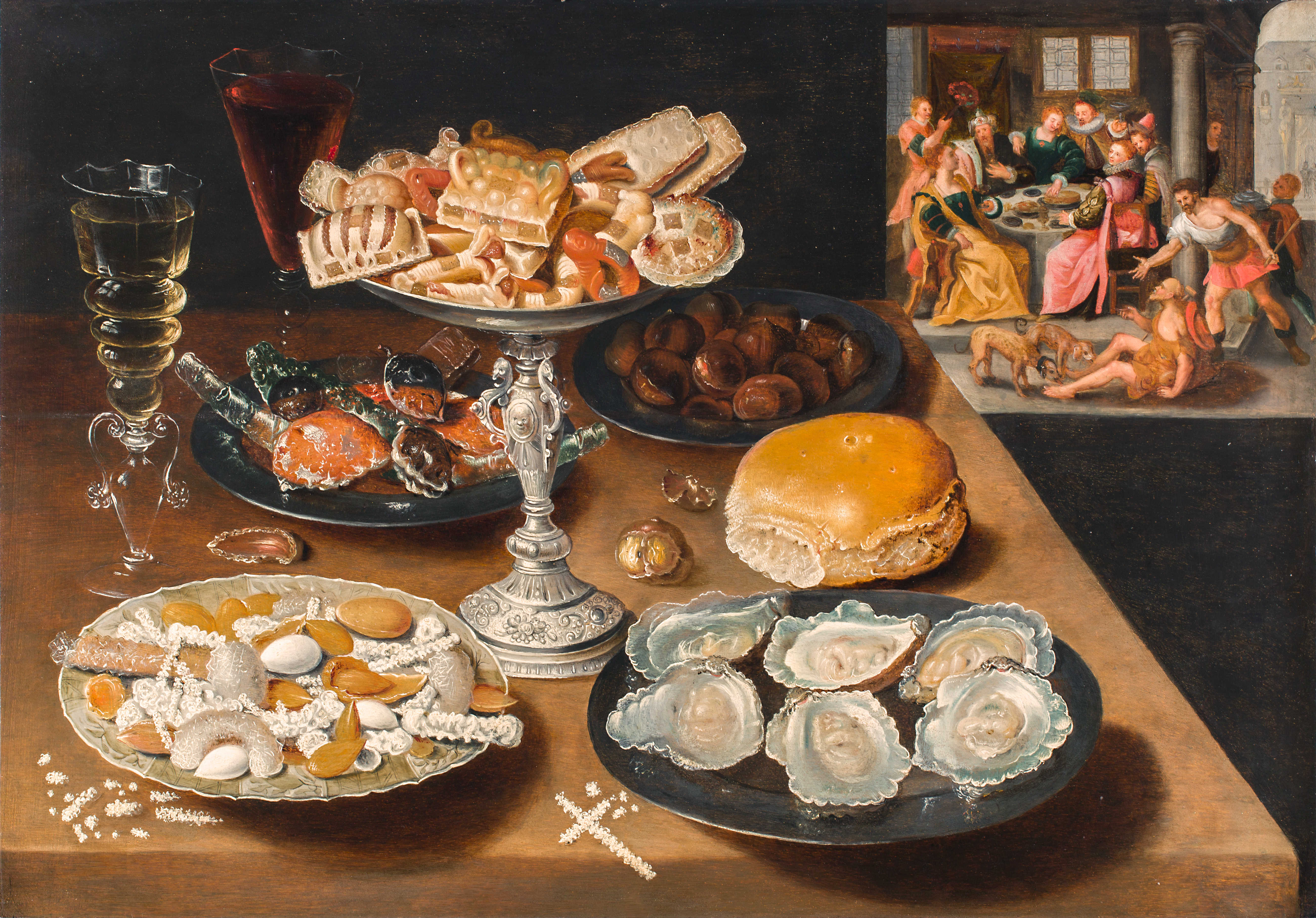
Osias Beert, born in Antwerp around 1580, is among the pioneers of the still-life genre; this painting is a remarkable early example of his mastery. Measuring 51 by 73 centimeters (20 by 29 inches), it presents not only an exquisite display of luxury objects but also a moral story drawn from the Bible. In the background, the tale of the rich man and Lazarus unfolds. The rich man feasts lavishly every day while Lazarus, a poor beggar, lies at his gate, longing for the smallest crumbs. Dogs lick his sores, and after death, Lazarus is carried by angels to Abraham in heaven while the rich man suffers in Hades.
The contrast between abundance and poverty is striking, yet the painting does more than depict a moral lesson. The objects on the table (sweets, cookies, candied spices) represent the Netherlands’ emerging table culture around 1600, where luxury and display were intertwined. At the same time, Beert’s work quietly hints at a global story. Sugar, a central ingredient of these delicacies, came through European colonies in the Americas, worked by enslaved indigenous people. The painting thus captures both beauty and the complex, often dark realities behind wealth. Beert’s attention to detail and composition transforms a still life into a narrative painting that resonates with human experience, reminding viewers that earthly pleasures are fleeting and moral reckoning is inevitable.
This magnificent painting (who got hungry after seeing it?) is in a private collection but we present it today courtesy of the Hoogsteder Museum Foundation in The Hague.
P.S. Discover more tasty still-life paintings in our Food & Drinks 50 Postcards Set! :)
P.S. Here are 7 famous feasts in art history!