
 Marie Victoire Lemoine
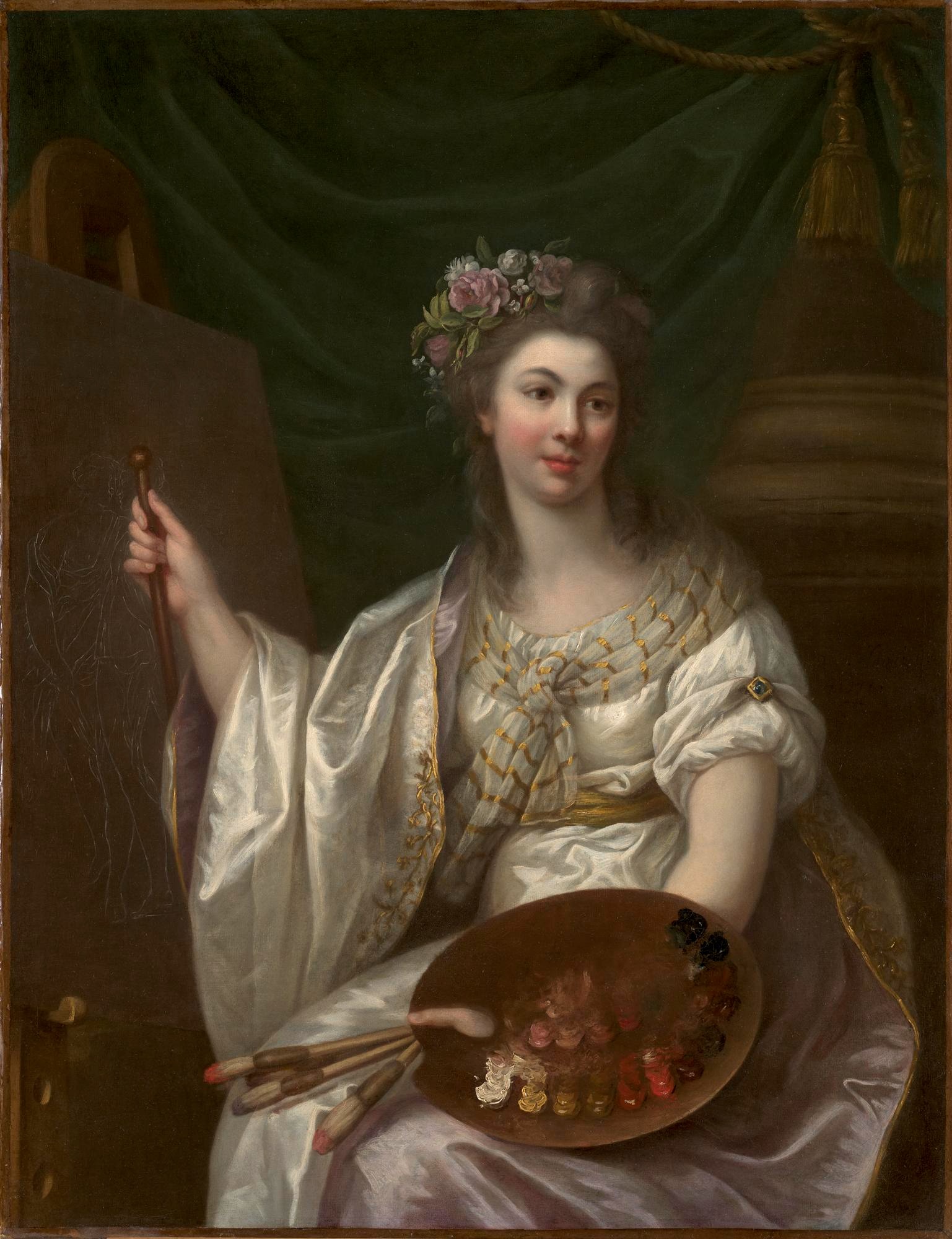
Marie-Victoire Lemoine, a French painter, was trained by the history painter Ménageot; her style aligns more closely with that of another amazing women artist of the time, Élisabeth Vigée Le Brun. The connection is not surprising: the Le Brun family owned the house where Ménageot lived, and Lemoine likely benefited from Vigée Le Brun’s teaching, as she began taking students in 1776. In 1796, Lemoine presented a self-portrait from 1789—painted in her young teacher’s studio—at her first Salon.
With Vigée Le Brun’s guidance, Lemoine gained both reputation and courtly connections, eventually receiving a commission to paint the Princesse de Lamballe. She exhibited this portrait in 1779 at the Salon de la Correspondance, a small exhibition open to all artists. Several commissions followed, and it was likely within this period that she produced the painting now in the Musée des Beaux-Arts d'Orléans, whose final date digit is partially erased.
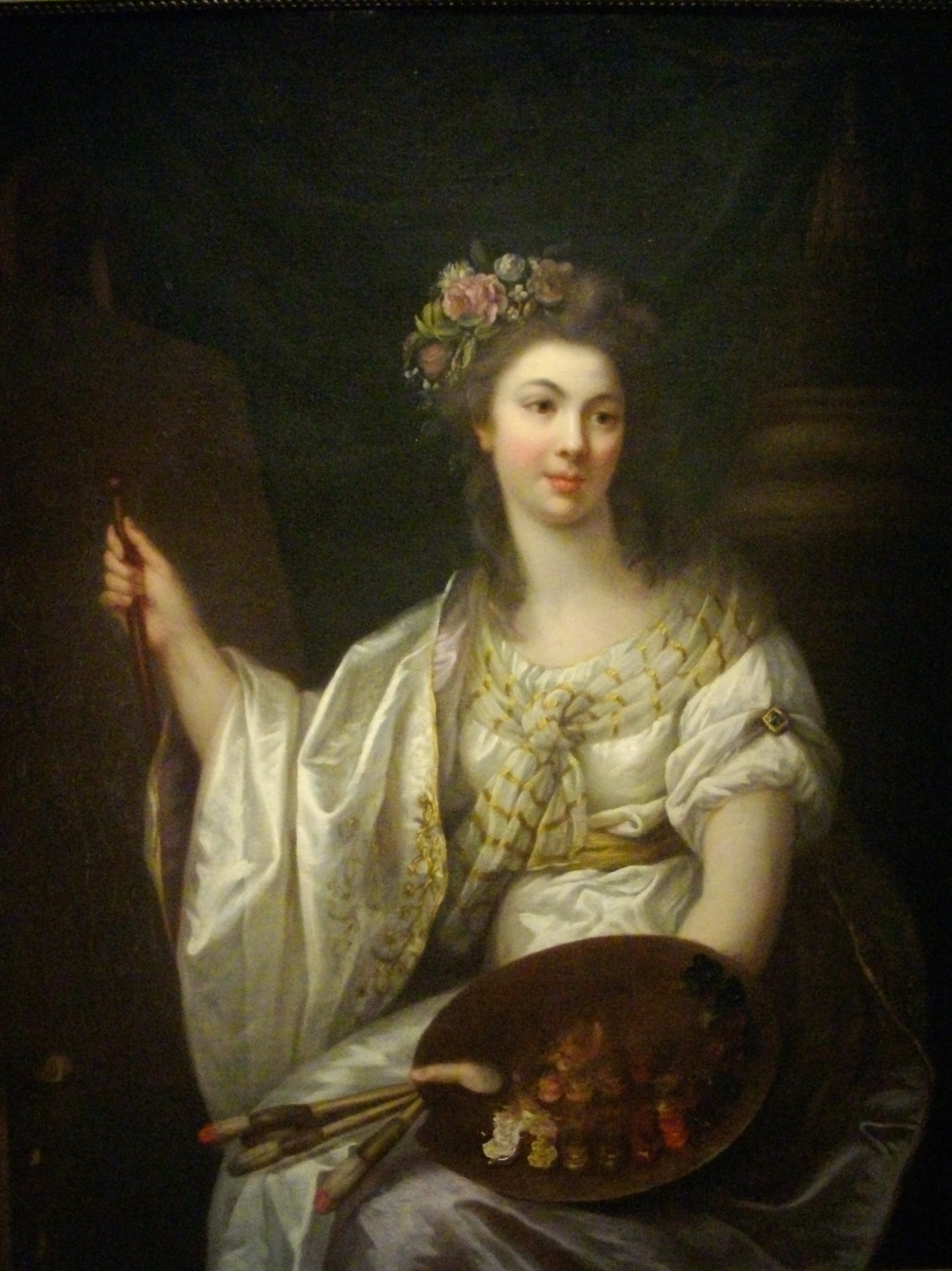
The subject remains open to interpretation. The woman portrayed carries the attributes of both an allegory of painting and a self-portrait, making the artist’s intention difficult to determine. Its closeness to Vigée Le Brun’s Self-Portrait in a Straw Hat, first shown at the Salon de la Correspondance in 1782, suggests Lemoine created it soon afterward.
Marie-Victoire Lemoine led a notably discreet career, exhibiting at the Salon only between 1796 and 1814, despite its being open to all artists from 1791. Around 30 works by her are known today—mainly portraits and genre scenes recalling Angelica Kauffman—offering a rare window into the artistic life of a woman at the end of the 18th century.
P.S. In our beautiful Women Artists 50 Postcards Set you can experience the art of 50 extraordinary female artists. :) Grab them, before they're gone.
P.P.S. Until the 19th century, art academies refused admitting women as their students. Discover how women artists had to fight for their artistic education!