
 Frederic Leighton
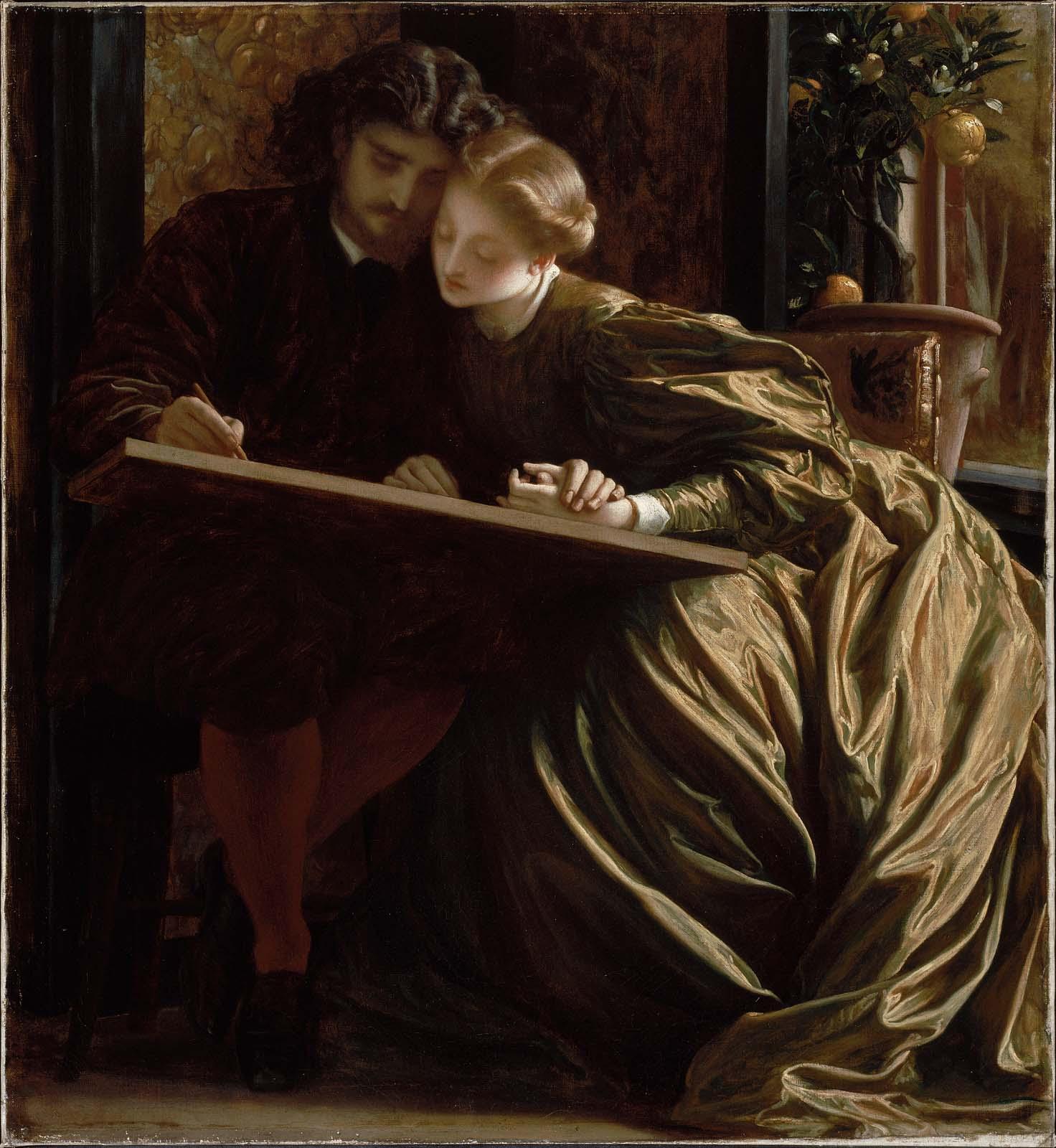
In this romantic scene, love is intertwined with art. Through its nostalgic subject matter and finely controlled, polished style, the painting exemplifies the academic ideals endorsed in the late 19th century.
Frederic Leighton, who became president of the Royal Academy in London in 1879, spent many years training in Germany, France, and Italy. The composition and luminous color of Painter’s Honeymoon reveal the influence of 16th-century Venetian masters such as Giorgione and Titian. This painting is an unusual departure for Leighton, who typically favored classical subjects and, in particular, the nude—a preference so pronounced that several of his works were removed from the 1857 exhibition of English art touring the United States for being deemed offensive. Here, instead, he turns to an intimate, contemporary scene.
The Italian man who posed for the painter appears frequently in Leighton’s work and seems to have been one of his preferred models. His hands are rendered with particular care, underscoring their importance to the act of painting itself. The tender modeling and muted tones used to depict the couple stand in marked contrast to the rigidity of the quince tree behind them, which Leighton appears to have found more challenging to render—the fruit, on close inspection, taking on an almost enameled quality.
Happy Valentine's Day everyone!
P.S. Take our Love in Art QUIZ; it's filled with some of the most famous depictions of love. If you're interested in art-related love stories, see the articles below!