
 Julia Margaret Cameron
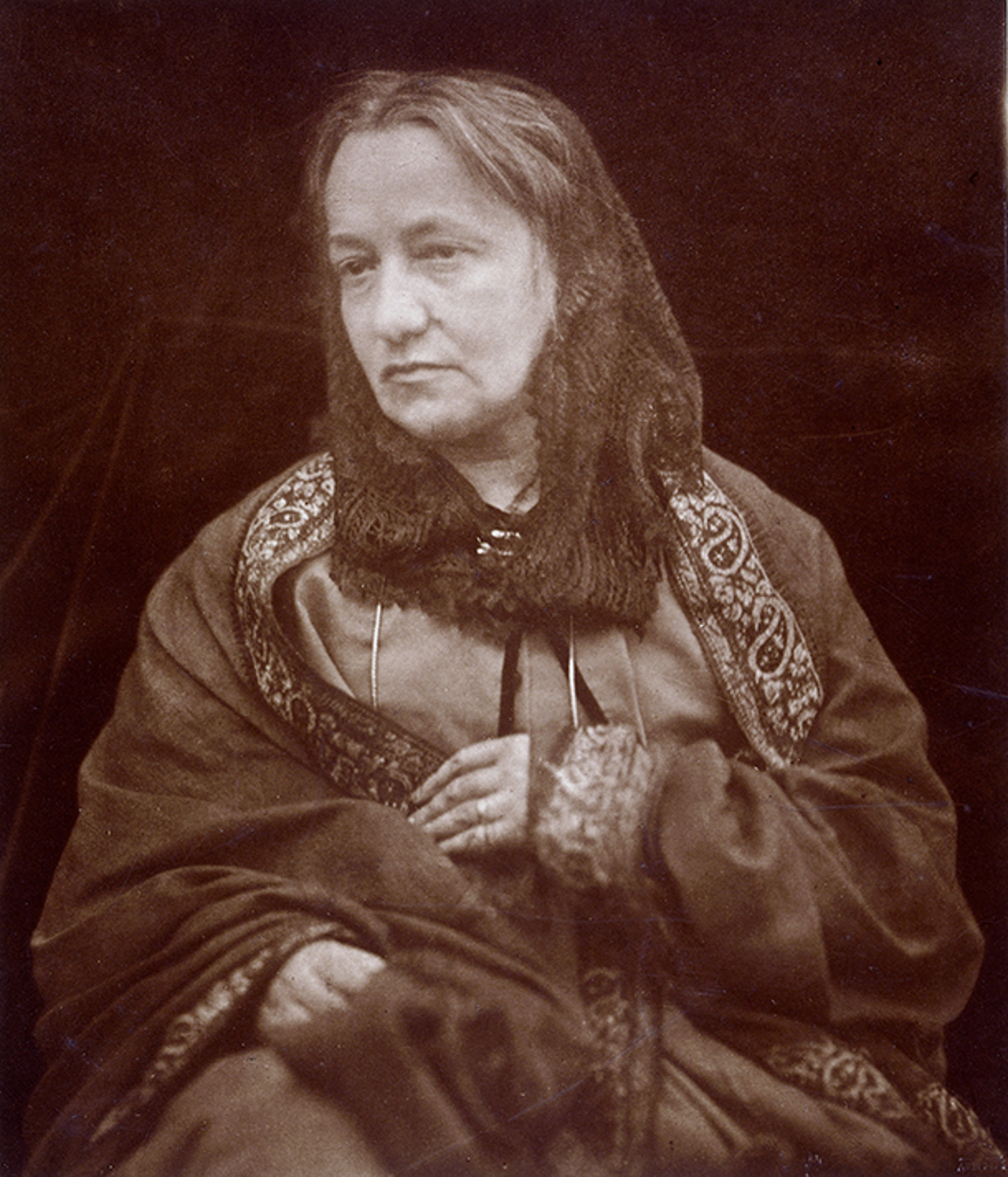
A woman of formidable intellect and deep spirituality, Julia Margaret Cameron moved with ease among the leading minds of Victorian England, counting figures such as Tennyson, Herschel, Darwin, Ruskin, and Carlyle among her circle. When she received a camera in 1863, she approached photography not as a means of exact likeness, but as a vehicle for expressing Biblical and literary ideals—innocence, devotion, wisdom, and passion—embodied by those closest to her.
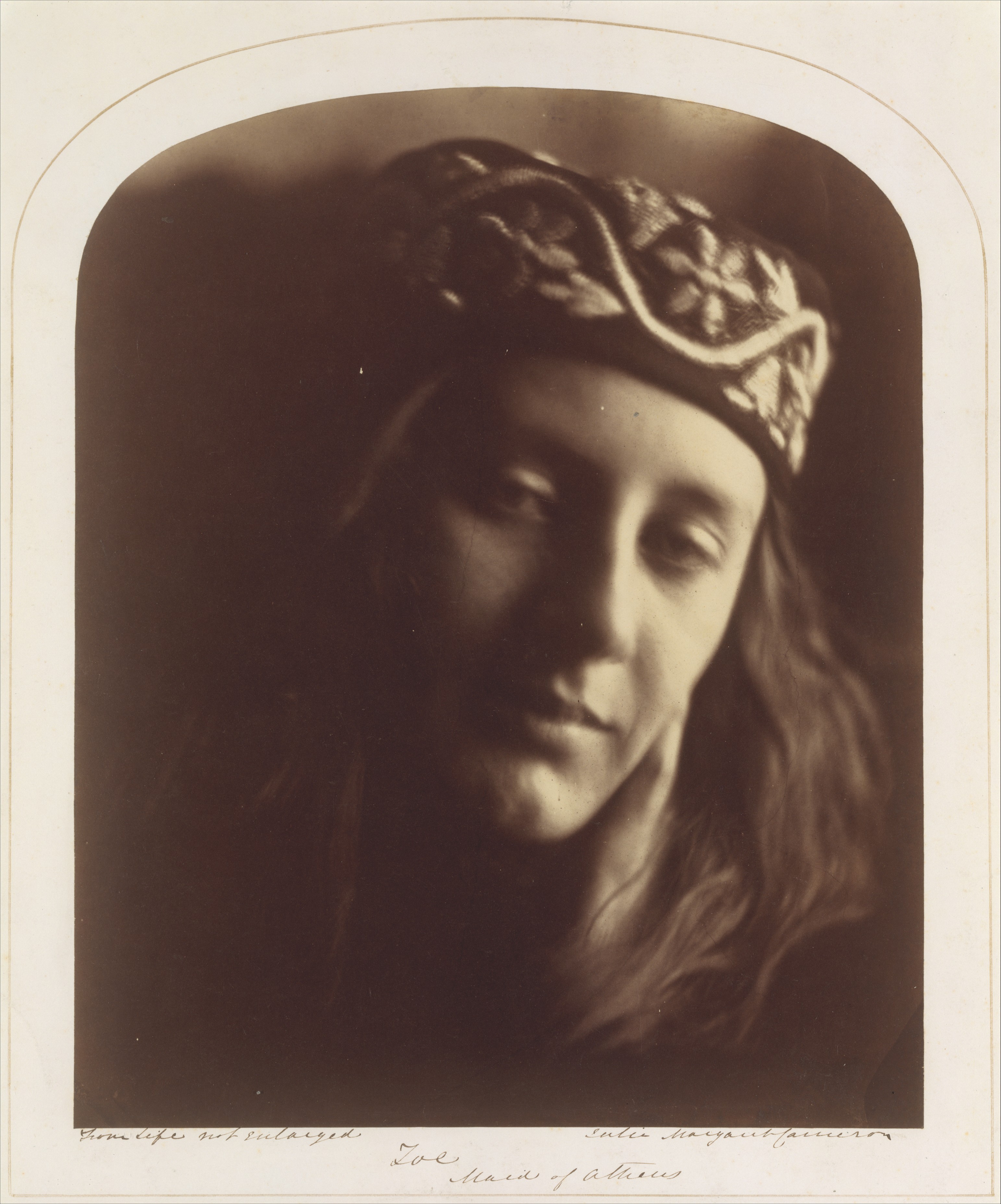
In this photograph, Cameron portrays May Prinsep, her sister’s adopted daughter. By allowing slight movement and deliberately softening the focus, she imbues the image with a sense of breath and inner life. The result is less a portrait than a poetic vision, shaped by love and longing. The photograph was inspired by verses from Lord Byron’s Maid of Athens, written in 1810—a poem in which desire, memory, and devotion intertwine. Like Byron’s words, Cameron’s image seeks not to describe, but to evoke, transforming the sitter into a living embodiment of emotion and idealized beauty.
P.S. Discover the fascinating photographs of Julia Margaret Cameron—the queen of Pre-Raphaelite photography!