
 Ellis Rowan
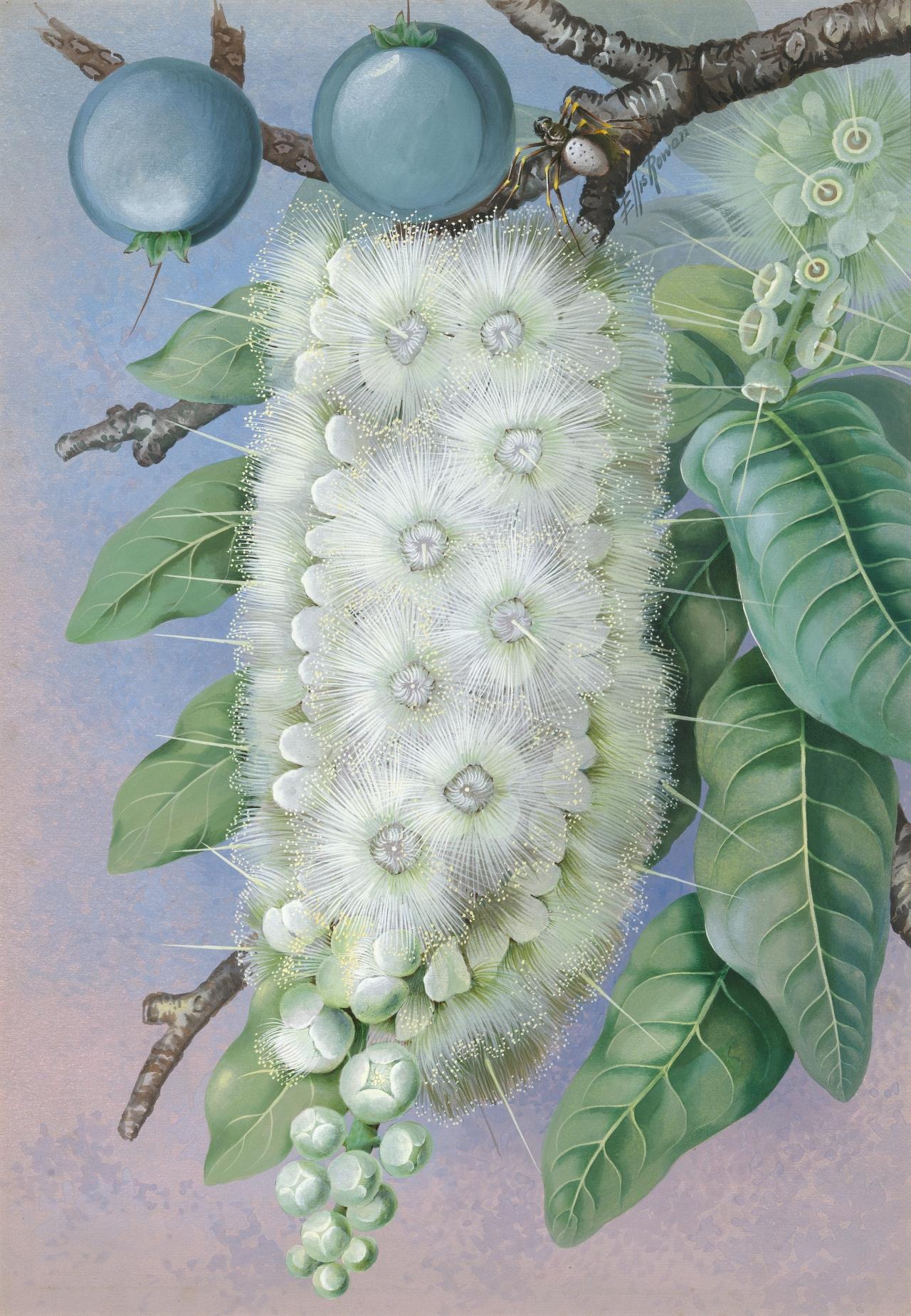
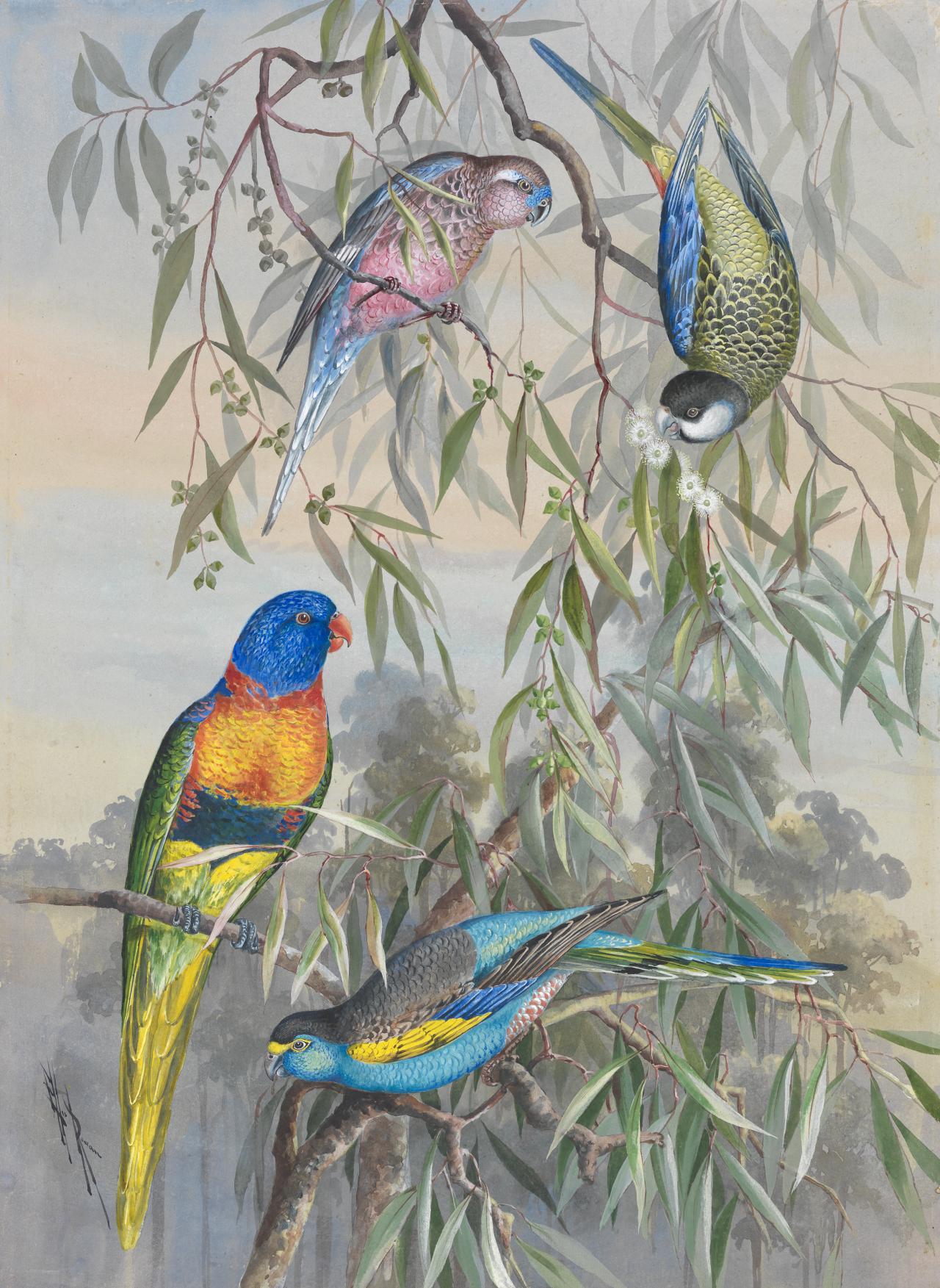
Rowan’s artistic path began early. As a young woman she started painting wildflowers, birds, insects, and butterflies—subjects that would remain central to her work. Her interest in botany was encouraged by Ferdinand von Mueller, a distinguished botanist and a friend of her father. From 1879 onward she exhibited widely at international exhibitions, earning significant acclaim: ten gold medals, fifteen silver, and four bronze. Among her many distinctions were the highest honors awarded at the 1888 Centennial International Exhibition in Melbourne.
An energetic traveler, Rowan journeyed throughout Australia, making six trips to Queensland in particular. After her husband’s death she spent many years abroad. In England, Queen Victoria accepted three of her paintings, and in the United States Rowan provided illustrations for three botanical books by Alice Lounsberry. Between 1916 and 1918 she traveled twice to Papua New Guinea, where, assisted by local guides, she located and painted 25 species of birds of paradise from life—an achievement that remains one of the most remarkable chapters of her career.
P.S. Bring the beauty of botanical art into your home! Our Flowers in Art 50 Postcards Set features stunning floral masterpieces—perfect for collecting, sending, or displaying. Don’t miss out on this vibrant celebration of flowers. :)
P.P.S. A number of women artists made a career in botanical illustration. Learn about Maria Sibylla Merian—an artist who changed science forever!