
 Egon Schiele
We have good news for you—for the next four Sundays we will be traveling to Vienna and presenting masterpieces from the amazing collection of the Leopold Museum. Let's start with Egon Schiele!
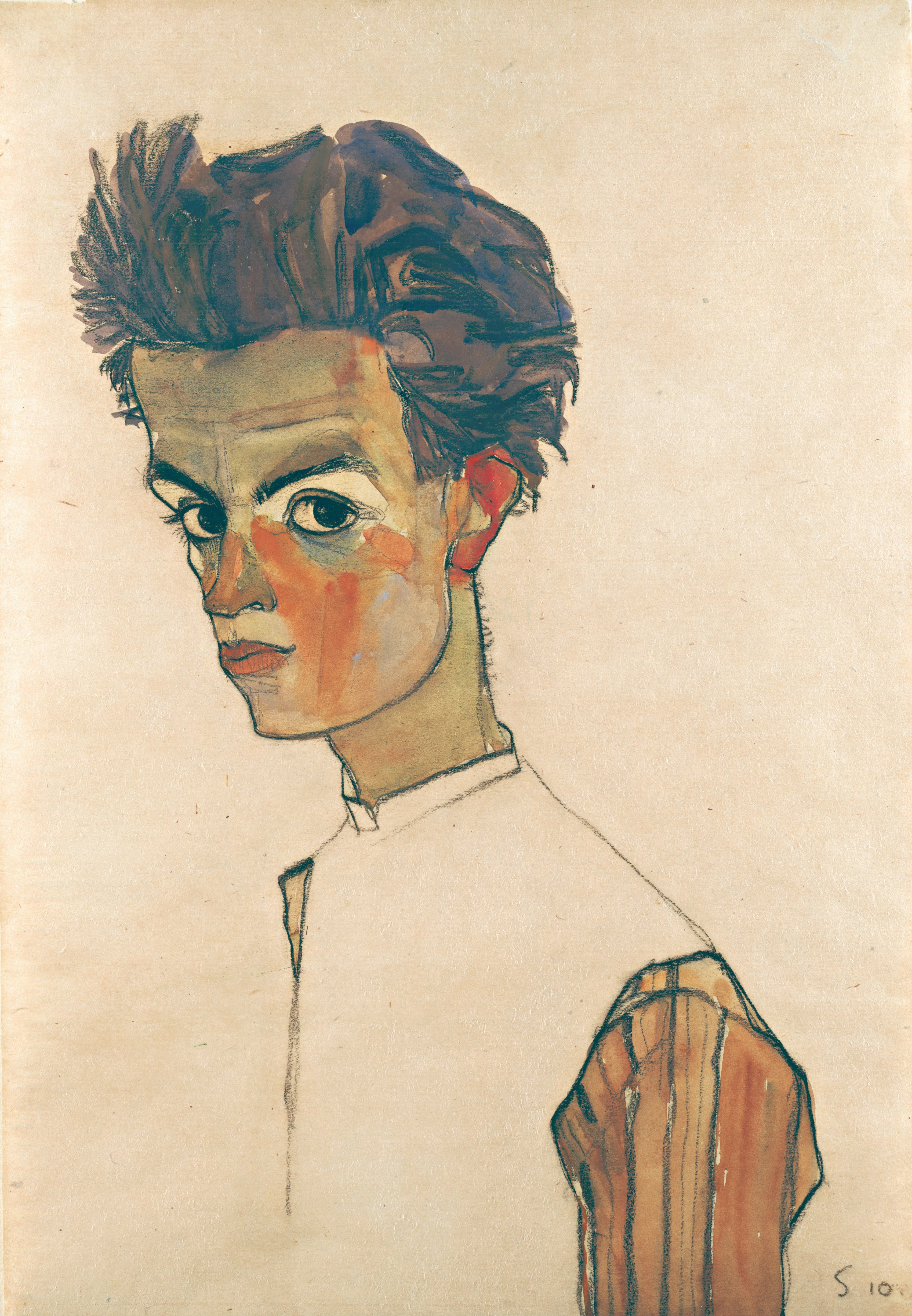
Egon Schiele explored the depiction of his own face, his own body, his own personality more intensely than any other artist in Vienna around 1900. This made his name a synonym of Viennese Modernism as a visual manifestation of one of the time’s central themes: the crisis of the individual.
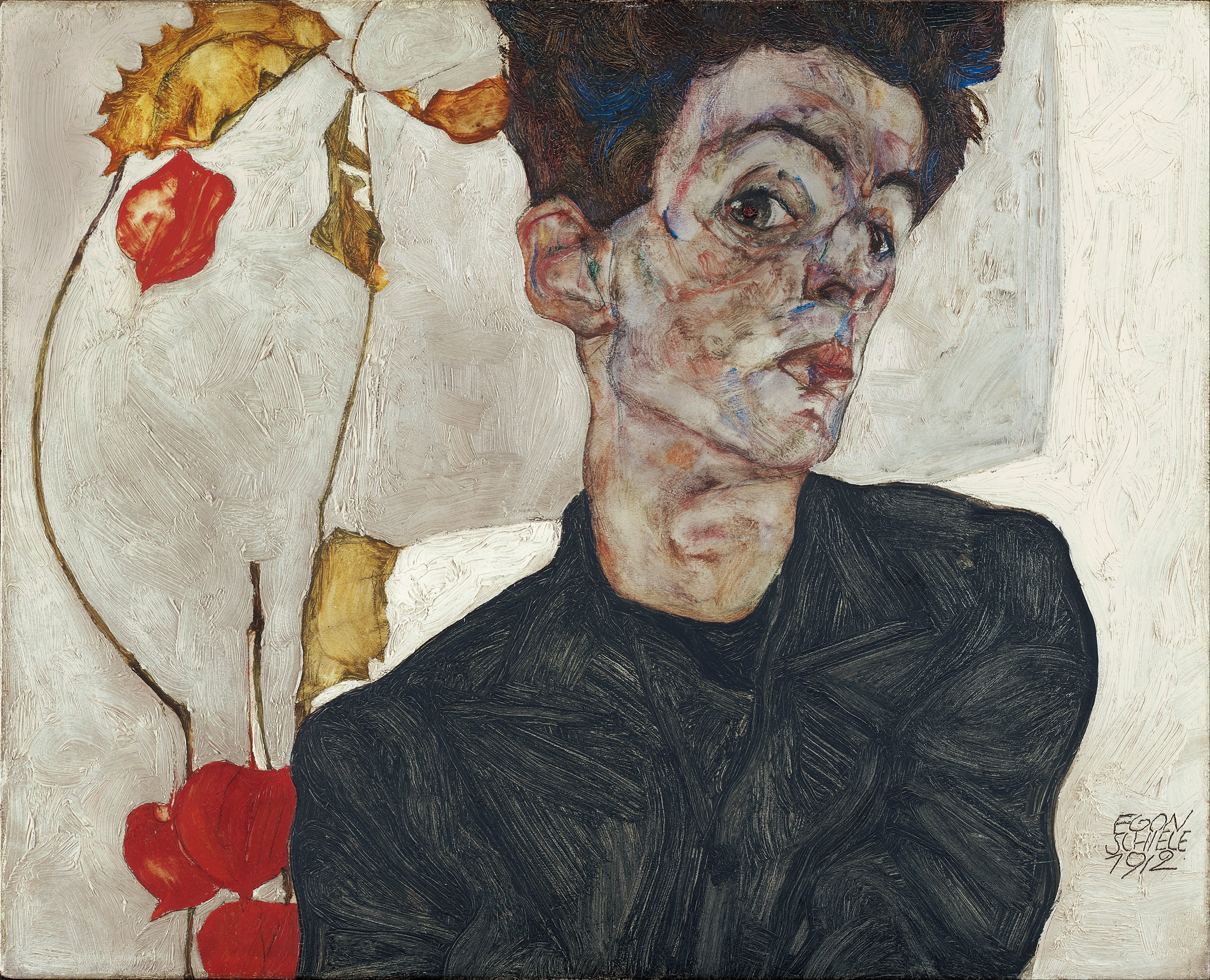
The Self-Portrait with Chinese Lantern Plant, created in 1912, is one of Schiele’s best-known works today and shows the artist at the height of his creativity. Nothing is left to chance in the balanced composition; every line finds its continuation or a corresponding counterpart: The head and the body are fragmented by the horizontal edges of the picture; the impact of these dark areas is reflected by the bold red of the Chinese lantern plant. Schiele’s head is turned to the right, while his gaze fixes directly on the observers in a contrary movement; the artist presents himself as fragile and self-confident at the same time. Schiele conceived the work as a counterpart to the simultaneously created Portrait of Wally Neuzil, a portrait of his partner at the time, which explains the strangely eccentric composition of both paintings.
P.S. We feature Egon Schiele's work in our stunning, golden Vienna Secession Planner, designed for limitless planning freedom.
P.P.S. Here are 12 famous self-portraits you should know!