
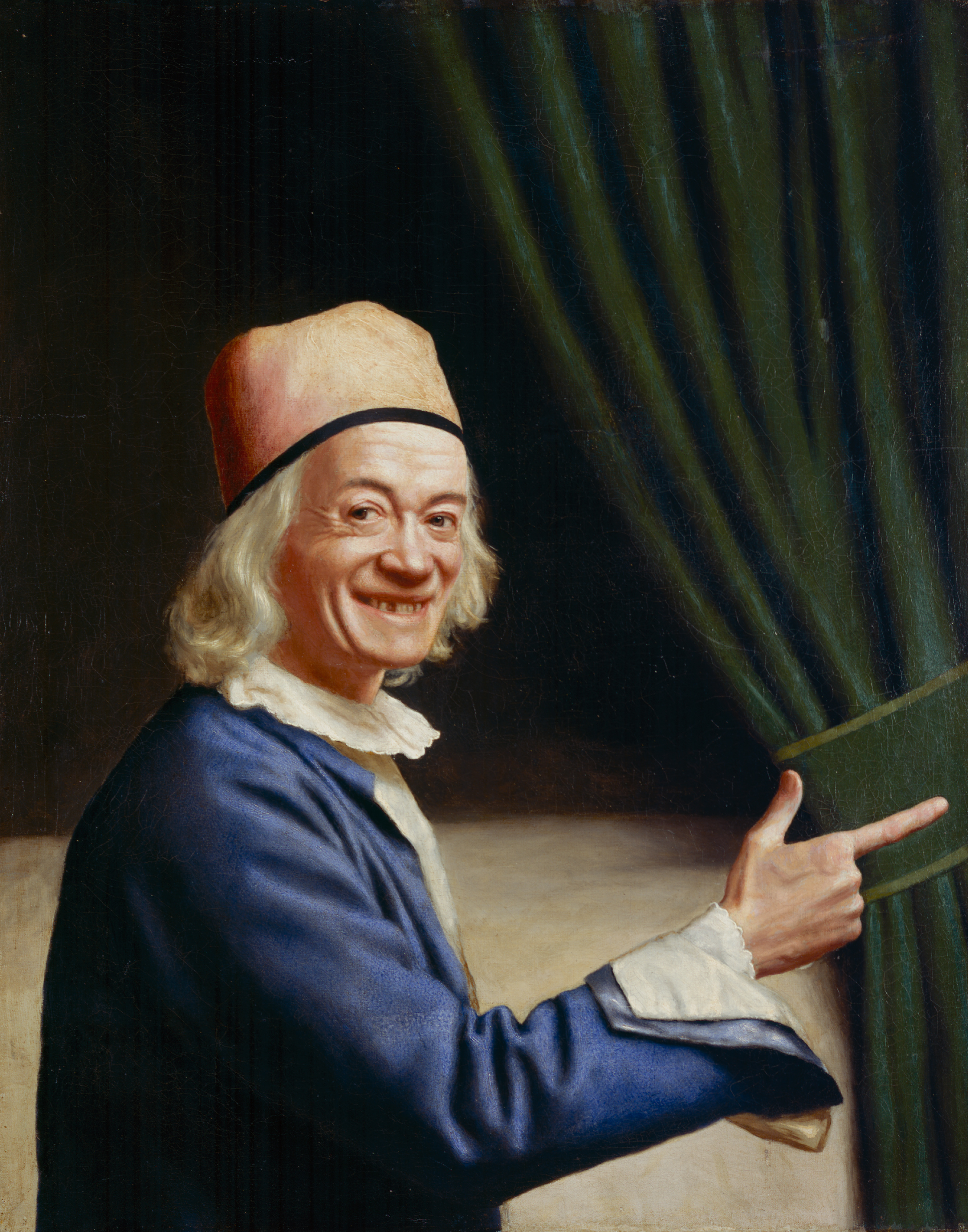
 Jean-Étienne Liotard
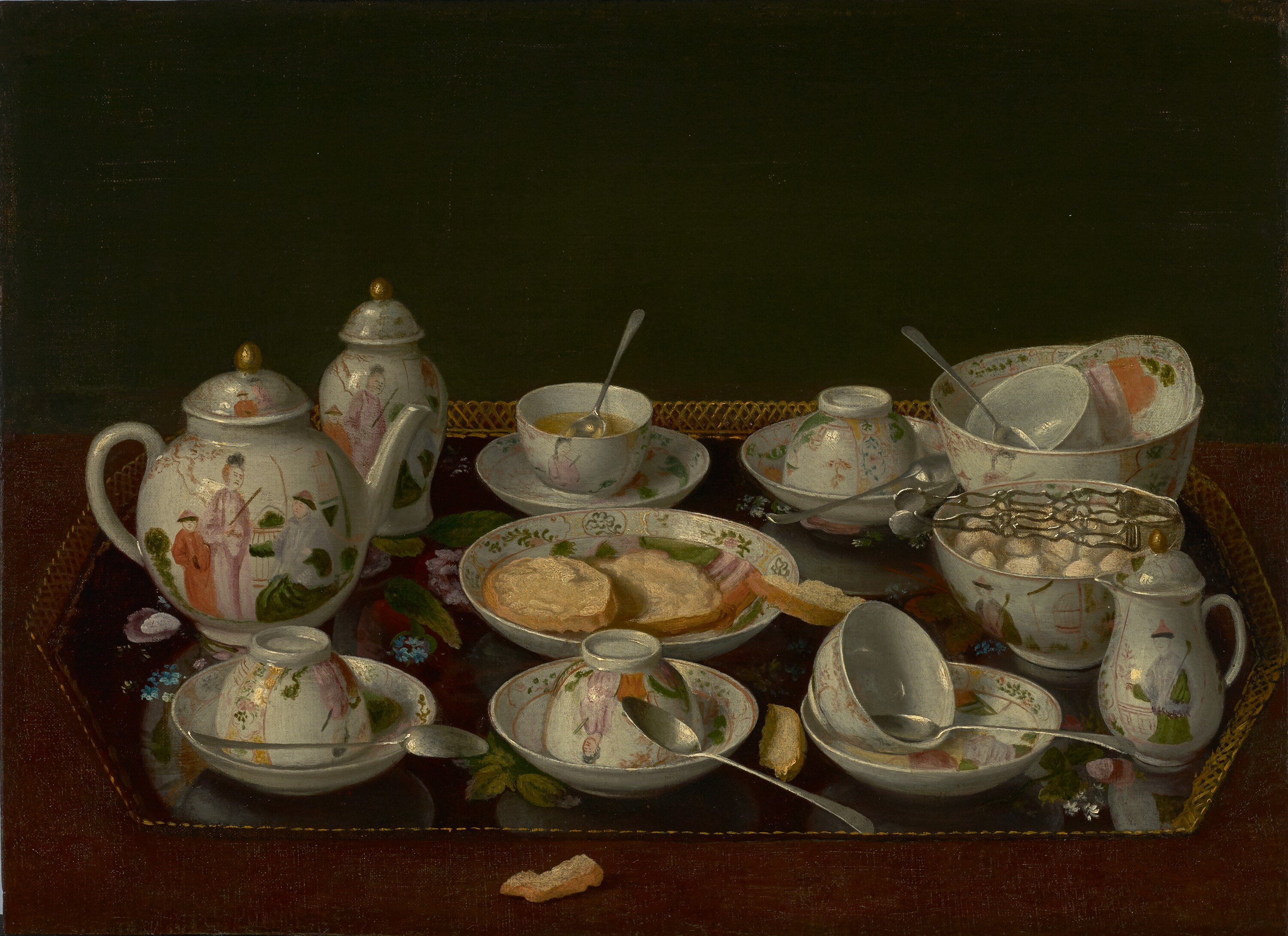
When Jean-Étienne Liotard was born, Chinese porcelain and the ritual of tea drinking had already become fashionable across Europe. Liotard became well-known for his pastel portraits, but later with age, shifting artistic tastes (and his political views) reduced demand for them. Late in his career Liotard increasingly turned to still-life subjects, including tea and coffee services. He had also incorporated elements of still life—fruit and porcelain vessels in particular—into his portraits since around 1740. Only five independent paintings of tea and coffee services by Liotard are known today.
This painting captures the aftermath of a tea service, slightly disarrayed. A tray holds six cups and saucers alongside a teapot, sugar bowl, milk jug, and a lidded vessel that may have stored additional tea leaves. Nearby stands a waste bowl (containing a cup and saucer), usually used for discarding cold tea and spent leaves. By the late 18th century, tea drinking had spread beyond aristocratic circles to the growing middle classes. Liotard contrasts the refinement of Chinese porcelain and silver with a more modest painted tin tray—known as tole—designed to imitate Asian lacquerware.
P.S. This masterpiece is featured in our Food & Drinks 50 Postcards Set. :) Curious what other tasty artworks await? Check out our DailyArt Shop!
P.P.S. In the 18th century, drinking tea, coffee, or chocolate was still not a widely accessible pleasure and remained largely associated with the upper classes. Take a seat at the table and enjoy these beautiful breakfast scenes by Liotard!