
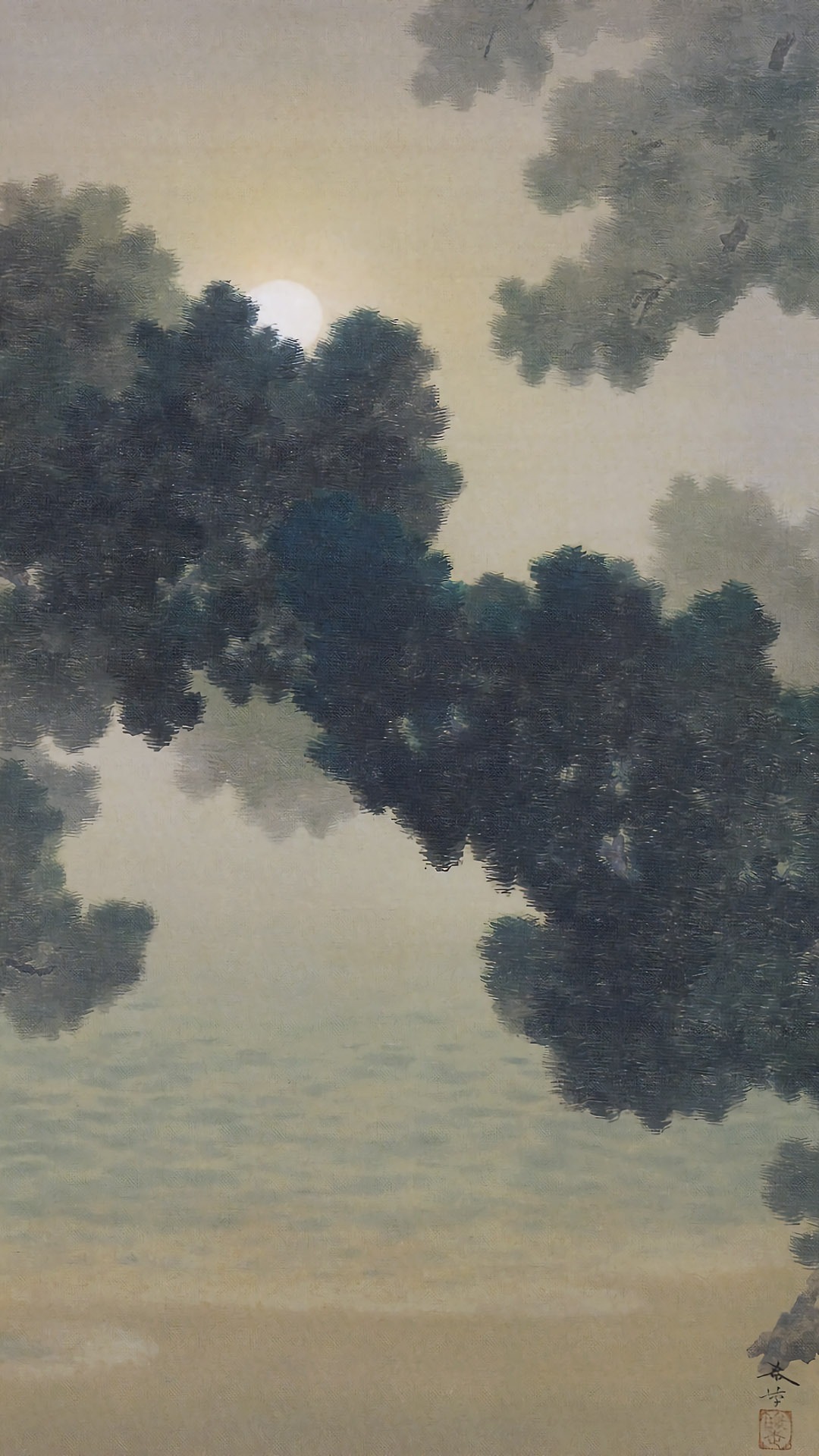
.jpg) Hishida Shunsō
Hishida Shunsō
Hishida Shunsō was one of the artists who helped revitalize traditional Japanese painting at a time when Japan was increasingly exposed to Western culture in the late 19th century. A talented child, he entered the newly founded Tokyo Fine Arts School in 1890, just a year after the institution opened. There, he studied alongside artists such as Yokoyama Taikan and Shimomura Kanzan. Together, they sought new ways of developing Japanese painting, experimenting with softer transitions of color and atmosphere rather than relying on strong outlines.
Their search for a new artistic language also took them abroad. Shunsō traveled to India in 1903 and later to the United States and Europe between 1904 and 1905, encountering new artistic ideas while remaining committed to Japanese traditions. Sadly, his career was cut short when severe vision problems left him completely blind shortly before his death in 1911 at the age of thirty-six. His passing was deeply mourned by fellow artists; Taikan later remarked that Shunsō’s talent was extraordinary and that had he lived longer, Japanese painting—and Taikan’s own work—would have been enriched by his presence.
P.S. If you love Japanese art, you should check out our Japanese Art 50 Postcards Set. It is perfect for sending and collecting.
P.P.S. Discover the magical atmosphere of the moon in Japanese prints!