
 Jean-François Millet
It is Monday, so time for a suitable painting.
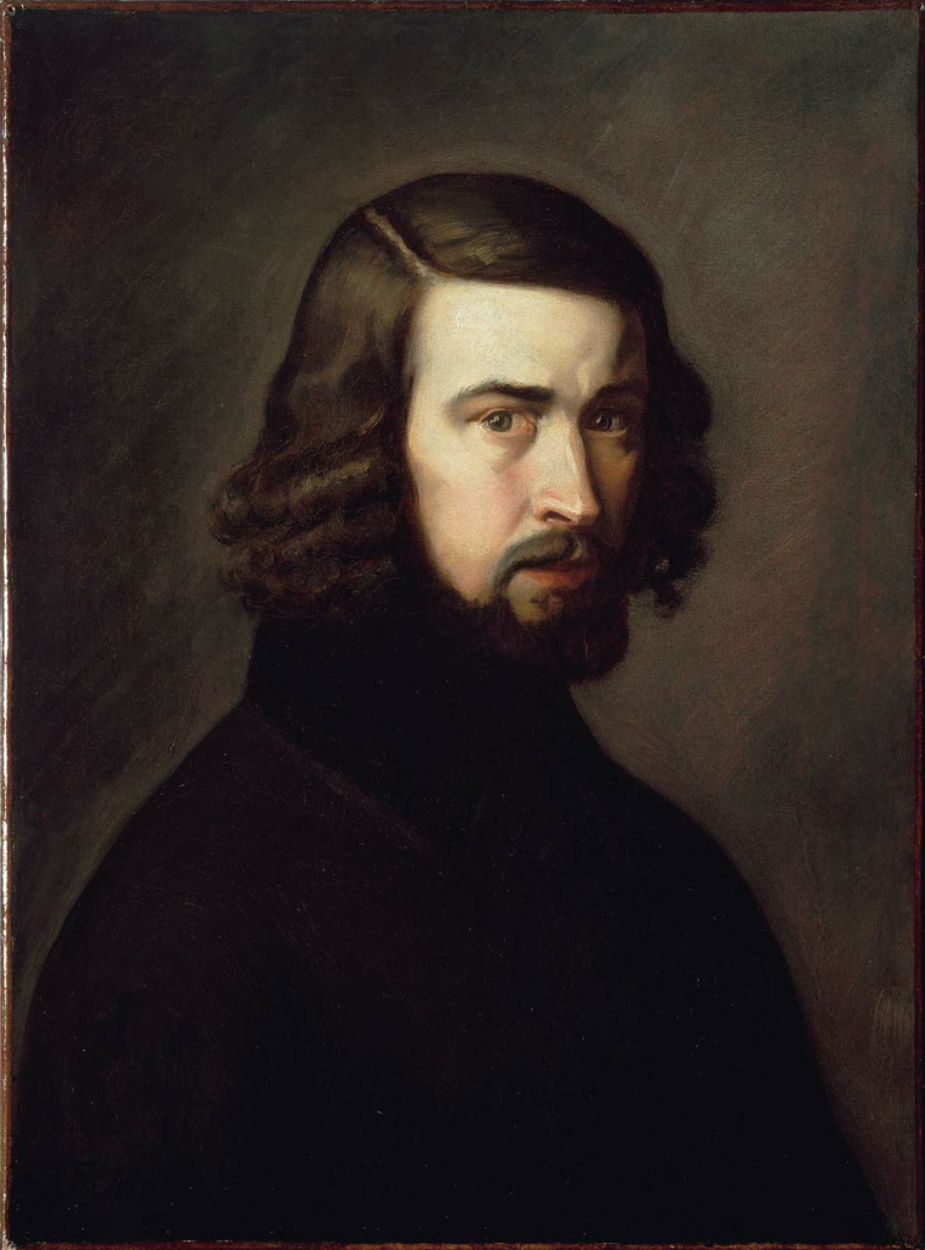
Born in Gruchy, France, into a farming family, Jean-François Millet described himself as a “painter of peasants.” In 1837, while studying under the history painter Paul Delaroche, he met Théodore Rousseau, a fellow student who would become a leading figure of the Barbizon School. Centered in the Forest of Fontainebleau, southeast of Paris, these artists sought to depict nature and rural life through direct observation, challenging established academic traditions. Sharing this vision, Millet settled in Barbizon permanently in 1849. While many of his peers focused on landscape, he devoted himself to scenes of rural life, portraying peasants and laborers engaged in everyday work.
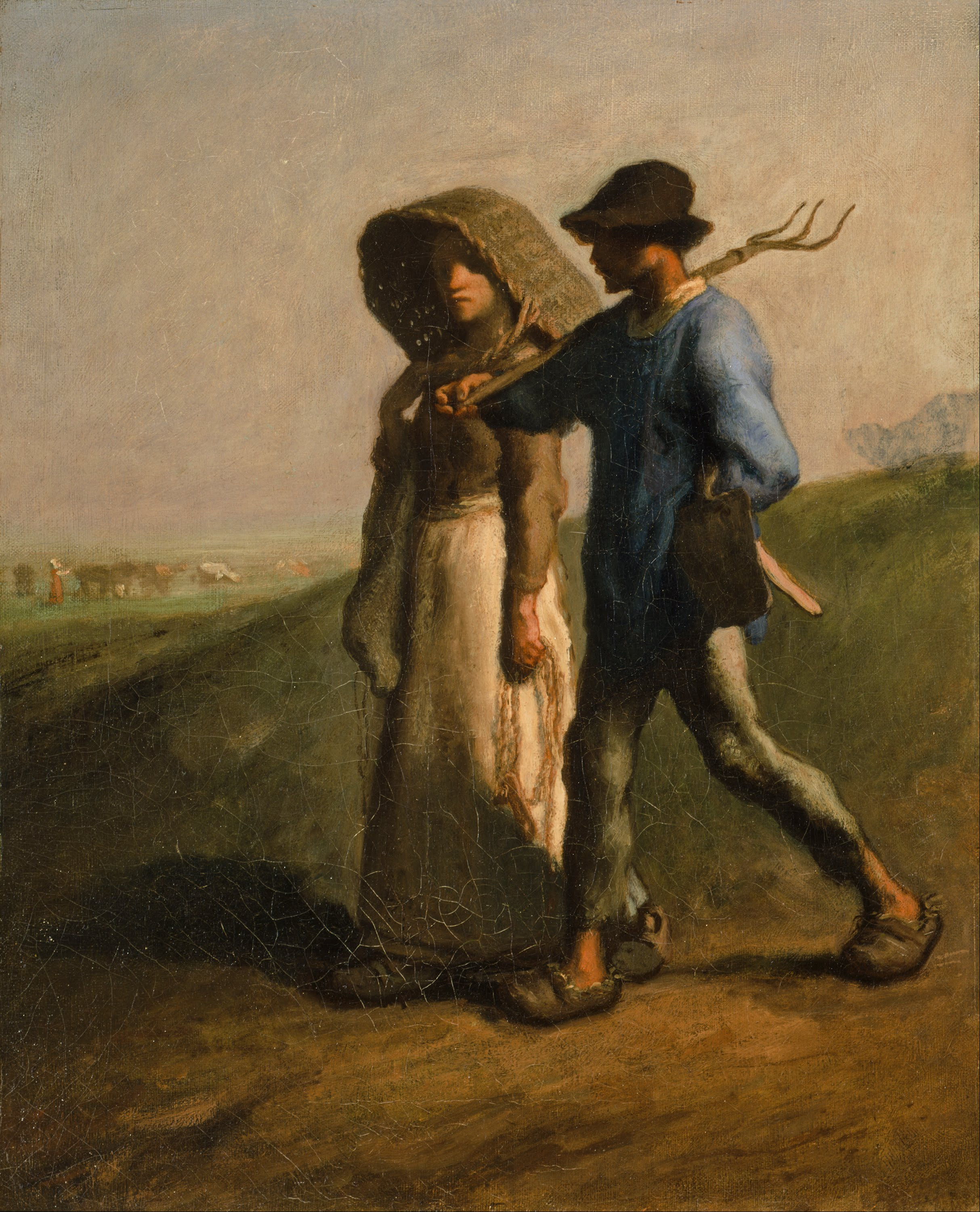
Millet began Going to Work in 1851, after turning away from portraiture and academic nudes to concentrate fully on naturalistic representations of the countryside. Although human figures are central to his compositions, they are often deliberately generalized. Rather than depicting specific individuals, Millet aimed to express the broader human condition and humanity’s enduring relationship with the land. Though critics sometimes faulted his simplified style, his works possess a sense of dignity and monumentality that transcends such concerns.
P.S. Jean-François Millet was the artist who could plow a field all morning, paint in the afternoon, then recite Shakespeare at night. Discover Jean-François Millet—the Peasant Painter!