
 Paul Nash
Yesterday was the anniversary of the armistice that ended the First World War in 1918—a day of remembrance across much of the world, and a fitting moment to look at this painting.
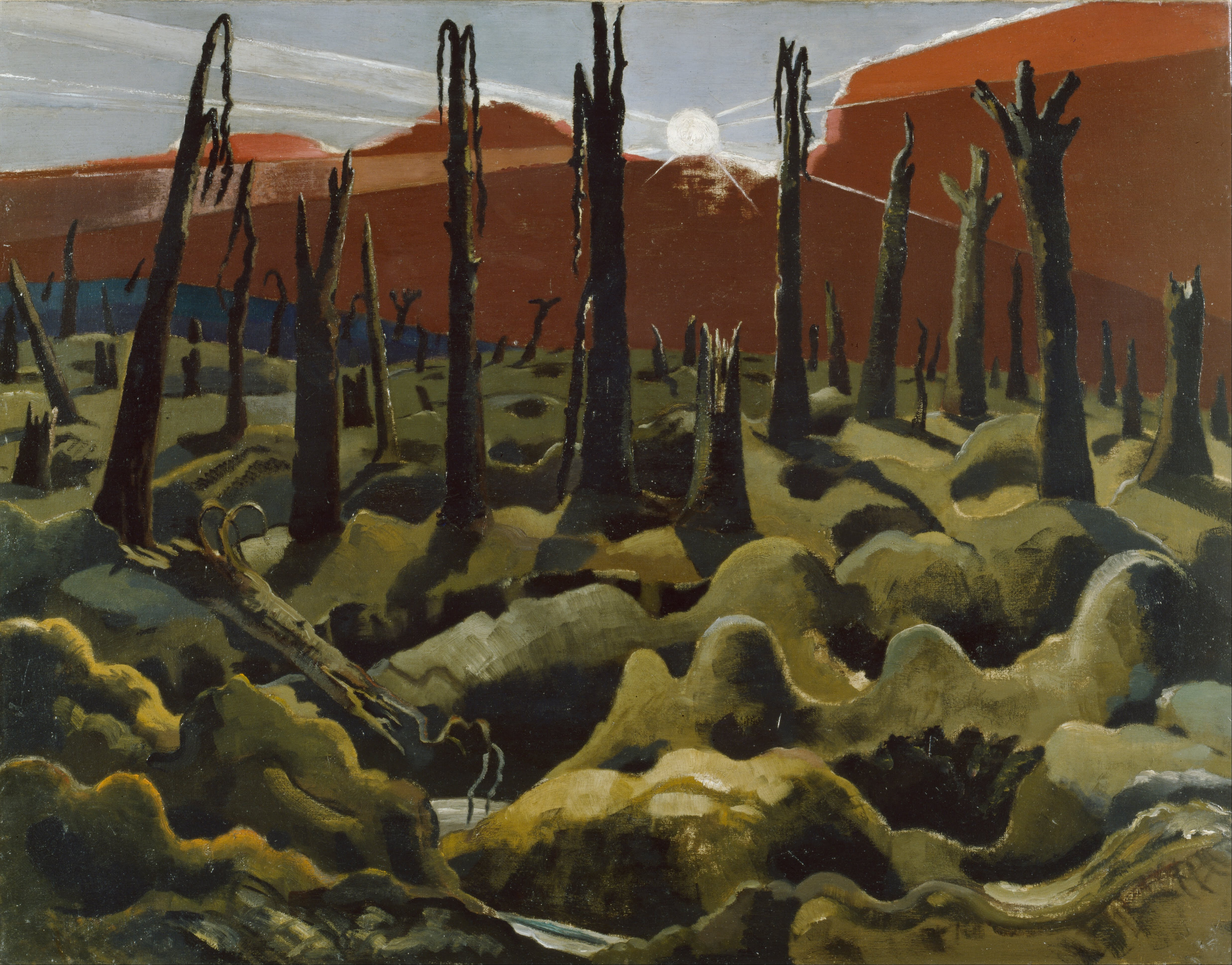
The optimistic title stands in stark contrast to Paul Nash's depiction of a scarred landscape shaped by battle in the First World War, including shell-holes, mounds of earth, and leafless tree trunks. Nash's first major painting and his most famous work, it has been described as one of the best British paintings of the 20th century, and compared to Picasso's Guernica. The work was among the first oil paintings Nash produced. It was based on his 1918 pen-and-ink drawing Sunrise, Inverness Copse, which depicts the remains of a small group of trees at Inverness Copse, near Ypres in Belgium.
Nash had enlisted shortly after the outbreak of the First World War with the Artists' Rifles. He transferred to the Hampshire Regiment and was sent to the front at Ypres. He held a passionate attachment to the natural world and regarded with horror the deformation the war had brought upon it. In 1917, Nash returned to England after breaking several ribs in a fall into a trench. Soon afterwards, the Battle of Passchendaele took place, leaving 200,000 British soldiers killed or wounded. Nash lobbied the Foreign Office to be allowed to return to the front as an official war artist. He wrote to his wife, Margaret: "I am no longer an artist... I am a messenger who will bring back word from the men who are fighting to those who want the war to go on for ever..."
P.S. Nash wasn’t the only artist to experience the First World War firsthand. Meet five artists who served as soldiers during the war.