
 Caspar David Friedrich
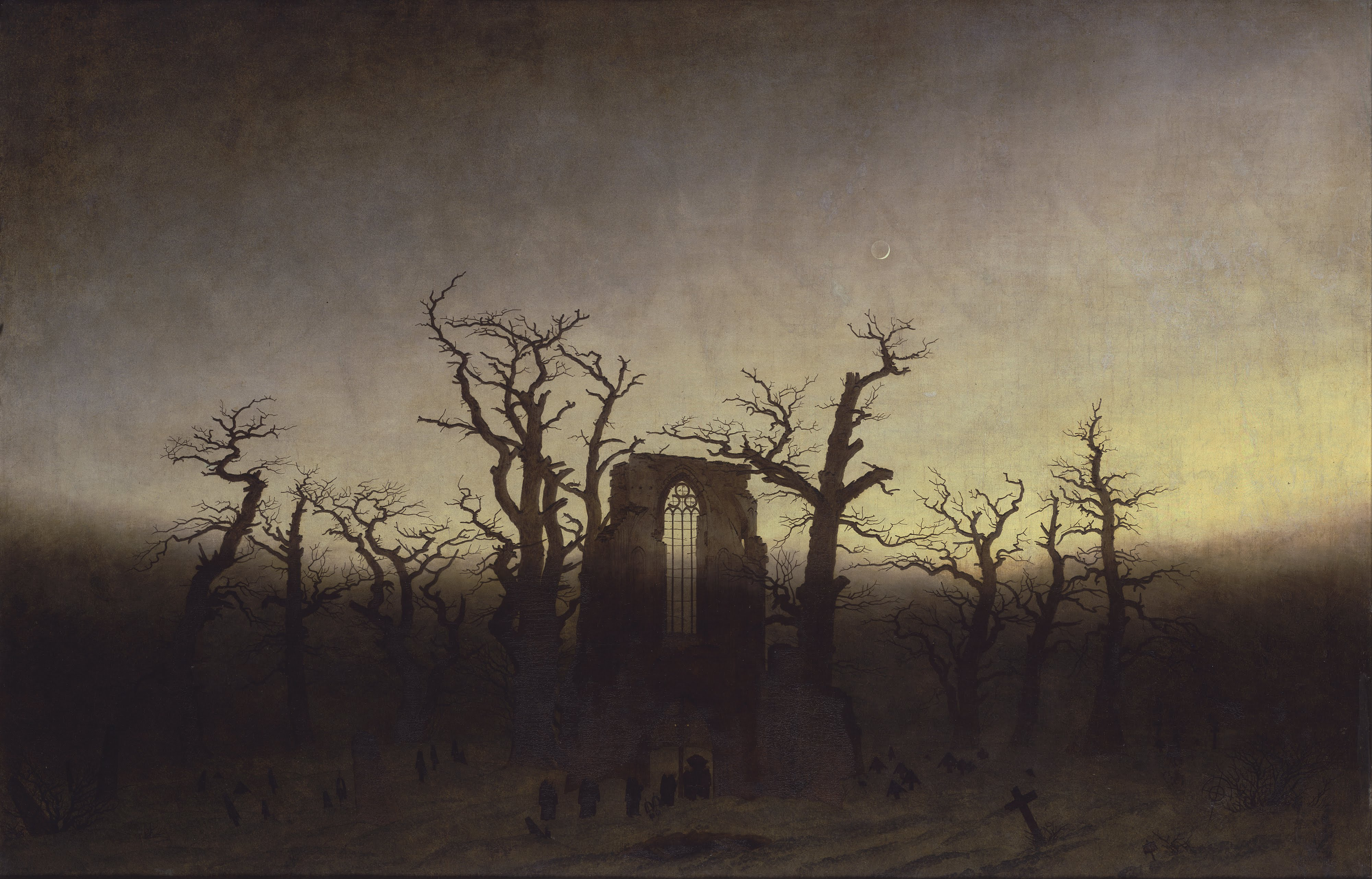
Painted in Dresden between 1809 and 1810, The Abbey in the Oakwood is one of Caspar David Friedrich’s most haunting Romantic visions. It was first exhibited at the Prussian Academy of Arts in 1810, paired with The Monk by the Sea. At Friedrich’s request, The Abbey was hung directly beneath The Monk, creating a dialogue between the two vast canvases. Following the exhibition, King Frederick Wilhelm III purchased both works; today they hang side by side in Berlin’s Alte Nationalgalerie.
The painting exemplifies Friedrich’s meditation on transience and eternity. In the center stands the ruin of a Gothic abbey, its window shattered and bare. A funeral procession of monks advances toward the ruin’s gate, carrying a coffin lit only by two candles. In the snowy foreground, a freshly dug grave lies open, surrounded by faintly visible crosses. The leafless oaks, darkened landscape, and cold twilight intensify the mood of mortality and decay. Yet nature endures: the abbey crumbles, but the trees reach upward, their tips catching the last rays of the setting sun. Above, a waxing crescent moon rises—an emblem of renewal amidst loss.
P.S. Discover more of Friedrich’s atmospheric views in our Landscapes 50 Postcards Set.
P.P.S. Read more about The Abbey in the Oakwood in DailyArt Magazine, or get to know 6 shades of romantic creepiness in Caspar David Friedrich’s paintings!