
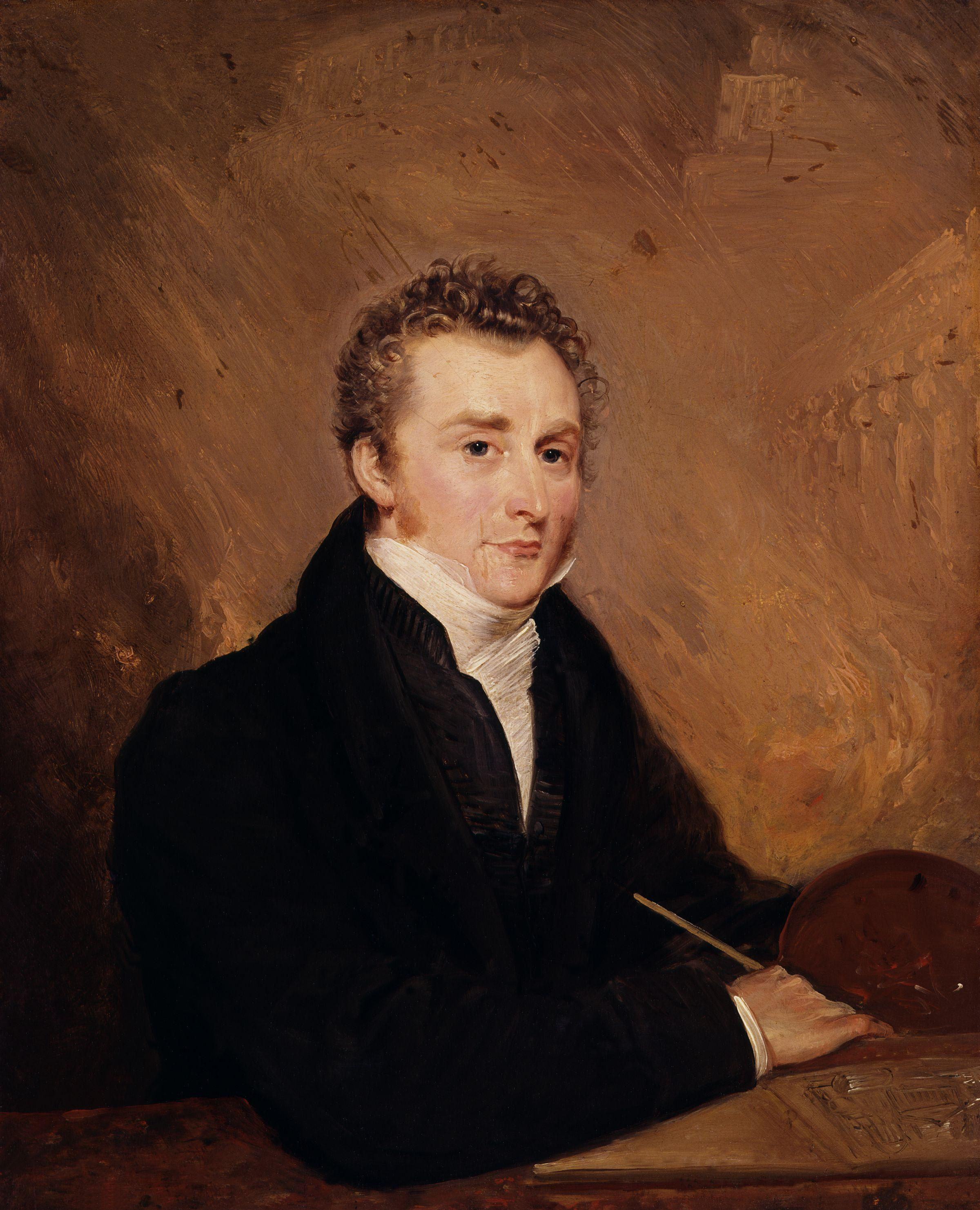
 John Martin
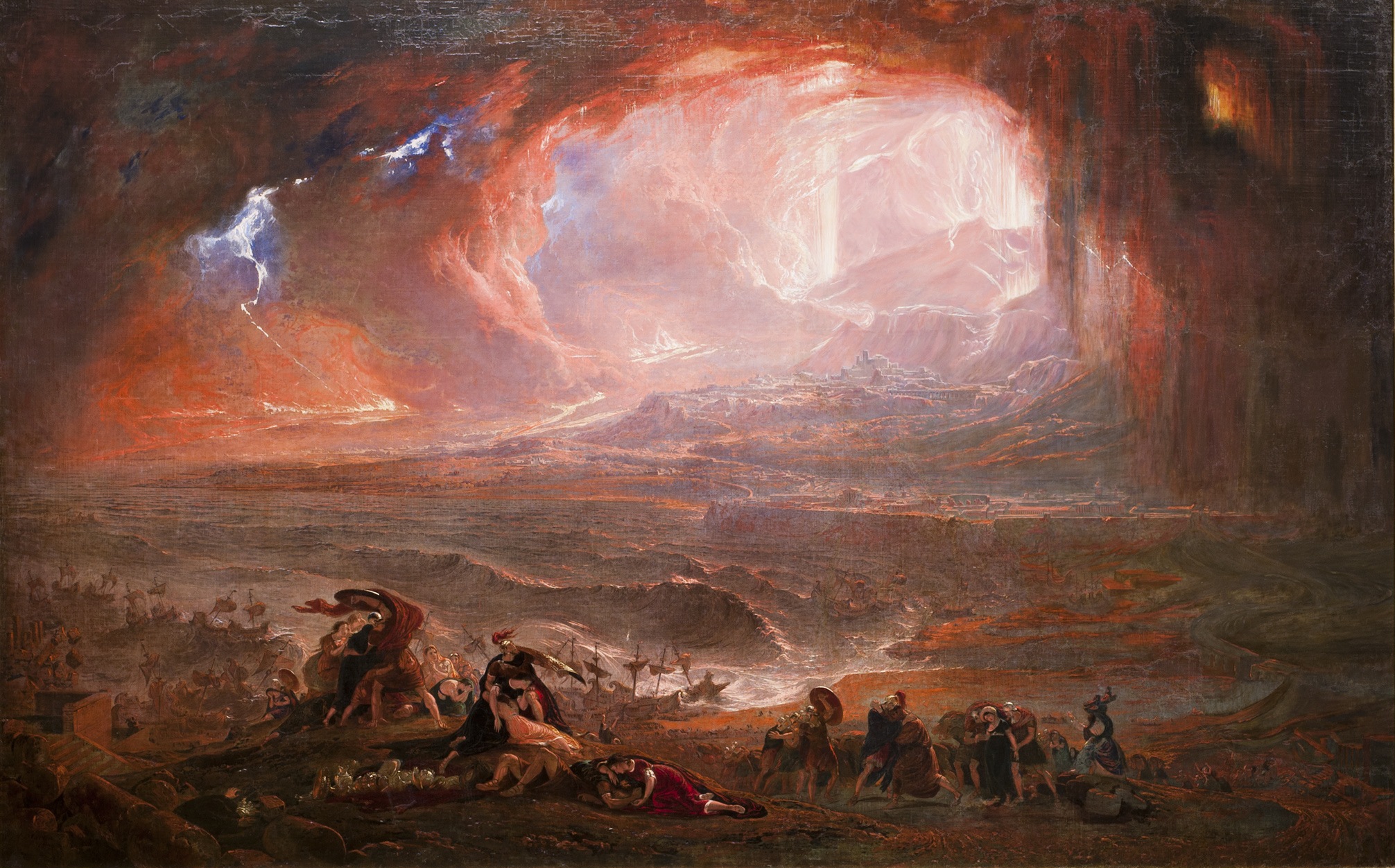
Mount Vesuvius erupted on this day in 79 CE and destroyed Pompeii and Herculaneum. Thousands of people died there, though the exact number is unknown. Both cities were excavated in the 18th century, which left a huge impact on contemporary culture and art. The eruption preserved an entire snapshot of Roman life, making Pompeii and Herculaneum some of the most important archaeological sites in the world.
This terrifying event of the eruption was painted by John Martin in a large, vividly colored oil painting. Seen from the vantage point of Stabiae, across the Bay of Naples, the scene is filled with chaos as desperate survivors flee to safety. In the distance, Herculaneum is engulfed in lava, while in the part with Pompeii, we can see the famous buildings of the Great Theatre and the Basilica. Mount Vesuvius looms in the background, captured in the early stages of eruption, its lava casting a red glow across the landscape, while the sky churns with ash clouds and flashes of lightning.
The painting premiered as the centerpiece of Martin’s solo exhibition at the Egyptian Hall in Piccadilly, London, in 1822. It was a commercial venue known for its eclectic attractions, including the Egyptian Hall, a Lapland exhibit (complete with live reindeer and people in traditional dress), an exotic animal showcase called The Terror of India, and the African Museum of Natural History. Within this context, Martin’s apocalyptic painting helped cement his popularity with the public as a master of epic disaster scenes. Critics at the time were less enthusiastic, however, often dismissing his work as sensational rather than serious art.
P.S. Natural phenomena can be very inspiring for artists. See what happens when Romanticism meets eruption. Here are the best volcanoes in paintings! You can see another volcano in our newest postcard set, Landscapes. Visit our Shop and enjoy our birthday sale! :)