
 Claude Monet
Claude Monet was a master of landscapes. That's both a cliché and the truth! :)
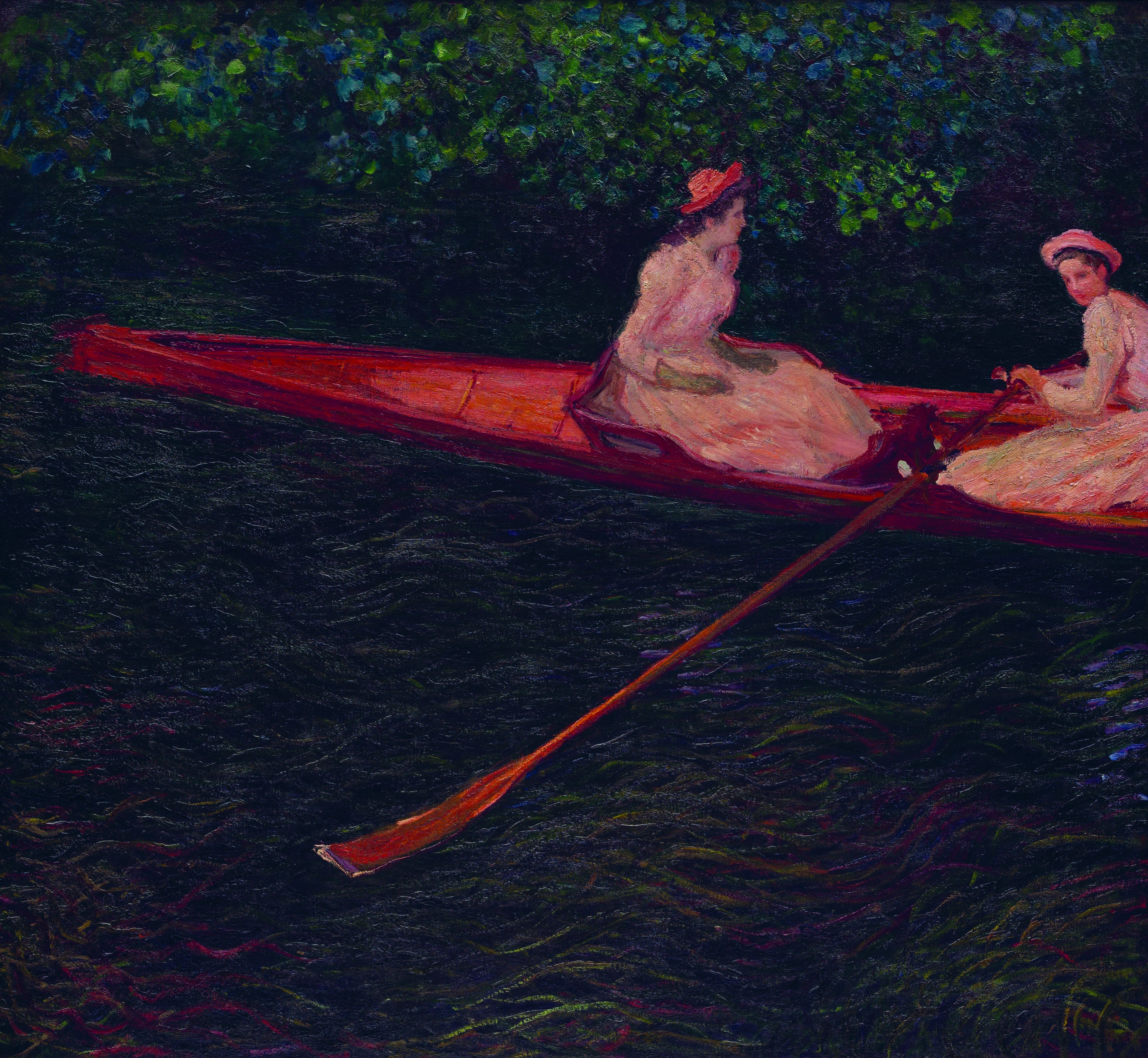
Between 1887 and 1890, Monet devoted himself to portraying a canoe on the Epte River, which flowed through his property in Giverny. For this series of paintings, the sitters were sisters Suzanne and Blanche Hoschedé. Their father, the banker Ernest Hoschedé—who had passed away by then—had been Monet’s patron and collector, and their mother, Alice, would later become Monet’s second wife. The Canoe on the Epte demonstrates Monet's interest in the effects of light on the water’s surface. The thick application of paint consists of pure colors that visually blend from a distance. The proximity of the river current, occupying the entire lower portion of the painting, suggests Monet was exploring both the reflections of plants and the depth of the river. The blurred depiction of the figures and the cropped framing of the canoe—cut off at the edge of the canvas—echo the visual language of photography, which was a decisive influence on the artist. The scene’s framing also evokes Japanese prints, which were circulating widely in France at the time.
P.S. Monet knew how to make rivers shimmer. See more stunning views in our newest Landscapes 50 Postcards Set. Are you familiar with it? You can find it here! :)
P.P.S. Monet's work was incredibly diverse, and the range of his subjects seems endless. Discover all its colors, here's Claude Monet in 10 paintings!