
 Robert Delaunay
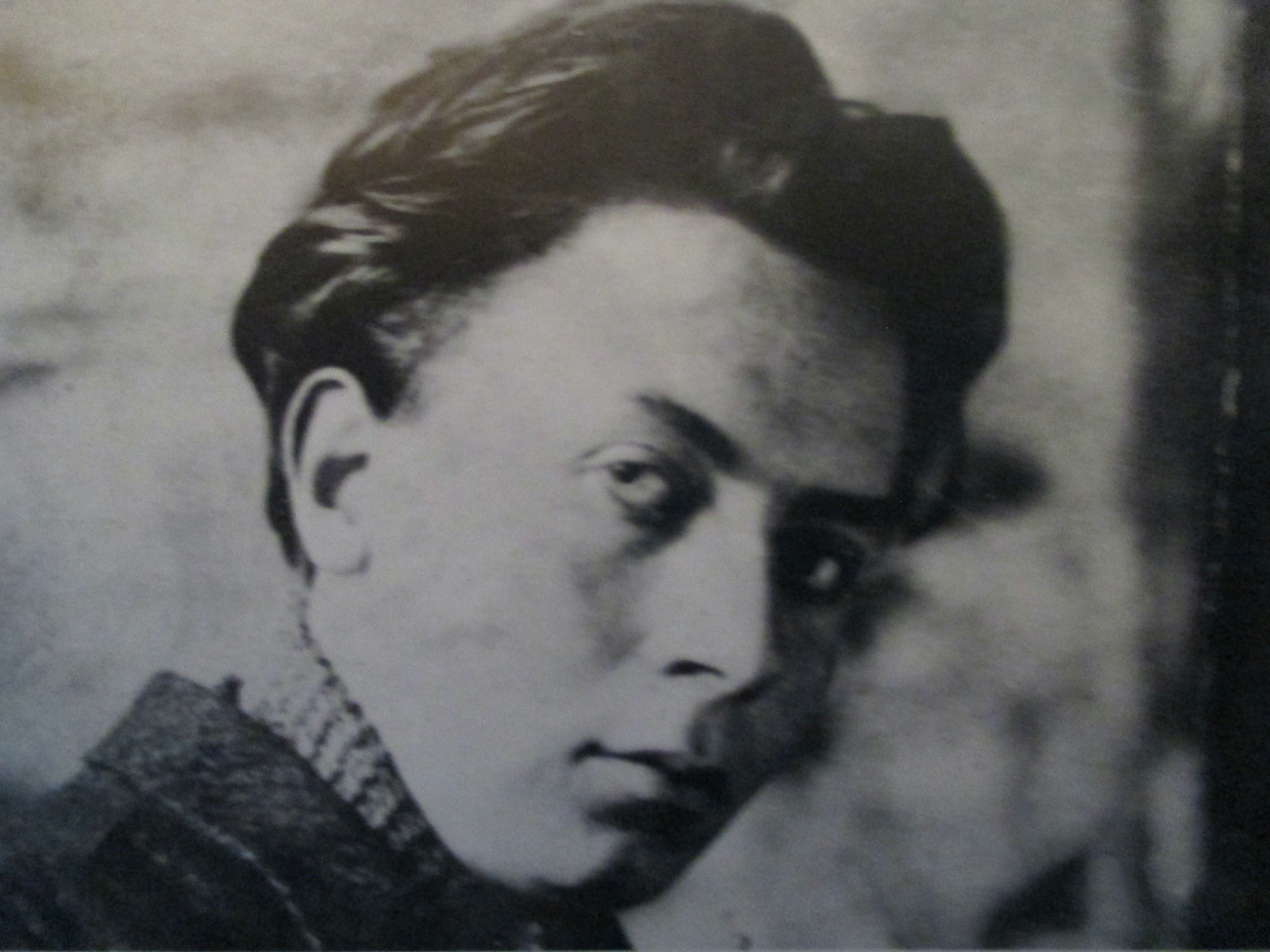
Robert Delaunay, despite having little formal art training beyond an apprenticeship with a stage-set designer, developed a sophisticated and influential style by studying color theory, particularly the work of French chemist Michel Eugène Chevreul and its application by the Neo-Impressionists. His wife, Sonia Delaunay—an accomplished painter and textile designer—was crucial in shaping his early exploration of collage and abstraction.
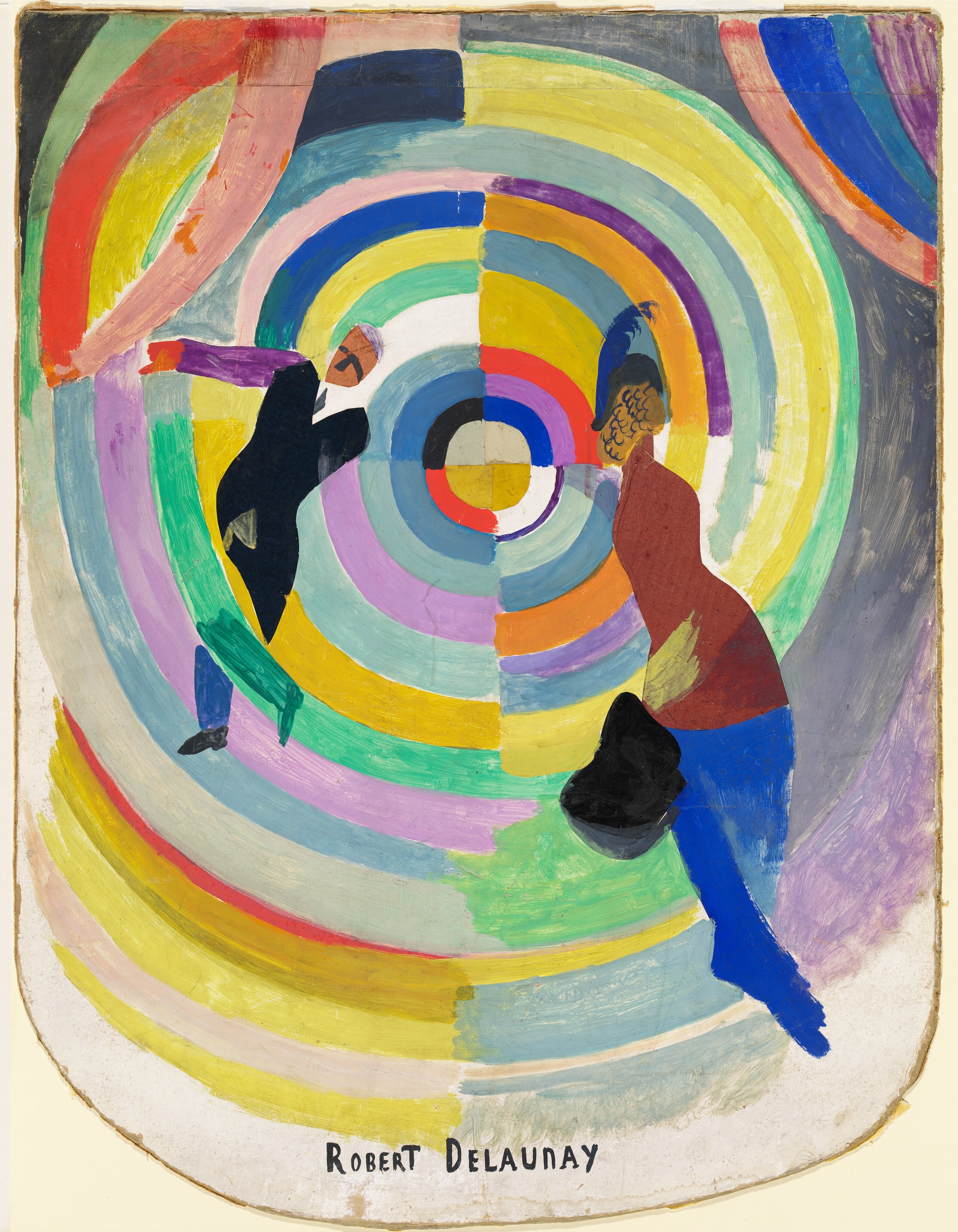
The painting we present today draws from a sensational newspaper illustration of a political assassination: Henriette Caillaux, wife of French Finance Minister Joseph Caillaux, shot and killed Gaston Calmette, editor of the newspaper Le Figaro, in 1914. The cover image of the illustrated supplement to the newspaper Le Petit Journal shows the dramatic aftermath of the attack—Mme Caillaux stepping forward, Calmette collapsing, and a blazing central flash. Delaunay abstracted the scene but preserved key visual cues. He used collage elements to emphasize the figures and explosion, arranging them along a vertical and horizontal axis that captures their fatal confrontation. Concentric circles—recalling targets or the sight of a weapon—convey the painting’s tension, while swirling background patterns suggest motion, even dance, perhaps inspired by his visits with Sonia to the Bal Bullier dance hall between 1912 and 1914.
Delaunay's use of concentric colored forms anticipated the visual strategies of later American artists such as Jasper Johns, Kenneth Noland, and Frank Stella. While those painters largely removed political meaning from their work, however, Political Drama shows a complex dialogue between abstraction and narrative. Early photographs of the piece show the title inscribed at the top and Delaunay’s name at the bottom—details later cropped, possibly in an effort to shift the work more fully into the realm of pure abstraction.
P.S. If you enjoy reading stories about art from different times and regions around the world, subscribe to the DailyArt Magazine newsletter and get them delivered straight to your inbox! And if you’re building something meaningful in the art space, we can help bring it to the right audience. See how we can support your mission.