
 Edward Burne-Jones
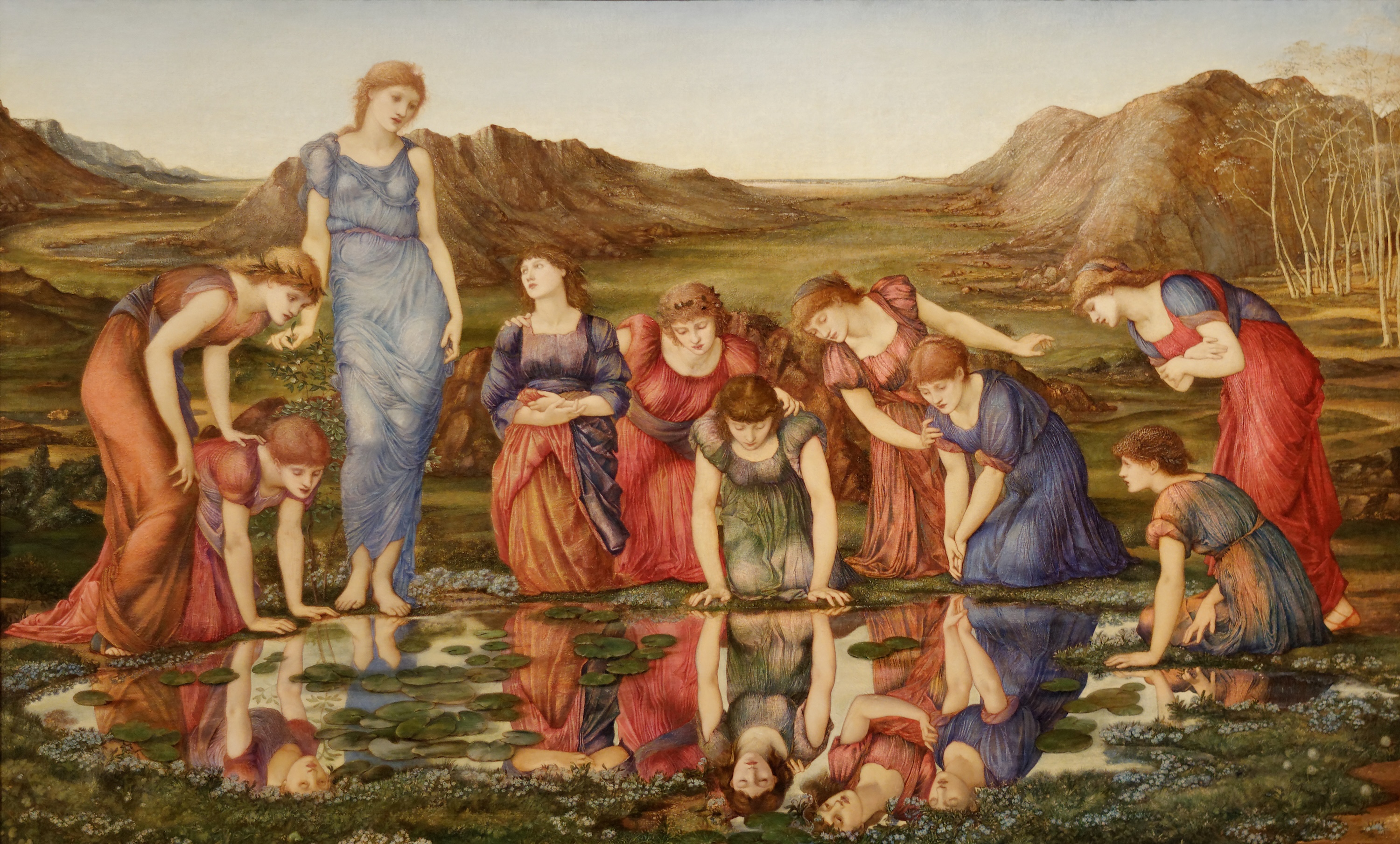
A prominent member of the Pre-Raphaelite movement, founded in England in 1848, Sir Edward Burne-Jones in the 1860s became a leading figure in the rise of Aestheticism—a movement that celebrated beauty and art for art’s sake. This composition exemplifies that ethos, presenting an exaltation of idealized beauty and aligning its atmosphere with the sensibilities of late Victorian art.
Burne-Jones minimizes narrative content, instead arranging poetic, dreamlike figures in a linear procession reminiscent of a Greek frieze. Clad in pseudoclassical garments, the figures we see evoke a timeless, mythic world. Rather than imitating the formal style of the Renaissance, Burne-Jones aims to capture its spirit. The influence of the Quattrocento's art, particularly Sandro Botticelli's masterpieces, is evident in the emphasis on decorative harmony and the wistful evocation of a bygone era.
This work was originally conceived as an illustration for The Hill of Venus, a section of William Morris’s epic poem The Earthly Paradise, which was inspired by the medieval legend of Tannhäuser, a knight and poet who found the Venusberg, the subterranean home of Venus, and spent a year there worshiping the goddess.
P.S. If you'd like to learn how the Renaissance shaped art history, enroll in The Art of Renaissance Florence, our online course.
P.P.S. Step into a dreamy medieval world of love and legends. Explore 5 romantic paintings by Burne-Jones!