
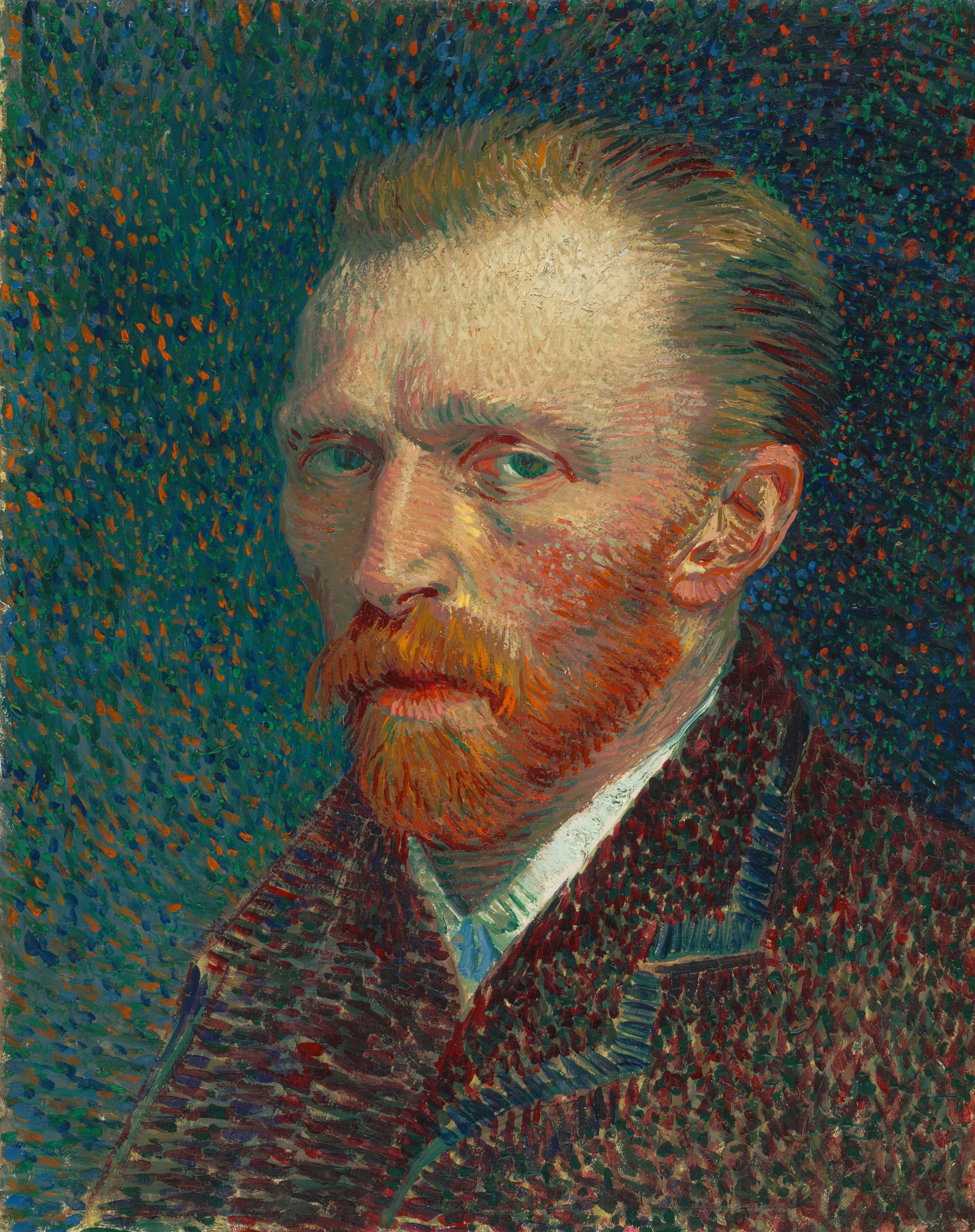
 Vincent van Gogh
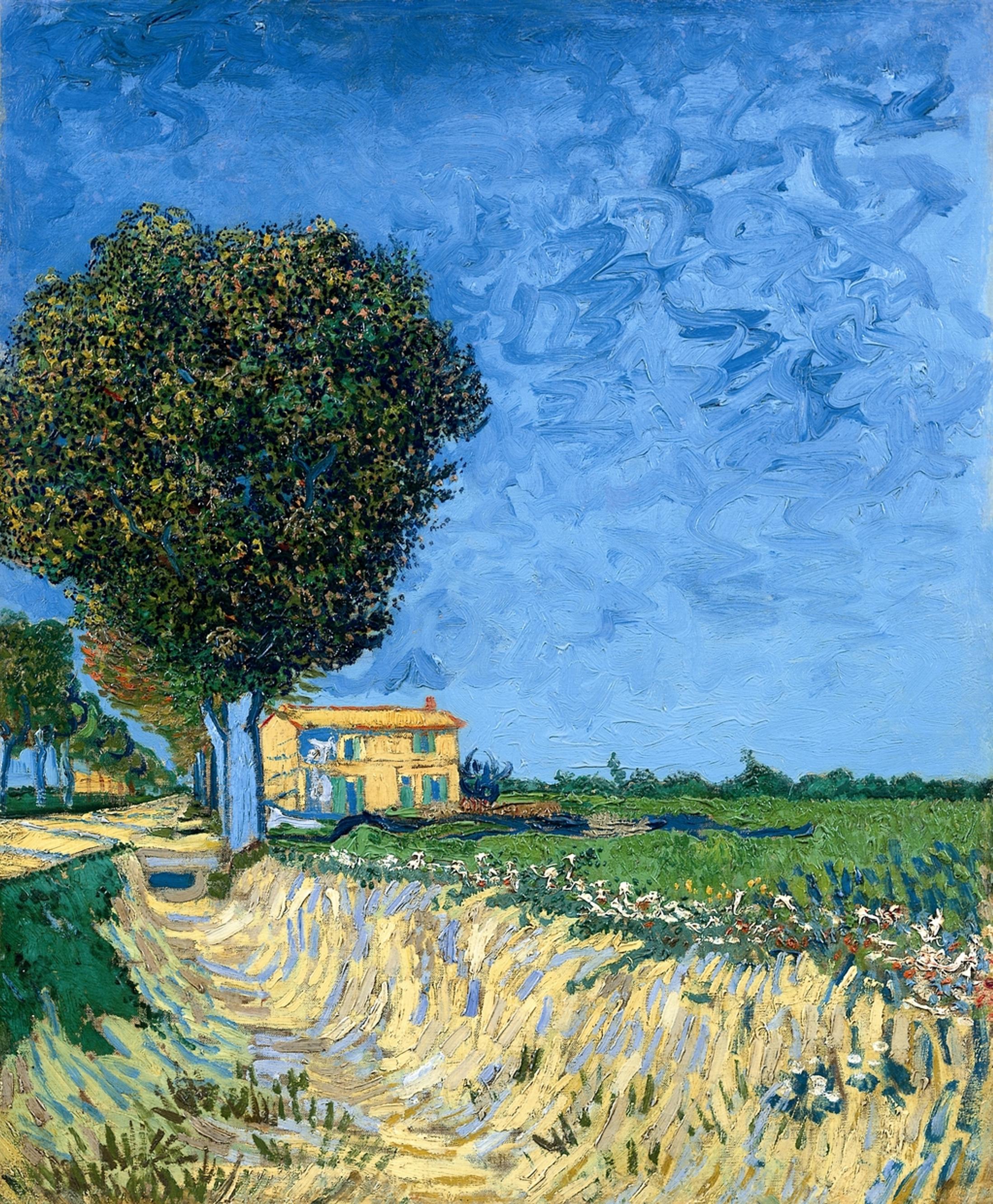
Let's start a new month with a beautiful painting by Vincent van Gogh.
Did you know that Van Gogh's path to art was anything but straightforward? He tried his hand at various professions (including teaching and lay preaching) before discovering painting at 27.
In 1880, he began developing his drawing skills, but his dark, rural motifs received little appreciation. During his time in Paris, he engaged with other modern artists who inspired him to create more colorful works. It wasn't until 1888 in Arles (in the south of France), however, that he developed the vibrant painting style for which he is now famous, marked by bold colors and short brushstrokes. It was there that he truly discovered color, writing in a letter: "There is no blue without yellow and without orange, and when you add blue, you must put yellow in with it, and orange too, right?" The painting we present today was created in Arles.
The color yellow seemed to hold special significance for him. In the “Yellow House” where he lived and worked in Arles, he made several attempts to establish an artists’ collective, all of which ultimately failed. Nonetheless, during his 15-month stay, he produced around 300 paintings before admitting himself to a psychiatric clinic. He later moved to Auvers-sur-Oise, an artists’ village near Paris, where he devoted himself entirely to painting despite ongoing health issues. On July 29, 1890, he died from a gunshot wound.
During his lifetime, van Gogh sold only a few paintings. His brother Theo supported him throughout his life—not only financially, but also by providing him with art supplies. As an art dealer, Theo would frequently “buy” Vincent’s works to help sustain him.
Have a great August! :)
P.S. Van Gogh’s years in Arles changed art forever. Learn more about his style in our online course: Post-Impressionism 101. :)
P.P.S. Want to test your knowledge on Vincent van Gogh? Take our Van Gogh QUIZ!