
 Horace Pippin
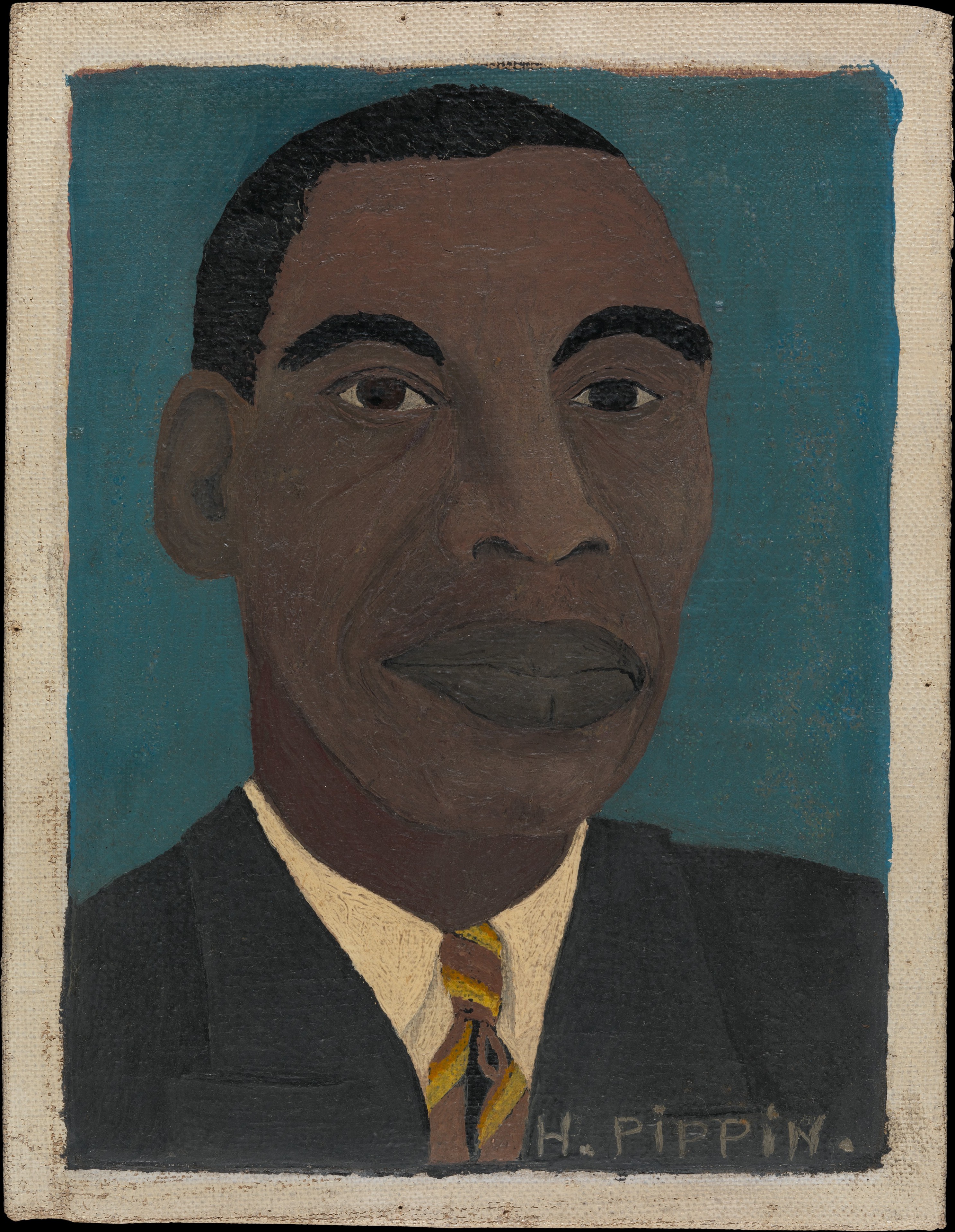
Horace Pippin was an American painter who painted a range of themes, including scenes inspired by his service in World War I, landscapes, portraits, and Biblical subjects. Some of his best-known works address the U.S.'s history of slavery and racial segregation. Pippin, throughout his career, also painted animals, often incorporating them into scenes that reflected his personal experiences and cultural context.
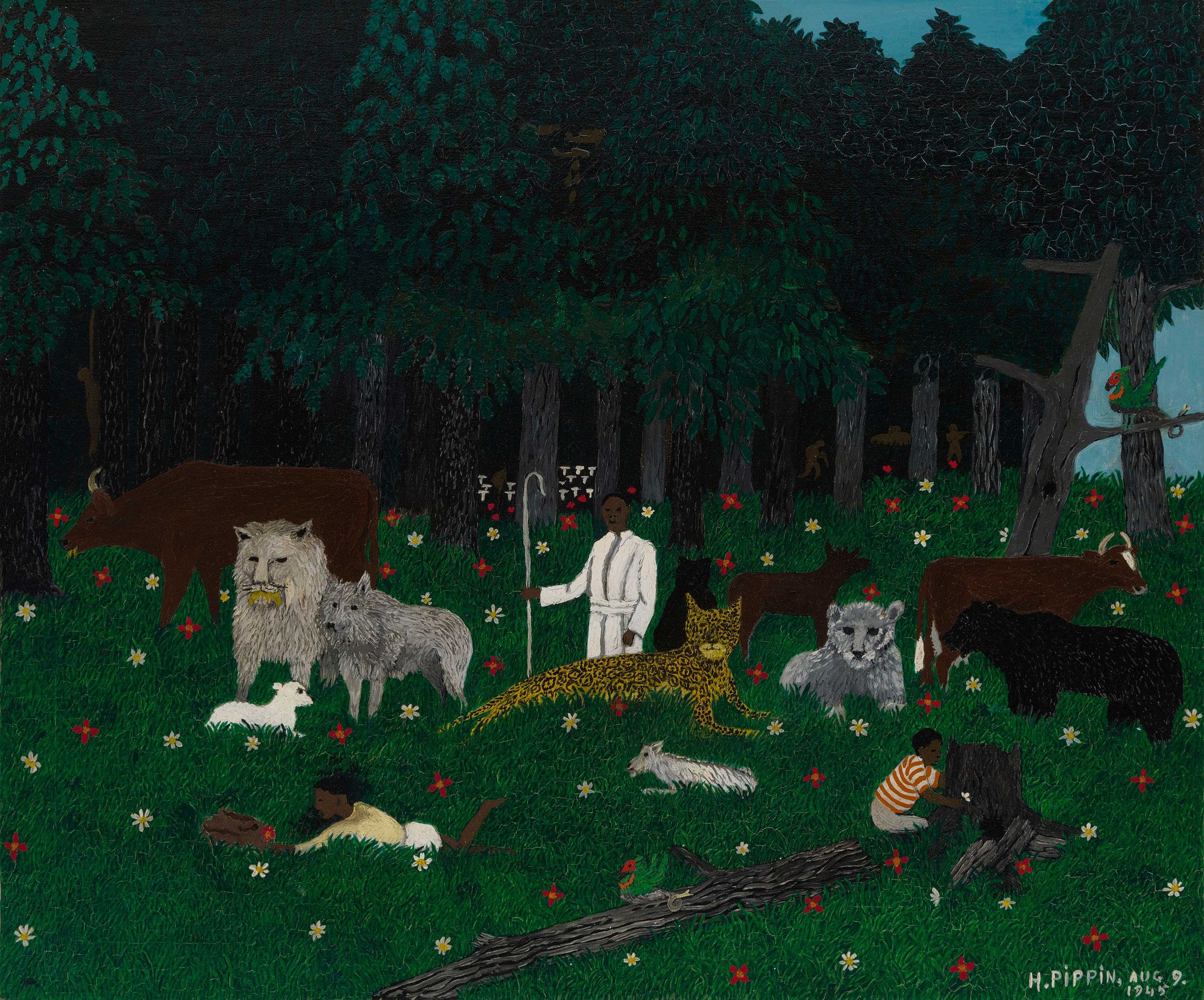
At first glance, today's painting appears to be idyllic scenes of harmony in Paradise. But closer inspection reveals dark details of war and racial violence in the shadowy forest. Holy Mountain III, part of a four-painting series, contrasts a serene landscape with grim reality—a lynched figure hangs from a tree as soldiers clash in the distance.
Beyond the peaceful foreground looms a dark forest, and the trees conceal nightmarish destruction. Tanks, soldiers, and white grave markers emerge through the gloom. The dozens of red wildflowers in Holy Mountain III are poppies, the traditional emblem of the World War I dead.
Even the dates on these paintings are dark reminders of war. The inscription on today's painting (August 9, 1945) marks the bombing of Nagasaki.
P.S. Read the incredible story of Horace Pippin—one of America's most fascinating self-taught artists.
P.P.S. Today is World Animal Day! On this occasion, don't miss our Animals in Art - 50 Postcards Set. :)