
 Artemisia Gentileschi
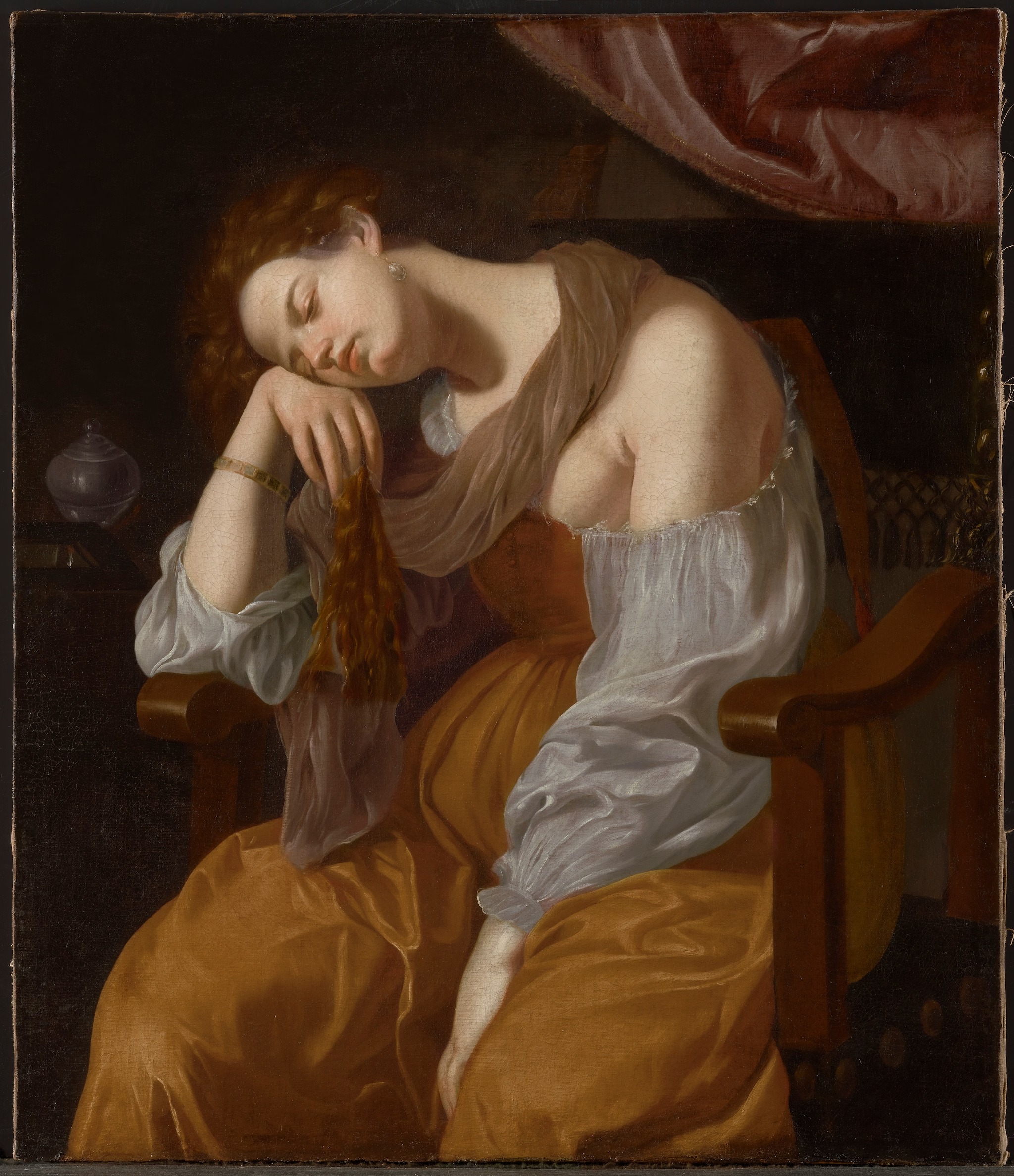
Monday, it is. Let's sigh a little with Artemisia Gentileschi's Mary Magdalene.
Gentileschi, one of the most significant and accomplished Italian painters of the 17th century, stands as an enduring symbol of perseverance, determination, and artistic triumph in the face of adversity. Trained in Rome in the workshop of her father, Orazio Gentileschi—a close associate and follower of Caravaggio—Artemisia forged her own path with remarkable independence and resolve.
Like Caravaggio, she often returned to the figure of Mary Magdalene, reimagining the saint’s spiritual awakening through her masterful handling of light and shadow and a profound sense of physical presence. In this work, Mary Magdalene’s eyes are closed as she gently touches a cascade of auburn hair. On the table to the left, an ointment jar and a small mirror lie abandoned—symbols of vanity, now cast aside. Along with her bracelet and pearl earring, these objects identify her as the saint who has renounced her life of luxury to devote herself to Christ, turning inward in repentance and contemplation.
Oblivious to her beauty, she transcends the material world, entering a state of deep spiritual reflection. The painting’s sensuality not only enriches the narrative of Mary Magdalene’s conversion but also reveals Artemisia’s gift for evoking a powerful emotional connection between subject and viewer. In contrast to her dramatic depictions of heroic women—such as Judith or Lucretia—this Magdalene captures a quiet, intimate moment of penitence.
Discover 10 masterpieces by Artemisia Gentileschi that prove why she is among the most important artists of the Baroque era.