
 Caspar David Friedrich
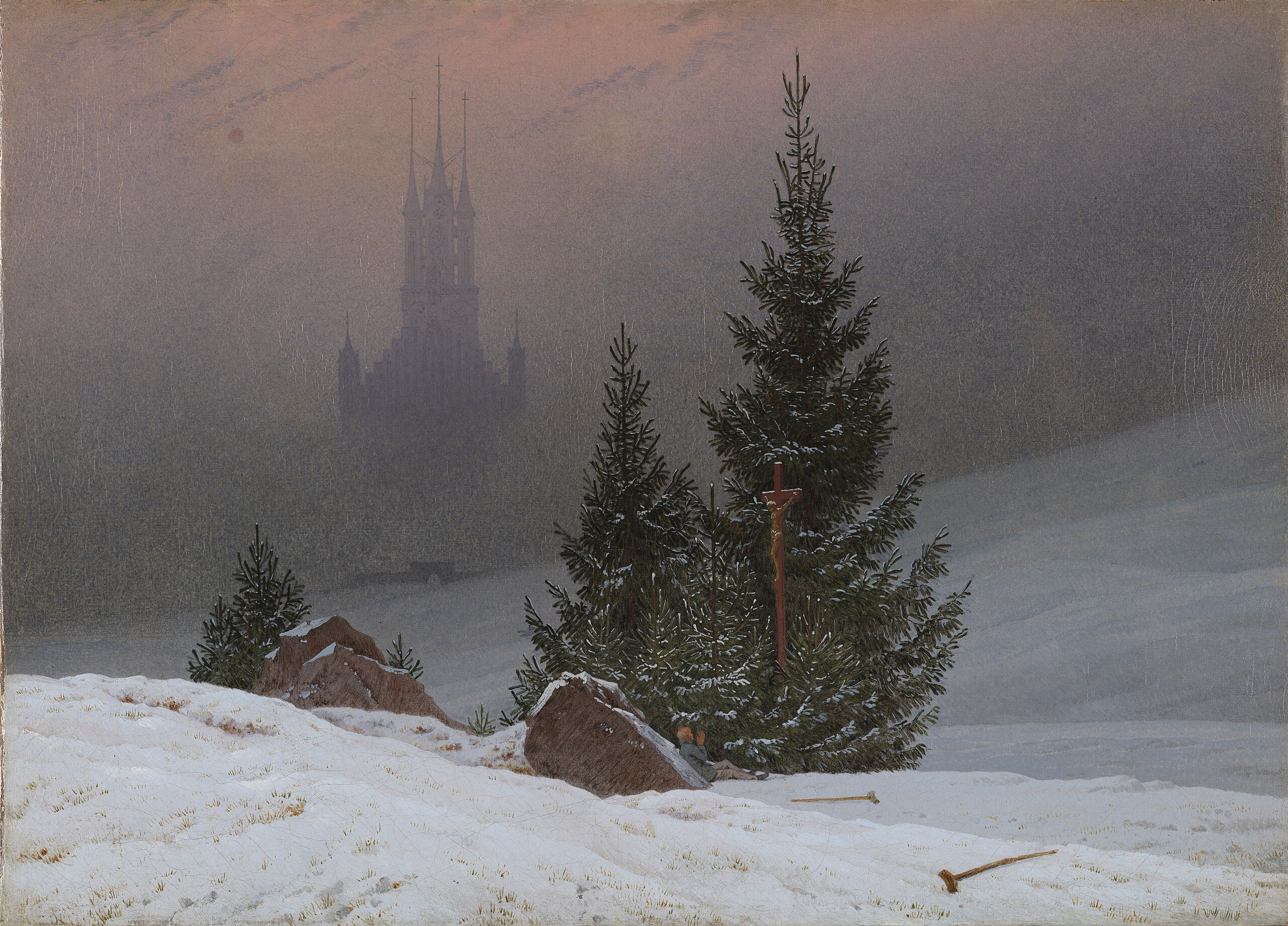
In a snow-covered landscape, a man has cast aside his crutches and sits in prayer before a radiant crucifix sheltered by three fir trees, symbolizing the Holy Trinity. In the misty distance, the faint outline of a Gothic cathedral rises, its spires mirroring the vertical forms of the trees.
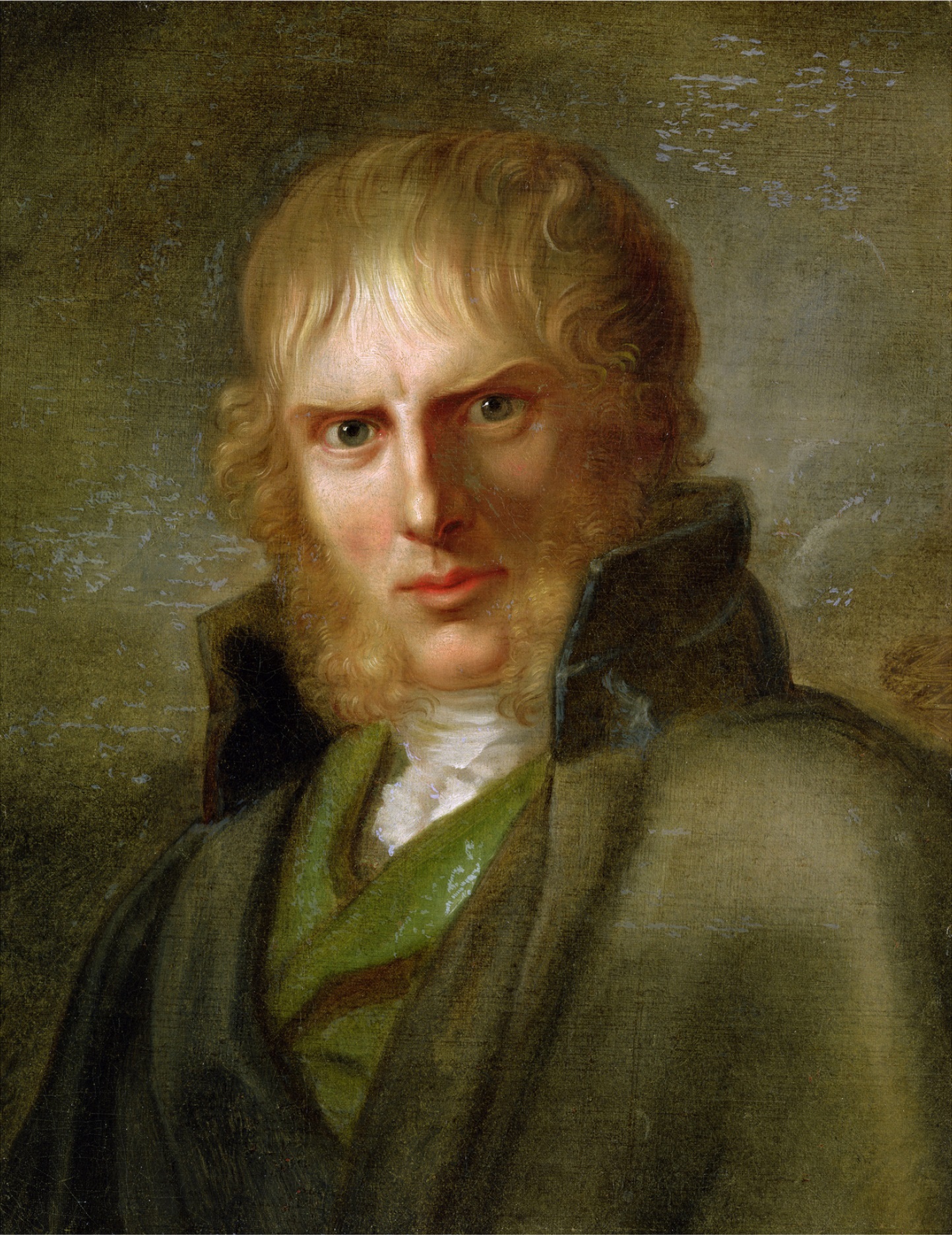
This work was created by Caspar David Friedrich, one of the foremost artists of the German Romantic movement. Born in the Baltic seaport of Greifswald and trained at the Copenhagen Academy, Friedrich devoted himself to landscape painting—though not as mere depiction of nature. As he wrote, his goal was not “the faithful representation of air, water, rocks and trees,” but rather “the reflection of [the artist’s] soul and emotion in these objects.” Over time, Friedrich infused his landscapes with deep symbolism: mountains, seas, trees, and even the changing seasons and times of day came to express spiritual meaning and the inner life of the soul. The painting we present today is thought to be a companion piece to another painting of the same title and date, housed in the Staatliches Museum in Schwerin. There, a lone figure on crutches wanders among withered oak trees beneath a dark, oppressive sky—a vision of desolation. By contrast, the National Gallery version transforms suffering into faith and renewal, offering a moving vision of hope and spiritual resurrection.
P.S. Here's Caspar David Friedrich in 10 paintings—the face of German Romanticism!