
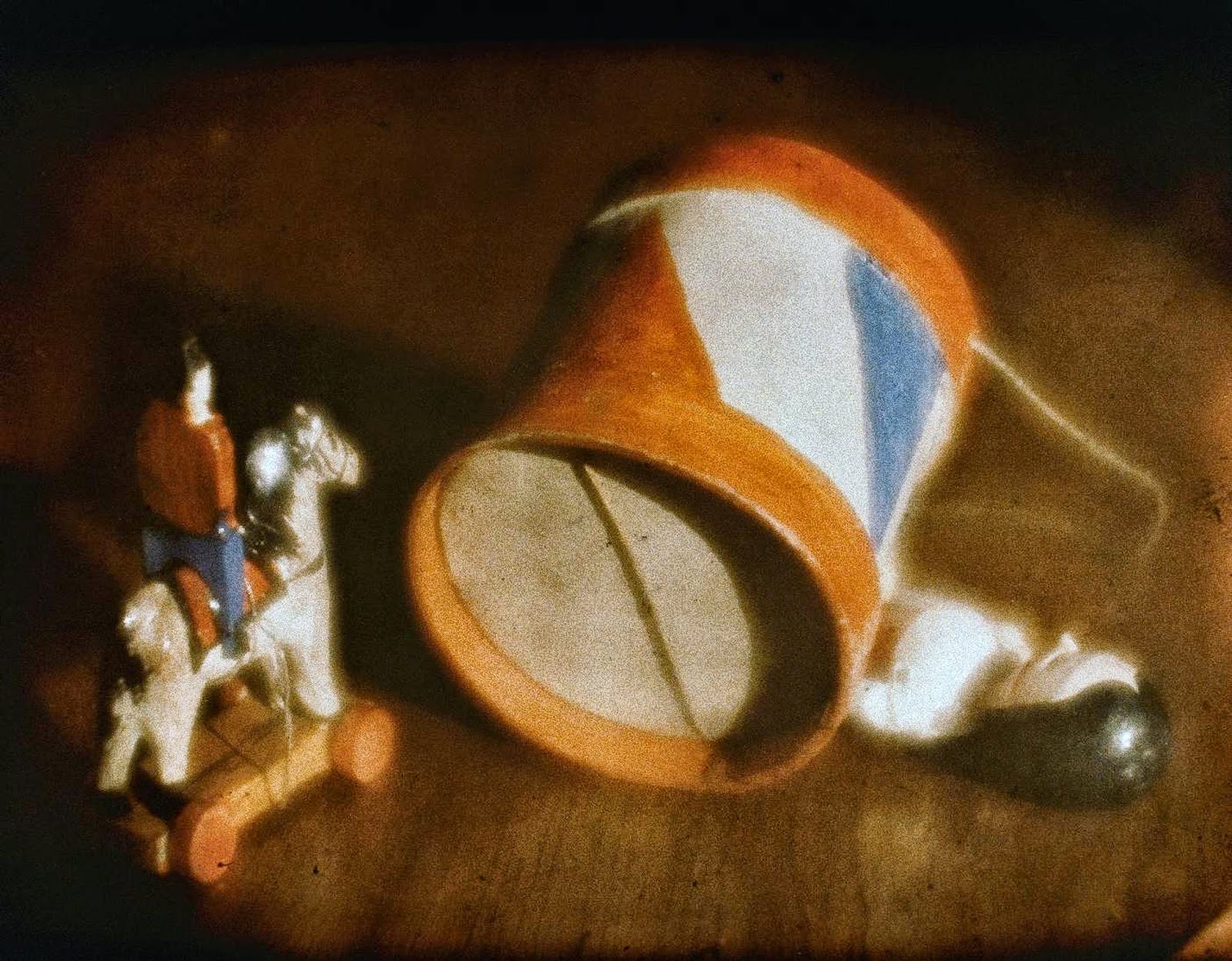
 Heinrich Kühn
Heinrich Kühn was a German-Austrian photographer and a pioneering figure in photography. Together with Hans Watzek and Hugo Henneberg, he was part of the Wiener Kleeblatt (“Viennese Cloverleaf”) artist group. With his pictorialist photographs, influenced by Impressionism, Kühn became one of the most important representatives of art photography, the first photographic style to establish itself as an independent art form.
Kühn rejected the manual manipulation of images, a popular technique at the time. Instead, he sought painterly effects purely through photographic means, for example, by using noble printing processes. He often produced up to a hundred negatives of a single subject to achieve the desired result.
Today's photo may seem unusual at first glance. Why? It was done using the photochrom technique, a process of hand-coloring photographs from a single black-and-white negative with subsequent photographic transfer onto lithographic printing plates. The process is a photographic variant of chromolithography (color lithography). Because no color information was preserved in the photographic process, the photographer would make detailed notes on the colors within the scene and use the notes to hand-paint the negative before transferring the image through colored gels onto the printing plates.
We hope you are having a calm and pleasant time under some Christmas trees. :)))