
 Kitagawa Utamaro
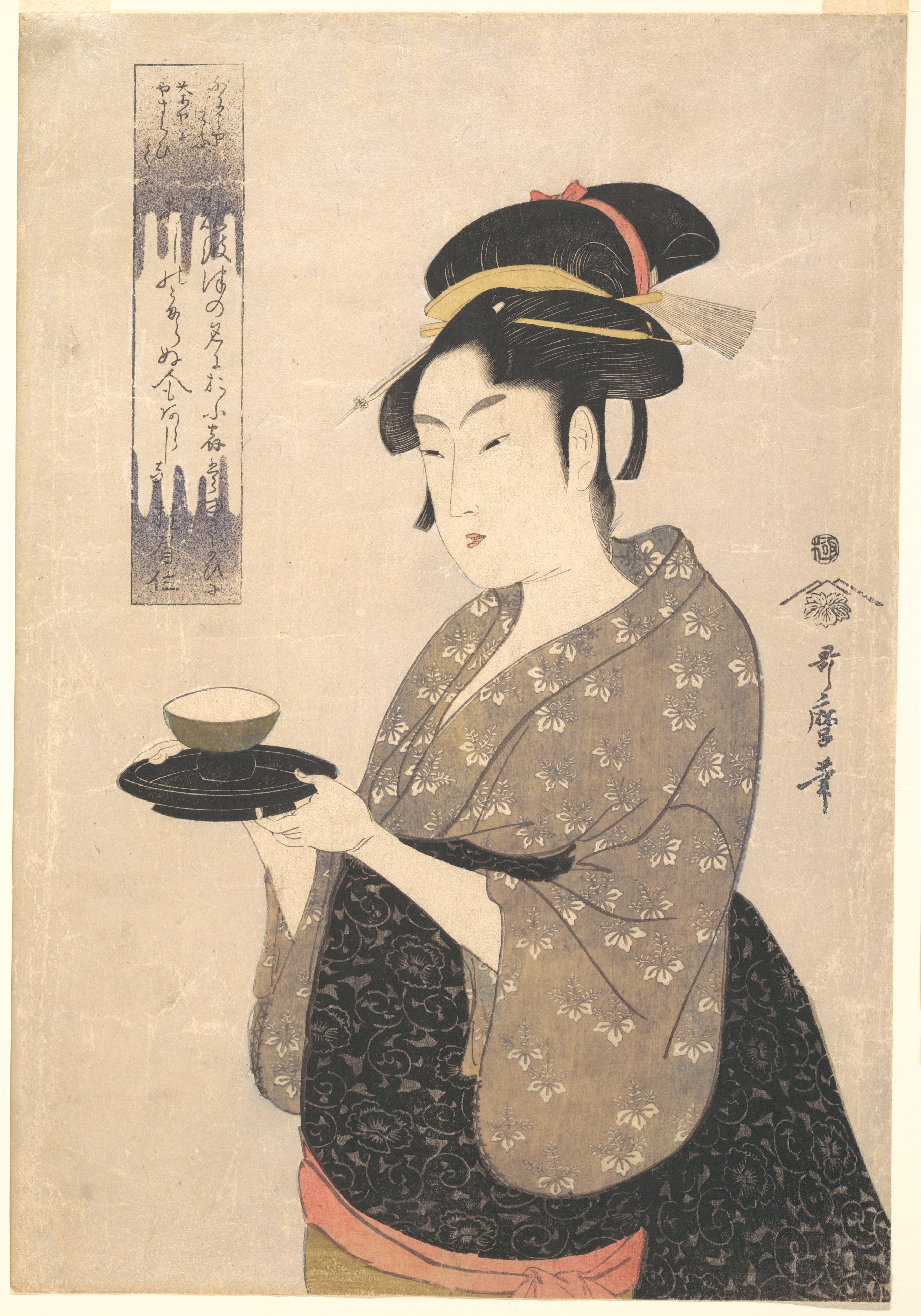
The beautiful woman depicted in today's masterpiece is Naniwaya Okita, a renowned teahouse waitress in Edo-period Japan, celebrated for her exceptional beauty and charm.
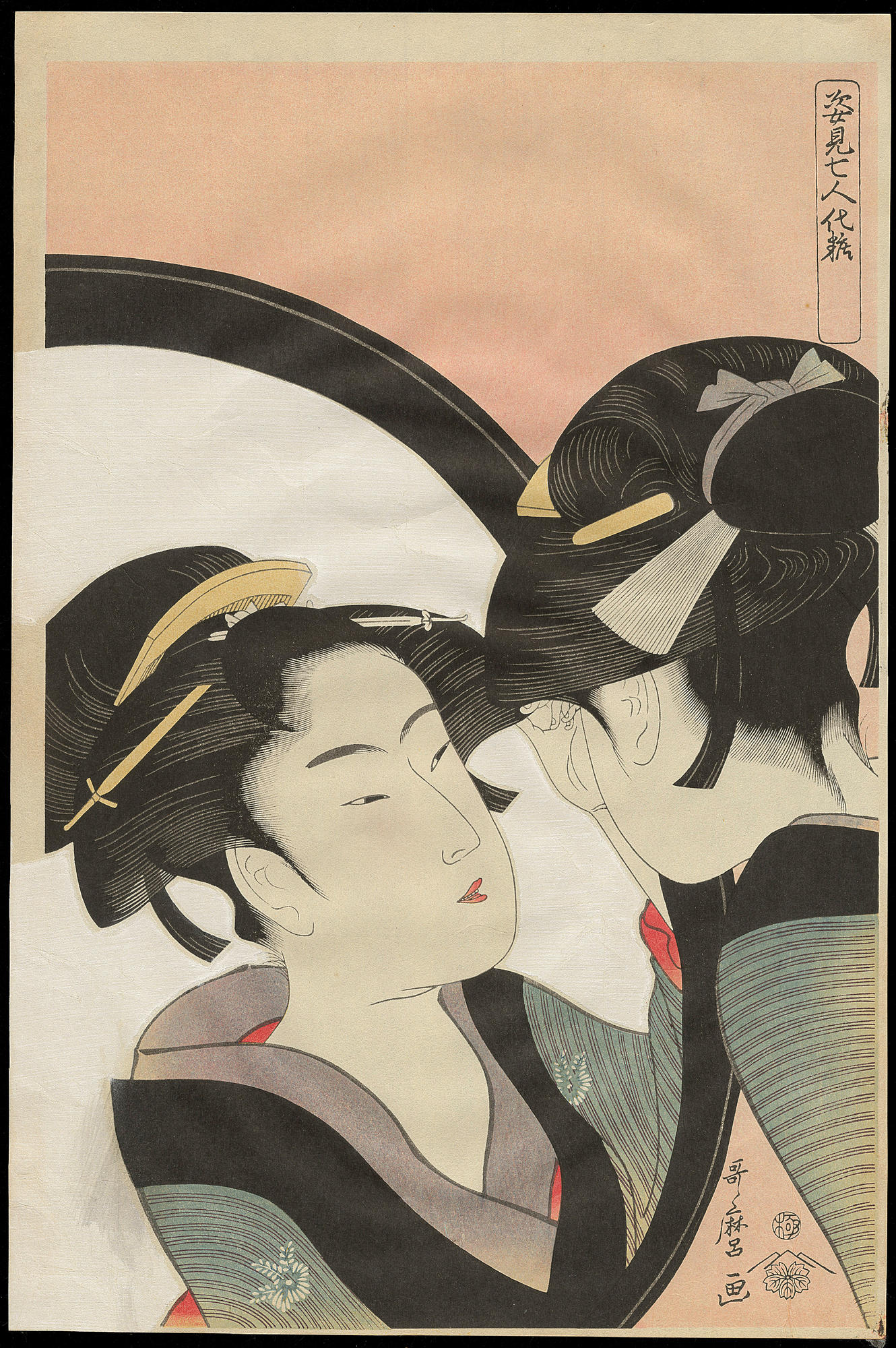
She worked at the Naniwaya teahouse in Edo (modern-day Tokyo), which became well-known largely because of her. Okita was a popular subject for ukiyo-e woodblock prints, particularly those by the great artist Kitagawa Utamaro in the late 18th century. Utamaro portrayed her several times, often idealizing her as the epitome of Edo grace and refinement.
In these prints, Okita appears elegant and self-possessed—an image of idealized feminine beauty rather than a literal portrait.
The poem on this print is signed Katsura no Mayuzumi, which can be translated as “Eyebrow Ink of the Katsura Tree.” This title evokes a poetic image and could metaphorically suggest refinement, beauty, or elegance. It leaves implicit the charms of the waitress:
While relaxing at a teahouse in Naniwacho,
No one can fail to stop in here
as they pass by the leggy weeds of Naniwa's straits
whatever his reason for coming.
P.S. Here's all you need to know about the Edo period!
P.P.S. We’re in love with Japanese art—that’s why you’ll find masterpieces like this one in our bestselling 2026 DailyArt Calendars. The New Year is just around the corner; order yours now and start 2026 surrounded by beauty and inspiration!