
 Otto Marseus van Schrieck
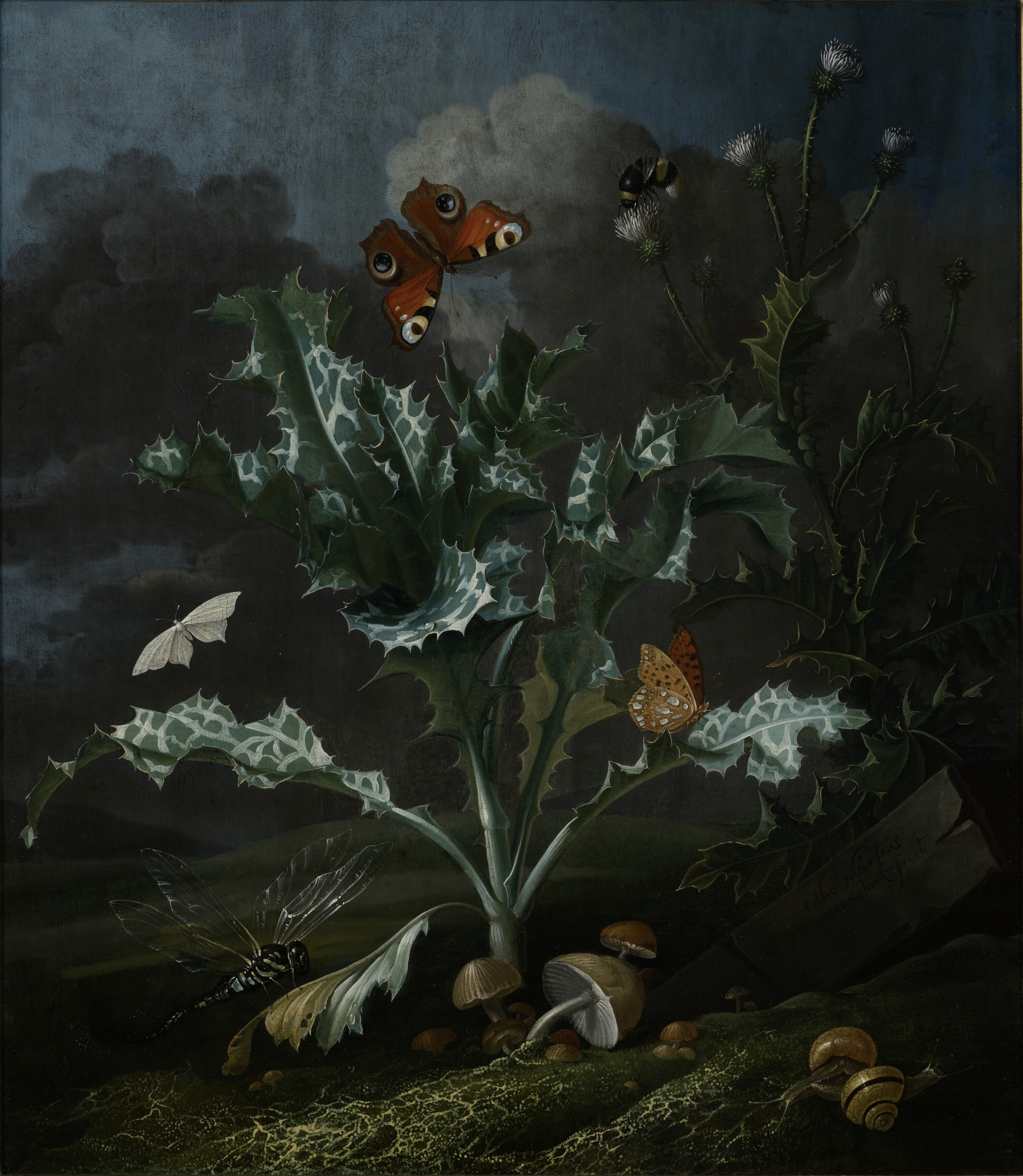
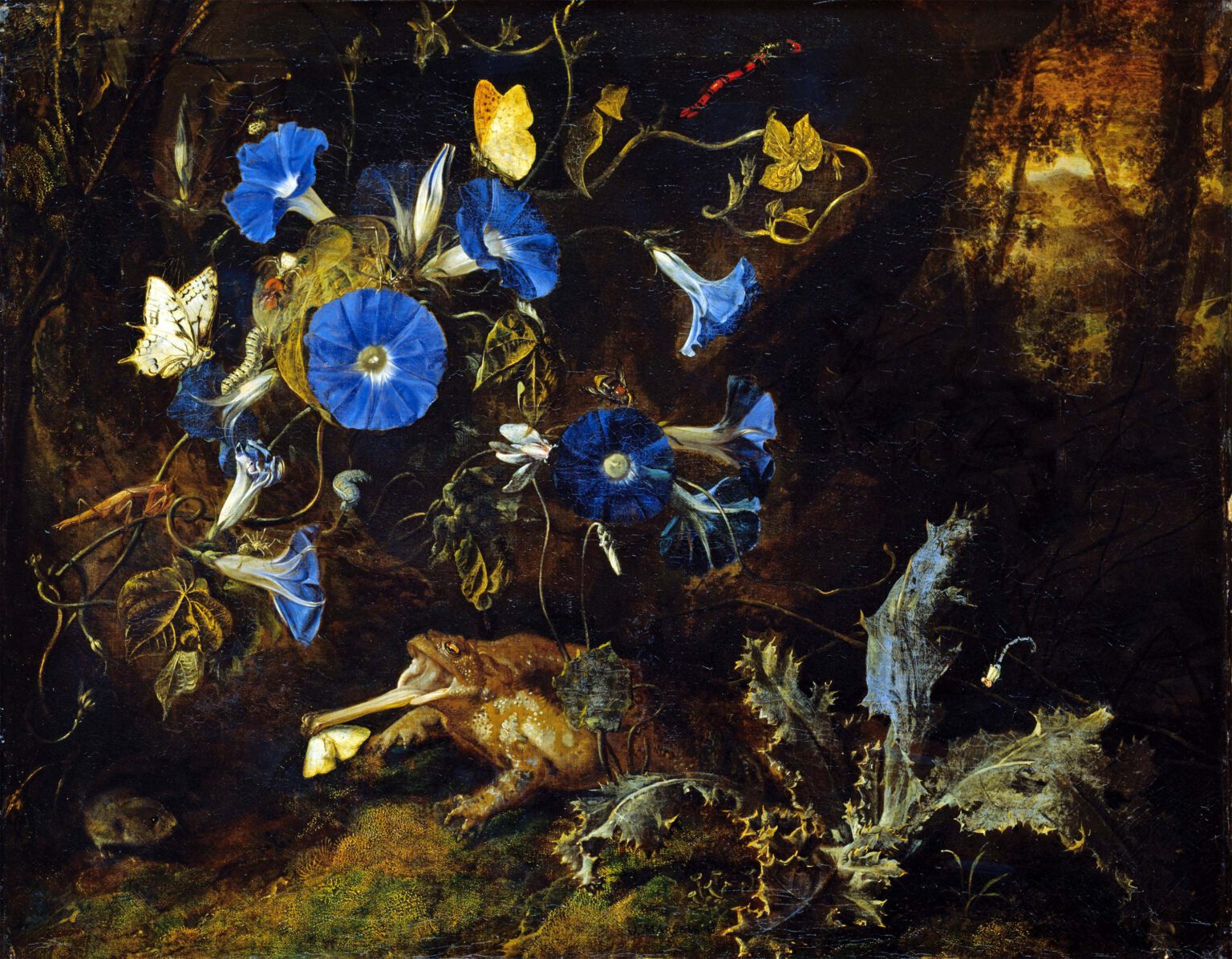
The painting is an example of a close-up view of nature, focusing the viewer’s attention on details of plants, insects, and other creatures living near the ground. Works of this type are known in Italian as sottobosco, meaning forest floor or undergrowth. The artist is Otto Marseus van Schrieck, whose work occupies a space between art and science. In addition to painting, he kept animals and conducted natural observations. His observations also contributed to the development of entomology, helping Johannes Swammerdam discover parasitic wasps.
Van Schrieck used painting to master the natural world. Through art, he transformed what might provoke fear or unease into a new aesthetic whole. Although his paintings contain many details that can be interpreted symbolically—such as the snake embodying evil or the butterfly symbolizing the soul—they are not moralizing. The distinctive value of his work lies in the balance he achieved between allegory and detached scientific observation.
Van Schrieck’s paintings were part of a broader 17th-century search for traces of God in the works of creation. At the time, the theory of spontaneous generation was still widely accepted; it held that lower forms of life, such as insects, frogs, or fungi, arose spontaneously from decaying matter. Van Schrieck and scholars associated with him challenged this theory. Their aim was to demonstrate that all living beings shared a common origin—that they were created by God and subject to the same laws of nature. The artist even planned to publish an illustrated natural history treatise, though he was unable to realize this ambition. Nevertheless, he left behind richly detailed works filled with hidden meanings, regarded as equivalent to scientific treatises and functioning as a kind of visual encyclopedia.
We present today's artwork thanks to the National Museum in Krakow, where the European Art Gallery was recently opened. It is full of the most interesting and best works of European painting and sculpture from the collections of the National Museum in Krakow, created between the 13th and 20th centuries. Take a look at some of its gems that are now on view!
P.S. Art is full of surprising creatures. Discover bugs and crawling critters in paintings!