
 Marianne von Werefkin
As it is Sunday, we continue presenting the masterpieces from the Lenbachhaus collection. Enjoy! :)
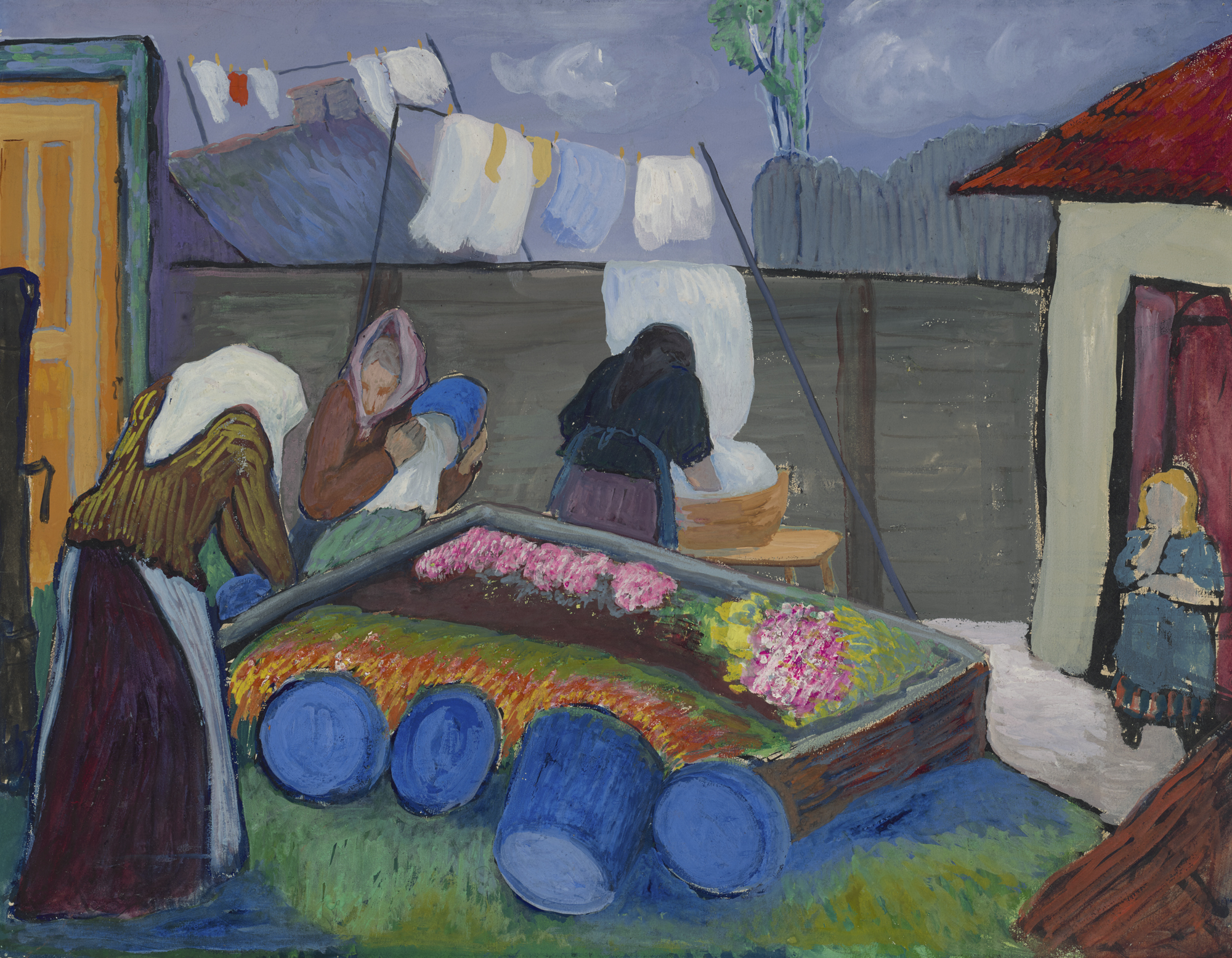
Three washerwomen are weighed down by the arduous work they perform in silence. The figure of a girl on the right presumably suggests the cross-generational continuity of this work. The four exist in their own spheres; Werefkin does not indicate whether the scene is set in rural Lithuania, where her family lives, or in the foothills of the Bavarian Alps, where she had been painting since around 1907. The toil, in any case, is the same everywhere.
What is striking is the palette, which combines pure colors with heavily mixed ones. The poet Else Lasker-Schüler wrote in a commemorative poem: “Marianne’s soul and her unruly heart like to play joy and sorrow together, as she so often paints melancholy in chirruping hues.” By 1909, when Werefkin painted this picture, she had come a long way. A wealthy daughter of the Russian aristocracy, she had studied with Ilya Repin in the 1880s. His naturalistic depictions of the poor peasantry aroused her lasting interest.
Through Repin, she was introduced to Alexej von Jawlensky. For roughly a decade, she resolutely dedicated herself to nurturing his creative development. She moved to Munich with him and repeatedly took him to France. Her Munich salon became a center of debate over the “art of the future.” After many years, she took up painting again, but now in a different stylistic vein. She began with sketches in gouache and colored pencils and, around 1907, started painting in tempera.
P.S. Explore the amazing Lenbachhaus collection through the eyes of people working in the museum. Here are Lenbachhaus staff picks!