
 Antoine Watteau
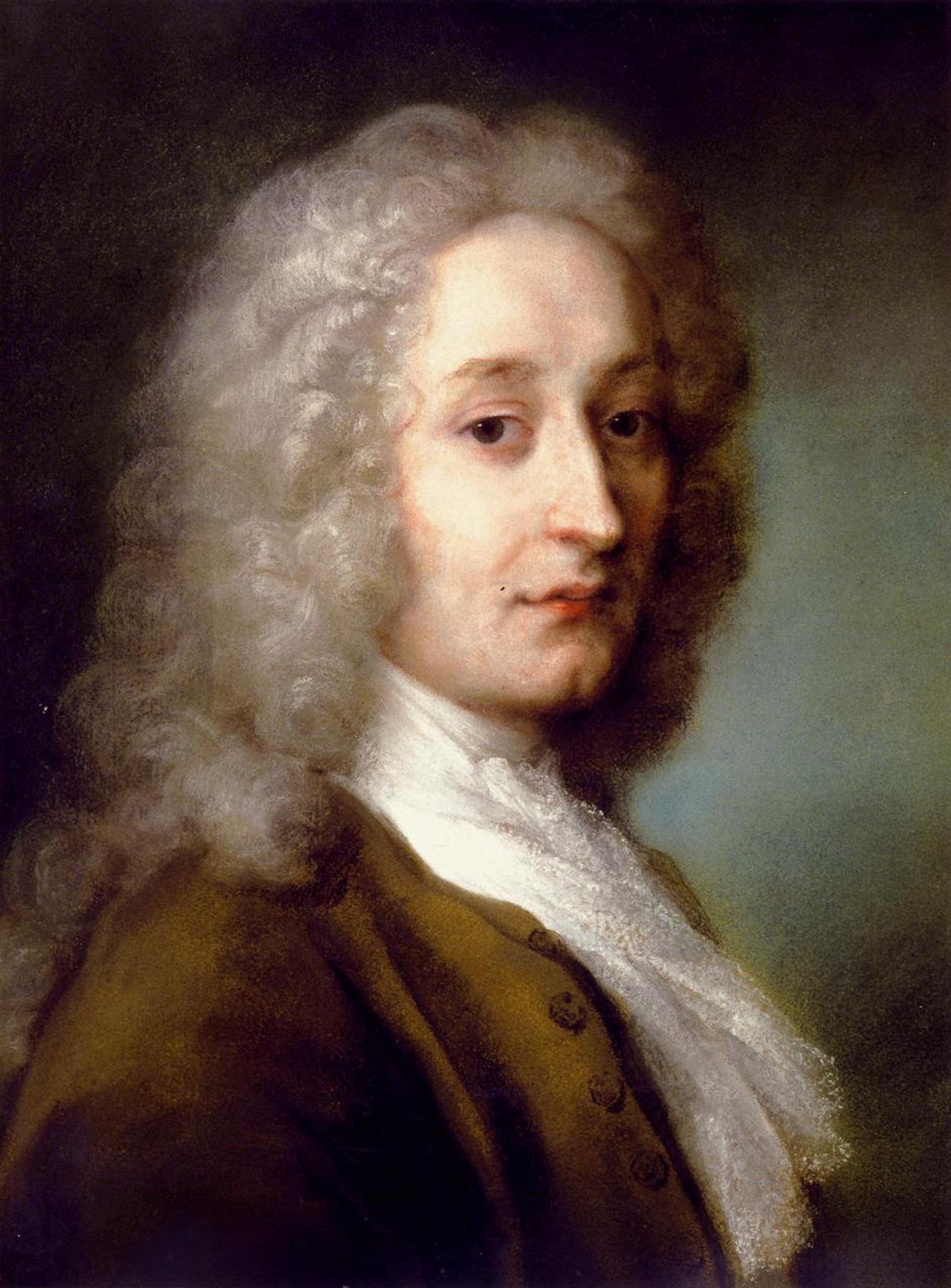
Jean-Antoine Watteau was a French painter and draftsman whose brief career spurred the revival of interest in color and movement. He revitalized the waning Baroque style, shifting it to the less severe, more naturalistic, less formally classical, Rococo.
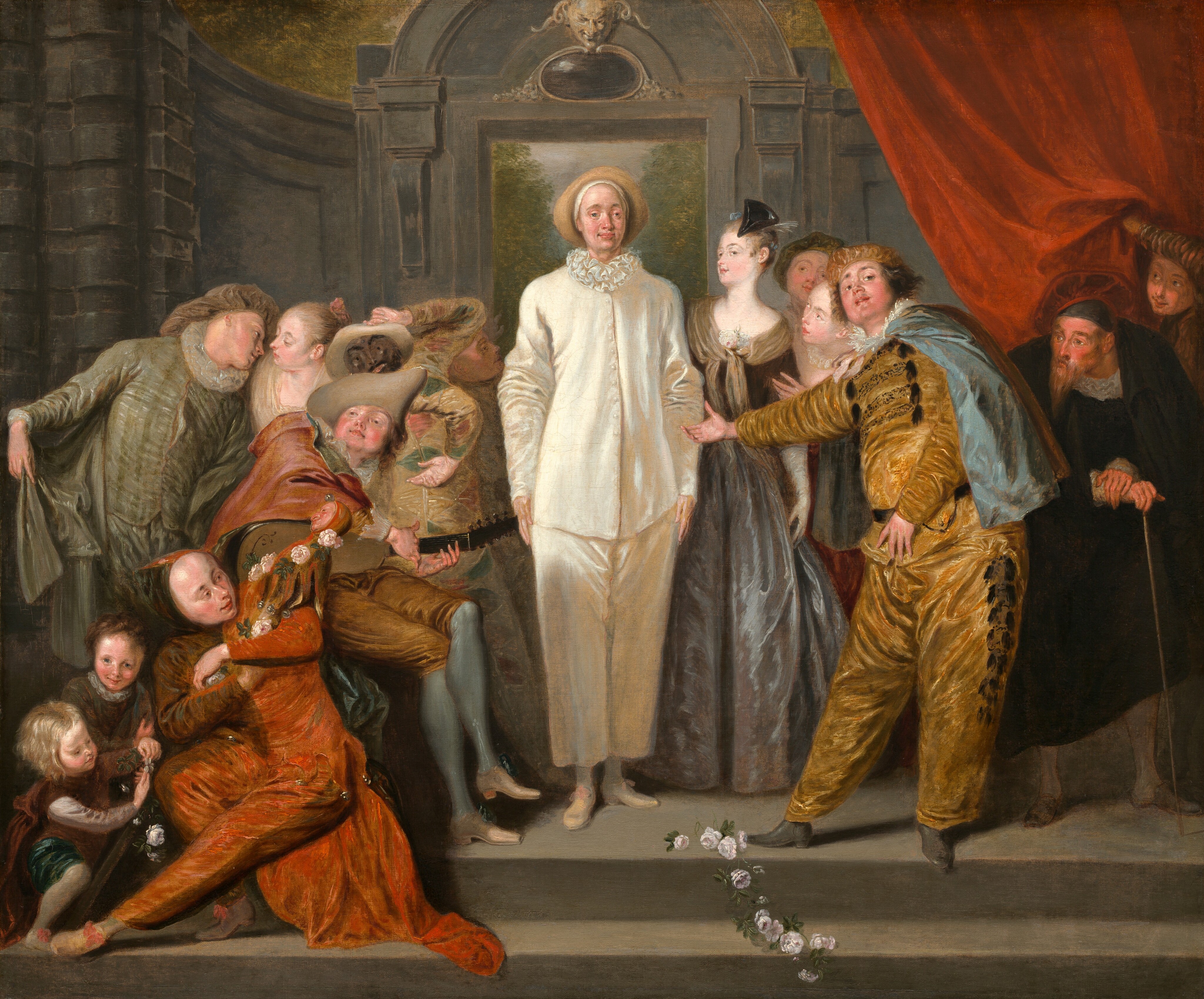
In the painting we present today, a troupe of actors gathers on stage to take a bow. They are costumed as stock figures from the commedia dell’arte, the slapstick theatrical tradition popular in 18th-century France. The performers continue to inhabit their roles, exchanging gestures and glances, animated and expressive—except for Pierrot, the lovesick clown at the center of the scene. Clad in luminous white, he stands motionless, a faint smile on his lips, his gaze unfocused. His expression remains unreadable.
An actor who refuses to perform, Pierrot becomes an enigma. Watteau was deeply intrigued by the blurred boundary between theater and life, between performance and reality. In this suspended moment, Pierrot invites us to reflect on who we are when we step beyond the roles assigned to us.
P.S. Here are 6 of the greatest Rococo artists you should know! For more stories about Watteau, see the articles below!