
 Lavinia Fontana
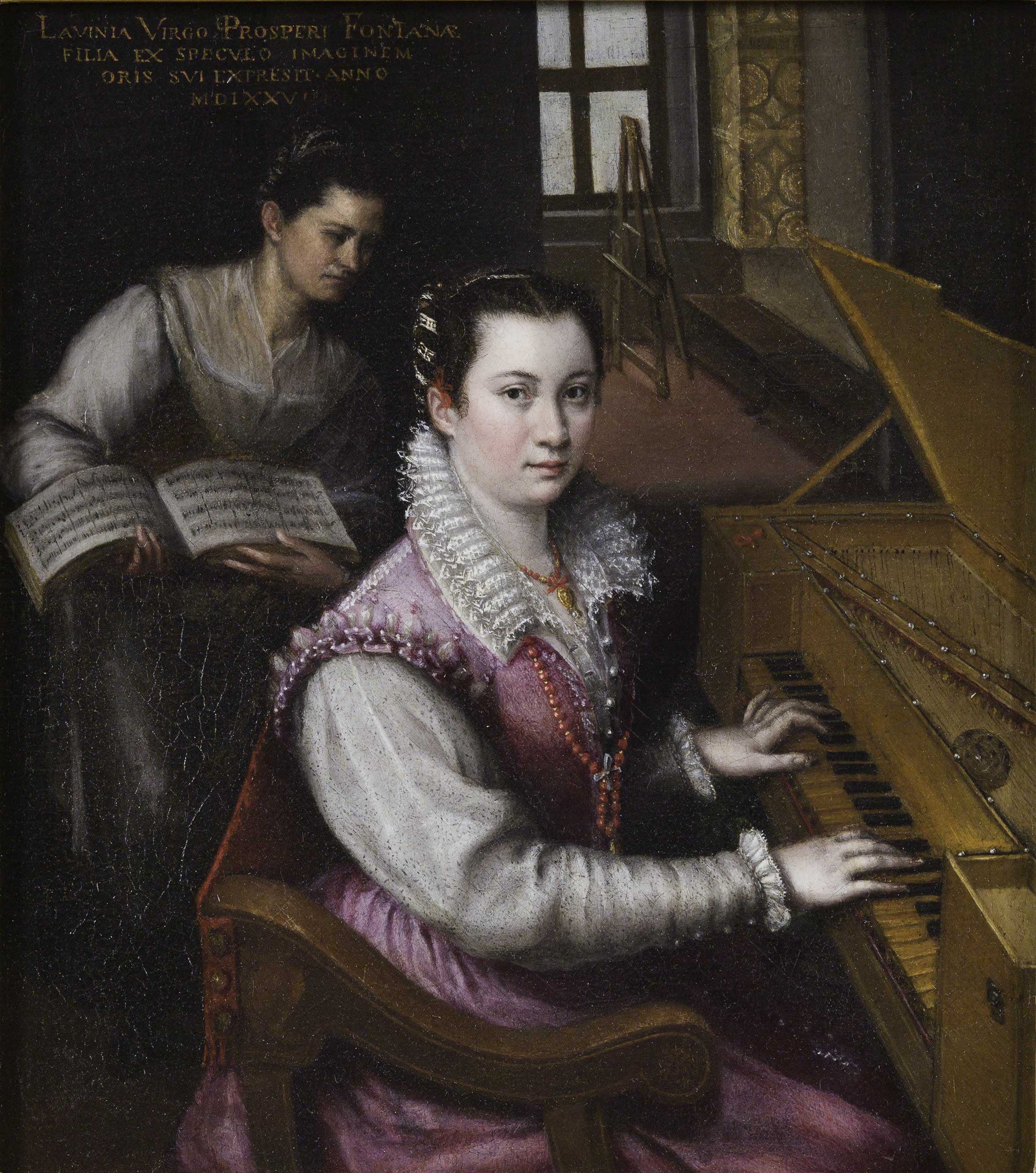
By 1577, when this self-portrait was painted, Lavinia Fontana stood at the threshold of a remarkable career. At just 24, she had trained in painting in her father, Prospero Fontana's, household workshop, studying prints after artists such as Raphael and Sebastiano del Piombo. This education prepared her to work not only in portraiture and devotional painting, but even in history painting—then considered a male domain. Thanks to her father’s efforts, she was already known within Bologna’s artistic and intellectual circles. The only serious obstacle to her success was her gender.
Like many early modern Italian women artists, Lavinia bypassed formal restrictions by learning at home. Yet while training was possible, professional independence was not: legal and social constraints prevented unmarried women from running workshops, signing contracts, or freely engaging with male patrons. Her earnings would legally belong to a male guardian. Recognizing both her talent and these limitations, Prospero sought a husband who would support rather than hinder her career.
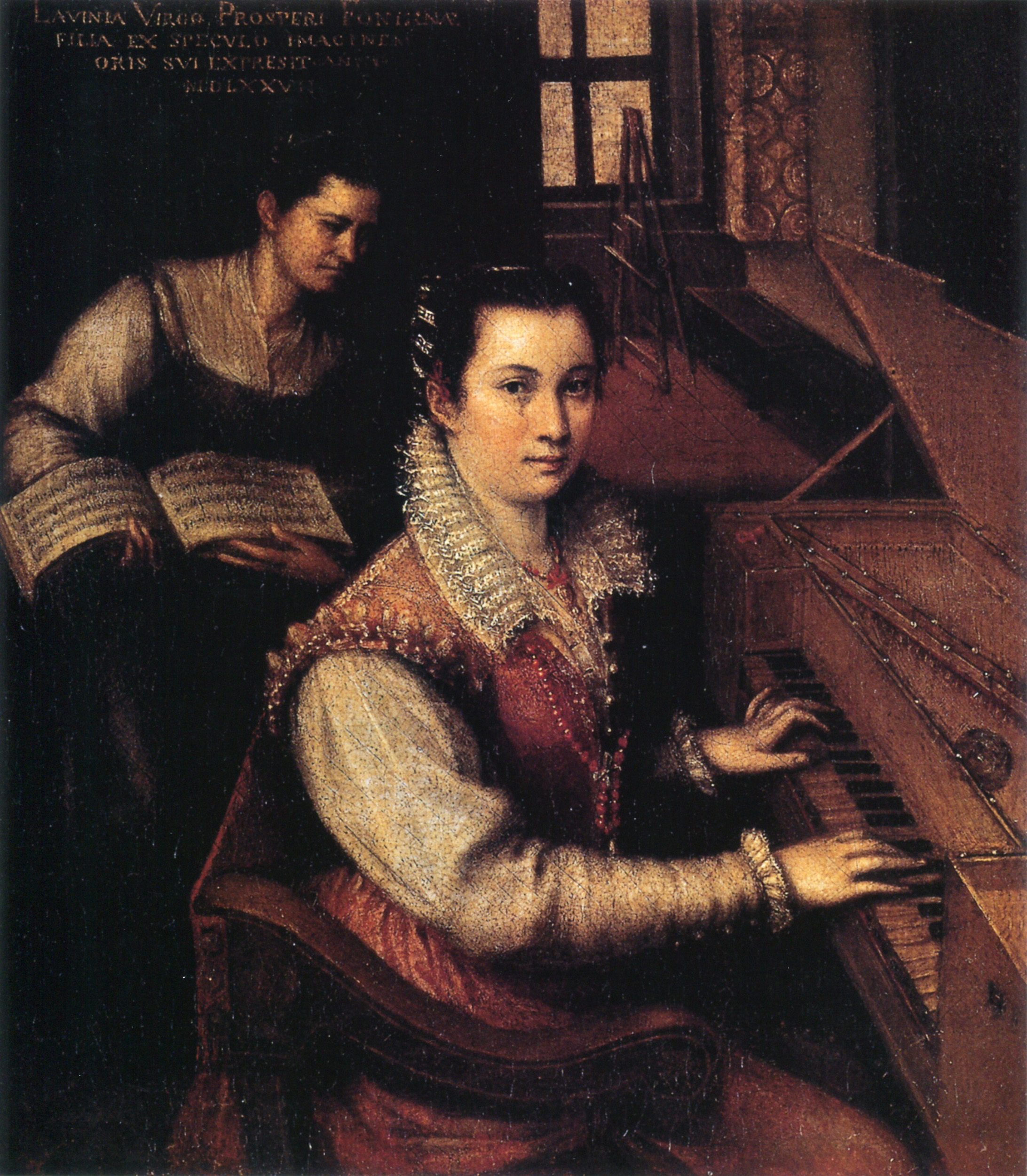
Self-Portrait at the Spinet was created specifically for marriage negotiations with Severo Zappi, whose son Giovan Paolo Zappi would become Lavinia’s husband. Although exchanging portraits was customary in elite betrothals, offering a self-portrait was exceptional. The painting presents Lavinia as an accomplished, cultured young woman—modest, chaperoned, and domestic—while subtly signaling her education, refinement, and future earning potential. Through carefully chosen symbols of love, learning, and virtue, the artist crafts an image that reassures a prospective family while quietly asserting her own ambition and intellect. In the end, her family relied on her career as a painter, she raised 11 children, and her husband served as her agent.
P.S. Lavinia Fontana appears in both of our Women Artists Postcards Sets, where you can explore more works by this remarkable Renaissance artist alongside masterpieces by women painters across the centuries.
P.P.S. Here are the 10 most famous self-portraits by female artists! Do you know all of them?