
 Unknown Artist
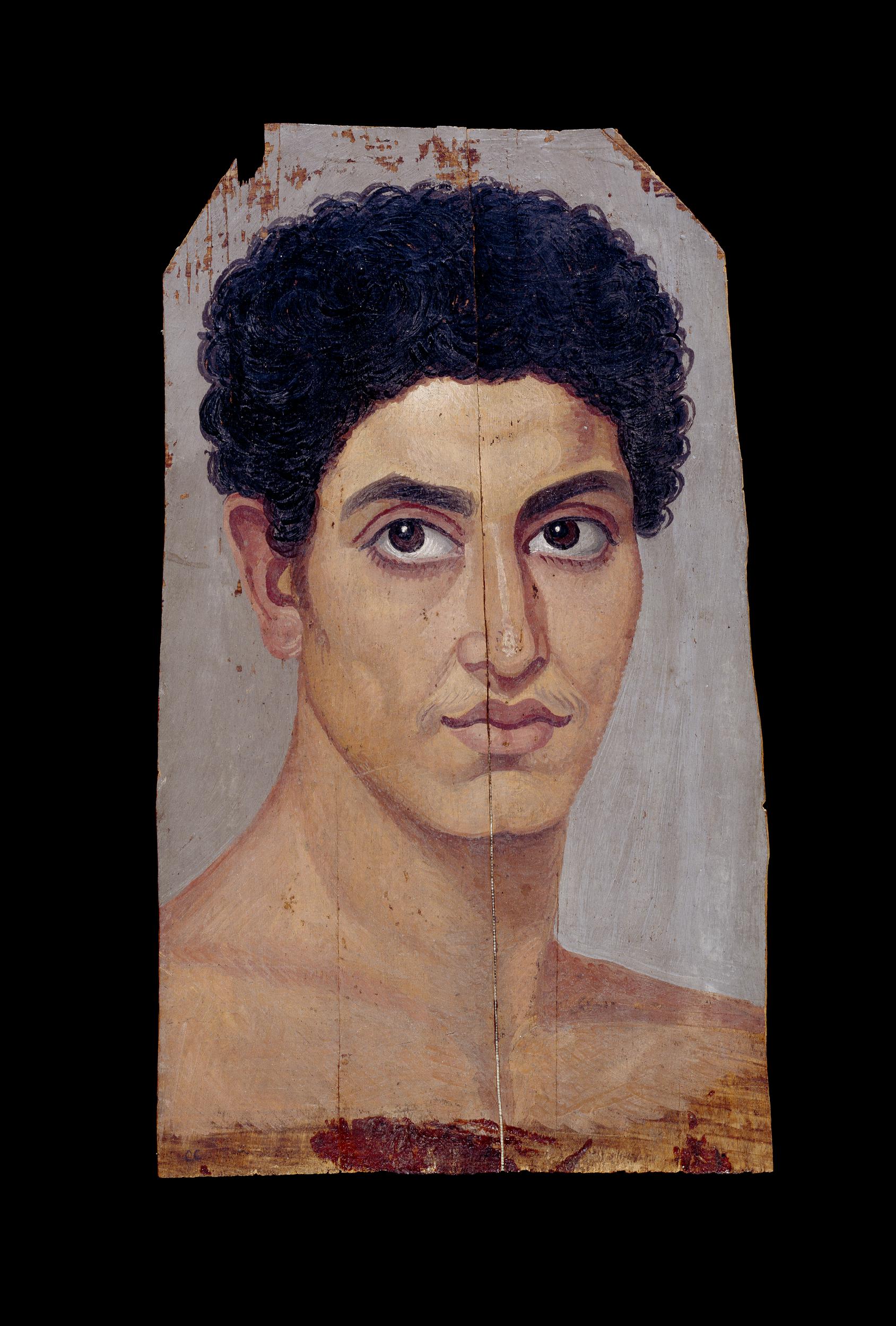
Today we present ... a mummy portrait of a very handsome guy, as you can see.
You may ask, what are the mummy portraits, and why are they so different from what we know of Egyptian art? After the Battle of Actium in 31 BCE, Egypt became part of the Roman Empire, and burial practices began to change. Painted wooden panels showing realistic human faces—now known as mummy portraits—emerged as a new funerary tradition. Unlike the stylized faces long used on Egyptian coffins, these portraits aimed to capture an individual’s true appearance.
What makes them especially fascinating is that this innovation did not replace older customs. Bodies continued to be mummified according to ancient Egyptian tradition and buried in sealed tombs. The painted portrait, rendered on a wooden panel, was inserted into the linen wrappings or cartonnage and placed directly over the face of the mummy. In this way, two worlds met: age-old Egyptian beliefs about the afterlife and Greco-Roman ideas of likeness and individuality.
The portraits themselves are strikingly lifelike. Their immediacy can be startling—even to modern viewers (I can imagine swiping right on this guy on Tinder!). Painted in encaustic or tempera on limewood, the portraits vary widely in style. Some are intensely naturalistic, others more freely painted. Hairstyles, clothing, and jewelry—especially in female portraits—reflect contemporary Roman and Greek fashions, closely related to those seen in wall paintings from places like Pompeii. Together, mummy portraits form one of the most intimate and human visual records to survive from the ancient world.
P.S. Writing about art in your personal Art Journal lets you connect with history in your own voice. Capture what fascinates you, from the lifelike gaze of a mummy portrait to the smallest detail that makes it unforgettable. Which artwork will you write about today?
P.P.S. See more from the lifelike Fayum portraits of the Roman Egypt!