
 Leonardo da Vinci
Today is World Art Day, celebrated on the birthday of Leonardo da Vinci! It is an international occasion dedicated to recognizing the importance of art in our lives. This day reminds us that art is not a luxury but a vital means of understanding ourselves and others, bridging histories and communities across borders. So... time for Leonardo da Vinci's classic masterpiece!
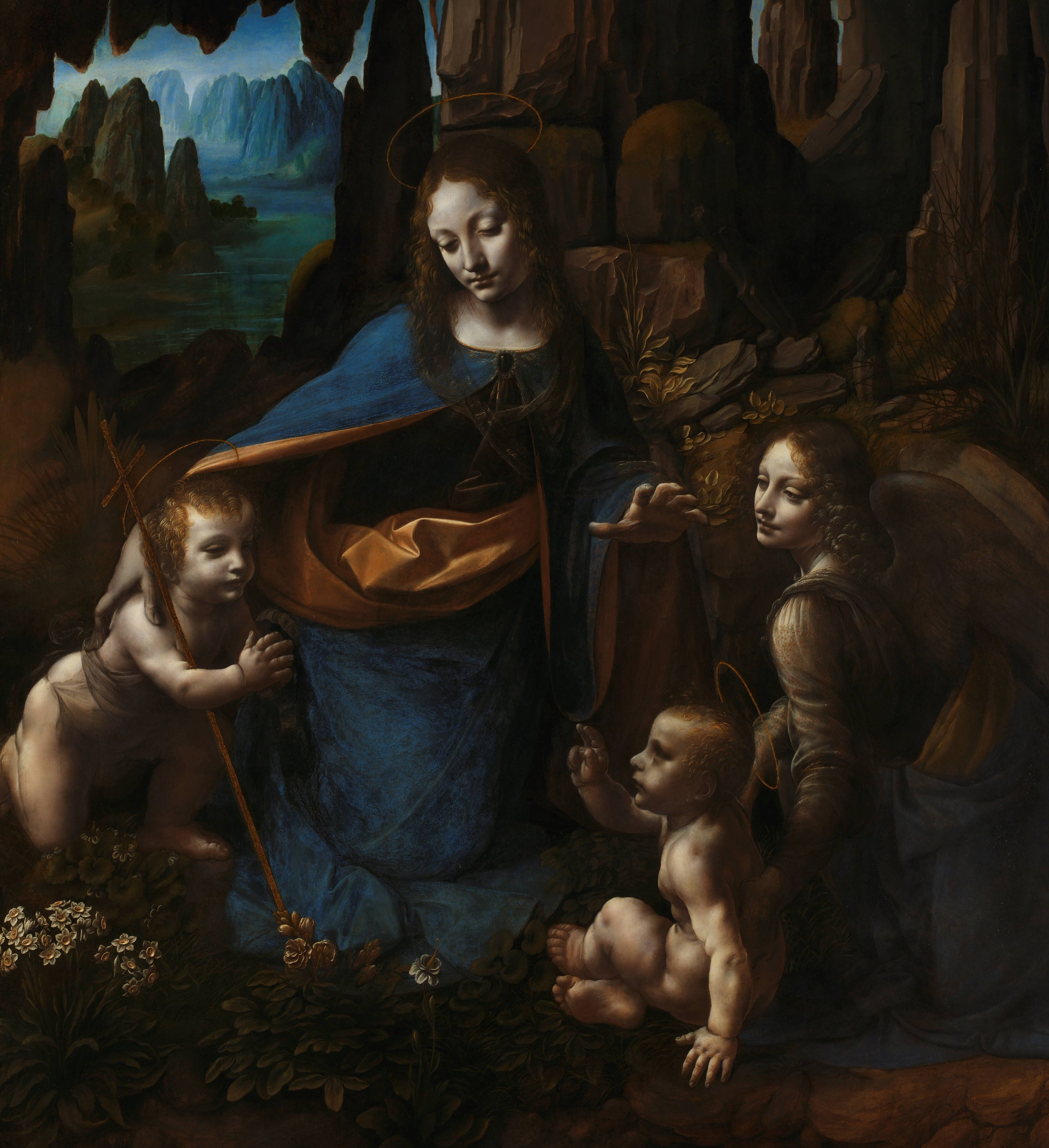
Virgin of the Rocks is one of his most enigmatic and ambitious works, and one of the few large-scale paintings by him to survive. Trained in Florence, Leonardo entered the service of the Sforza court in Milan in the early 1480s, where he received the commission for this altarpiece for the church of San Francesco Grande. The chapel belonged to a confraternity dedicated to the Immaculate Conception—a doctrine still relatively new and the subject of intense theological debate. Officially sanctioned for celebration only in 1477, the feast had no fixed visual tradition, giving Leonardo unusual freedom to invent a composition. He set the Virgin, the Christ Child, the infant Saint John the Baptist, and an angel within a shadowed grotto, binding them together through gesture and gaze. The rocky cavern and distant waters evoke a world at the dawn of creation, a fitting setting for a subject concerned with Mary’s purity before time itself.
The painting also reveals the breadth of Leonardo’s curiosity. His fascination with geology, botany, light, and optics informs every surface: jagged rock formations, dense foliage, and a vast landscape that dissolves into blue distance through what we now call aerial perspective. The figures seem to breathe out of shadow, their contours softened by subtle gradations of tone—an effect later termed sfumato. Technical studies show that Leonardo reworked the composition over many years, adjusting details such as Christ’s head and enriching the sky with costly ultramarine after returning to Milan in 1506.
P.S. To celebrate today, we’re offering a special discount in the DailyArt Shop: enjoy 15% off the Renaissance Collection that honors Leonardo da Vinci's genius.
P.P.S. Here are 11 things you might not know about Leonardo da Vinci!