
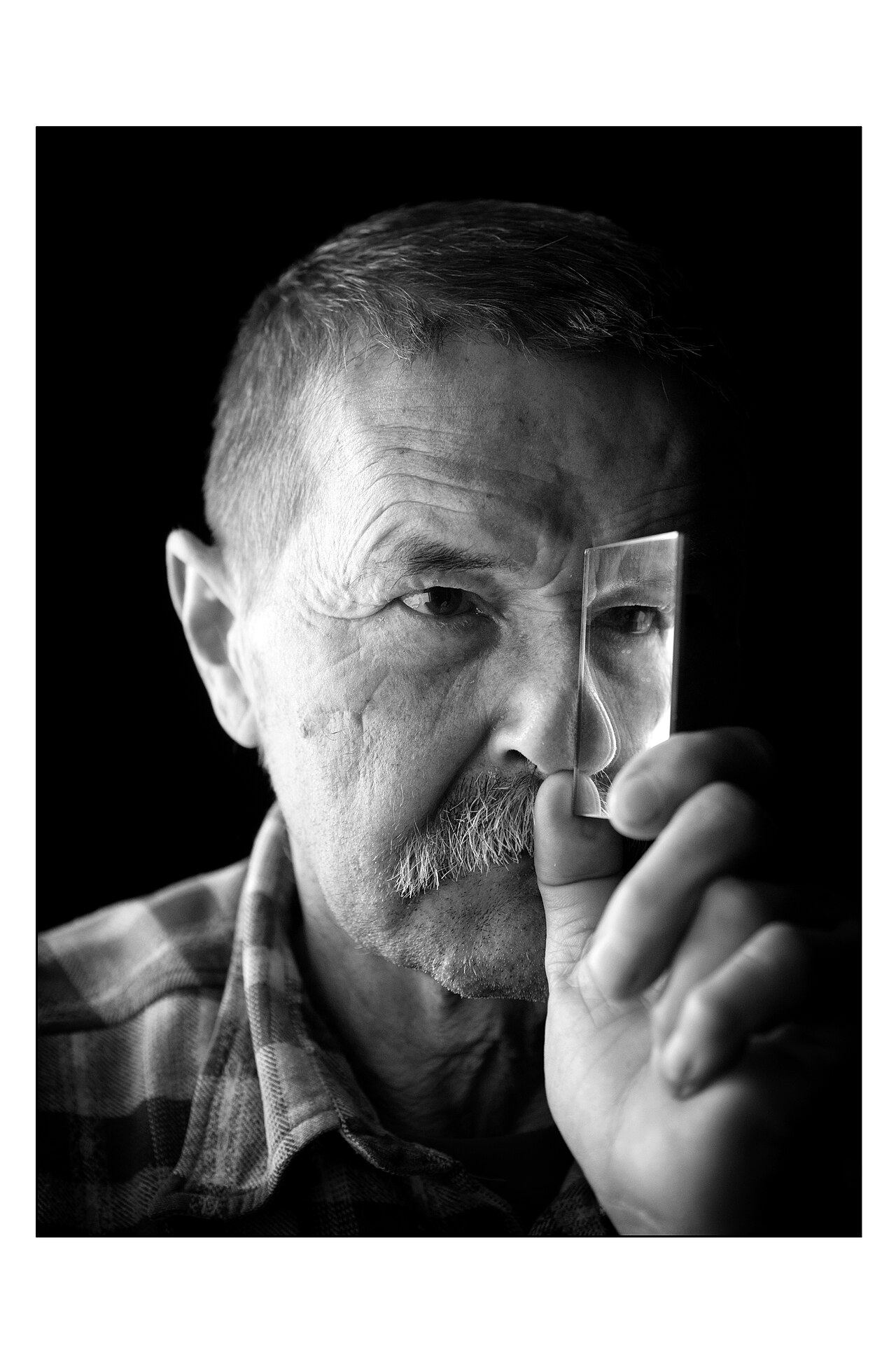
 Lucjan Demidowski
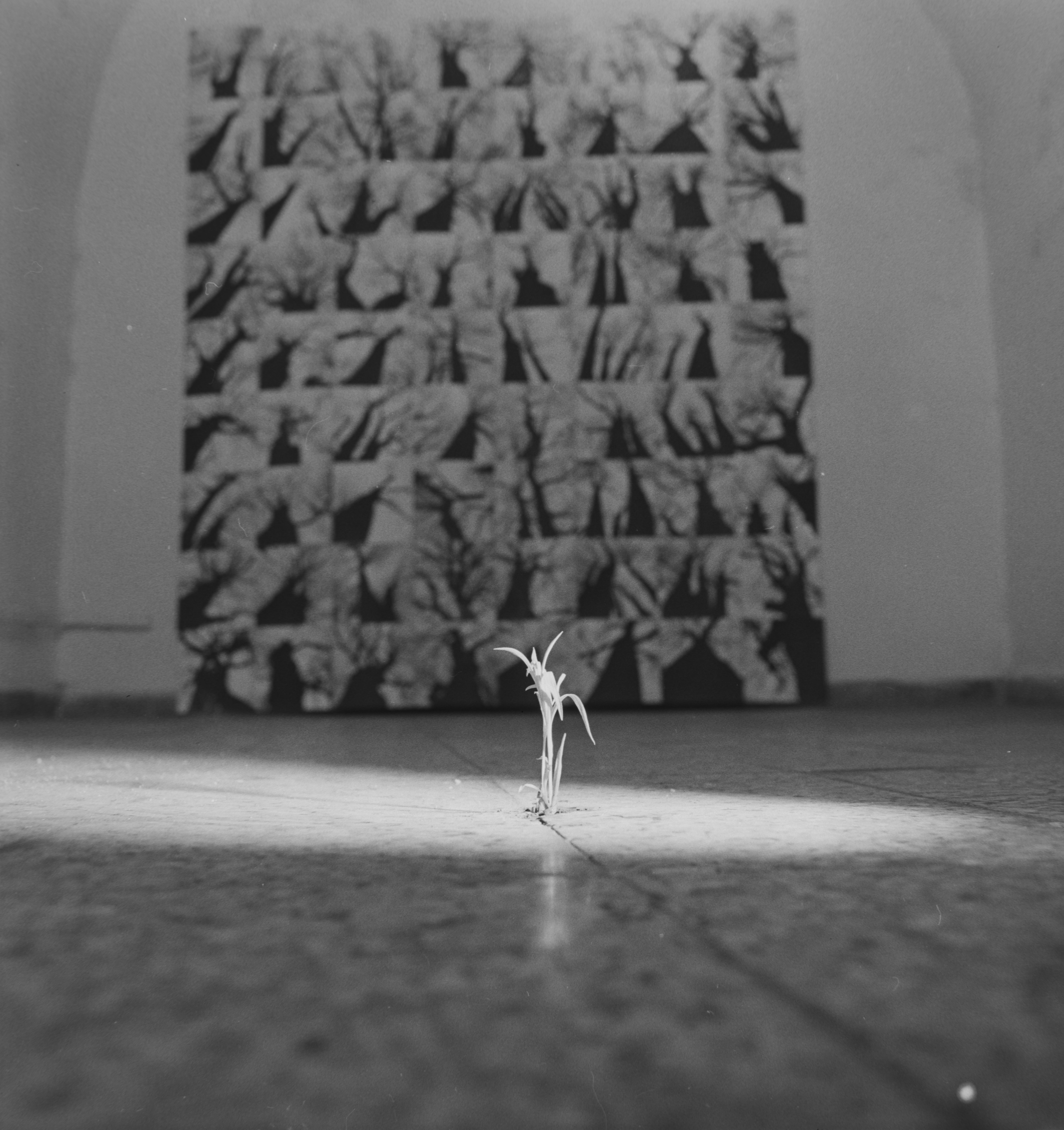
In March 1973, the Galeria Labirynt in Lublin, Poland, hosted the solo Garden exhibition by the Polish conceptual artist Lucjan Demidowski. At first glance, the show appeared to be a simple presentation of photographs. On a large gallery wall, the artist displayed 72 black-and-white prints depicting tangled, leafless tree branches. Arranged rhythmically, the images formed a dense network of lines—almost like a graphic structure.
Garden, however, extended beyond the photographic image itself. In a crack in the gallery floor, Demidowski planted real grass. The plant had been taken from outside the building, illuminated with a spotlight, and watered throughout the exhibition. When the show ended, the artist returned it to nature, replanting it in exactly the same spot from which it had been taken—stronger and more grown.
Rather than limiting the work to static images on the wall, Demidowski integrated photography into a living, organic process. The lifeless winter branches shown in the photographs were contrasted with an actual living plant. Documentary imagery was thus confronted with real biological duration. This simple yet meaningful gesture broadens our understanding of his practice, where photography becomes an action rather than merely a means of representation.
Garden explored the relationship between art and reality—between what is fixed and recorded, and what is alive, changing, and growing.
P.S. Discover more rare archival photographs at the Virtual Museum of Photography of the Archeology of Photography Foundation.
P.P.S. How well do you know famous photographers? Test your knowledge in our photography quiz!