
 Élisabeth Vigee Le Brun
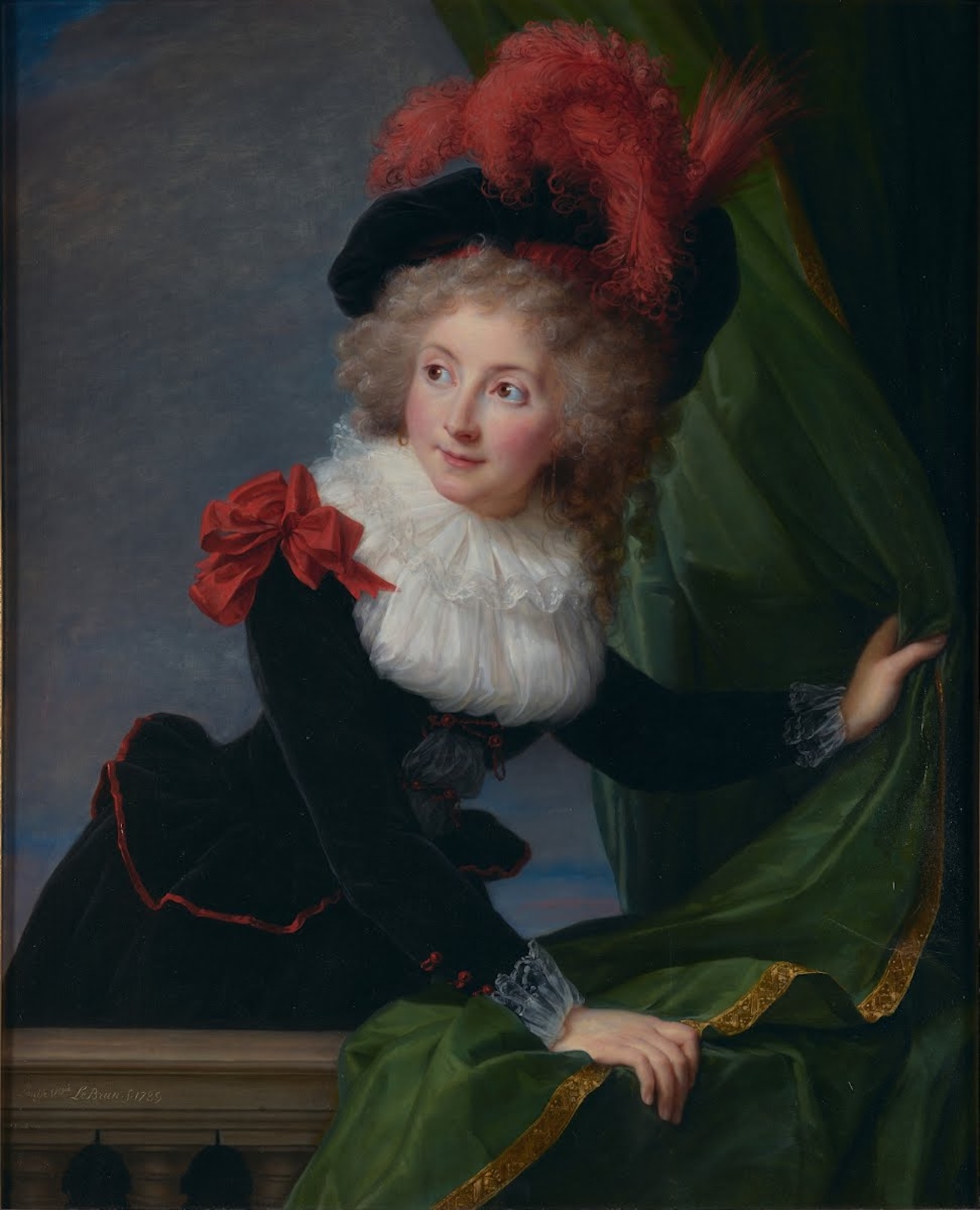
Madame Perregaux by Élisabeth Vigée Le Brun is one of the artist’s final portraits created before the outbreak of the French Revolution. The painting depicts Adélaïde de Praël, wife of the influential banker and collector Jean-François Perregaux, whose clients included prominent aristocrats and major art patrons. Vigée Le Brun, one of the leading portraitists of the Ancien Régime, would soon leave France and spend many years working across Europe after the Revolution transformed French society.
The portrait demonstrates the elegance and sophistication that made her one of the most sought-after painters of aristocratic women. Although the artist had already emigrated by the time the work was publicly shown, her husband, the art dealer Jean-Baptiste Pierre Le Brun, submitted it to the Salon of 1791 at the Louvre. The painting was admired for its refinement and its subtle references to earlier European painting traditions.
Madame Perregaux is depicted with grace and theatrical elegance, wearing a richly styled costume described at the time as “Spanish,” a fashionable reference to 17th-century portraiture. Both the pose and the luxurious fabrics reveal Vigée Le Brun’s admiration for Peter Paul Rubens and the great Flemish Baroque tradition. Her decision to execute the portrait as an oil on panel rather than canvas also reflects her fascination with Netherlandish Old Masters, for whom wooden panels remained a preferred support.
P.S. Discover 10 Vigée Le Brun's portraits of the most powerful individuals of her time!
P.P.S. Inspired by Élisabeth Vigée Le Brun? Our Women Artists products are currently 25% off, including postcard sets featuring her work and that of many other remarkable women artists.