
 Félix Vallotton
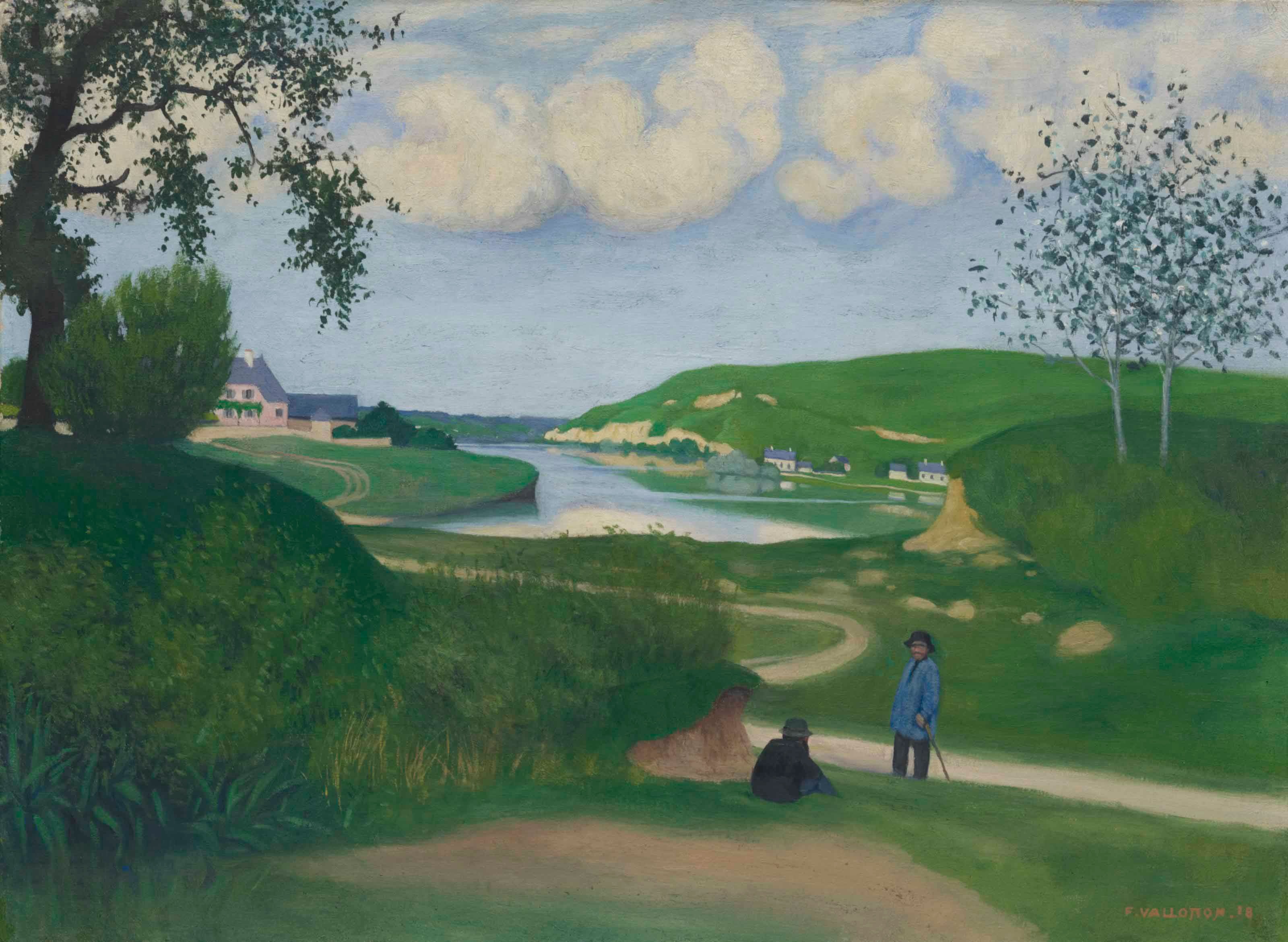
In 1918, Félix Vallotton began referring to a new type of work as paysage composé ("composed landscape")—landscapes created not from direct observation but from memory and imagination. This painting belongs to that series and marks an important shift in his artistic practice.
Vallotton drew inspiration from Nicolas Poussin's Landscape with Diogenes Throwing Away His Bowl, which he admired in the Louvre. As he recorded in his journal, he set himself the challenge of creating a landscape "without any documentation whatsoever," relying only on the vague memory of Poussin's composition. The experiment fascinated him, though he admitted feeling constrained by the limitations of memory, writing that his "reservoir of forms" seemed insufficient.
Echoing Poussin's classical structure, Vallotton arranged tree-covered hills along either side of a winding river, with clusters of houses punctuating the landscape. Yet instead of depicting the ancient philosopher Diogenes and his companion in the foreground, Vallotton replaced them with two contemporary hikers, subtly transforming a 17th-century ideal landscape into a modern scene.
P.S. Inspired by landscapes shaped by memory, imagination, and emotion? Take a look at our Landscapes 50 Postcards Set, featuring breathtaking visions of nature created by some of the greatest artists in history. From classical vistas to modern interpretations, this collection celebrates the endless ways artists have captured the beauty of the world around us.
P.P.S. Discover the captivating art of Félix Vallotton!