
 Unknown Artist
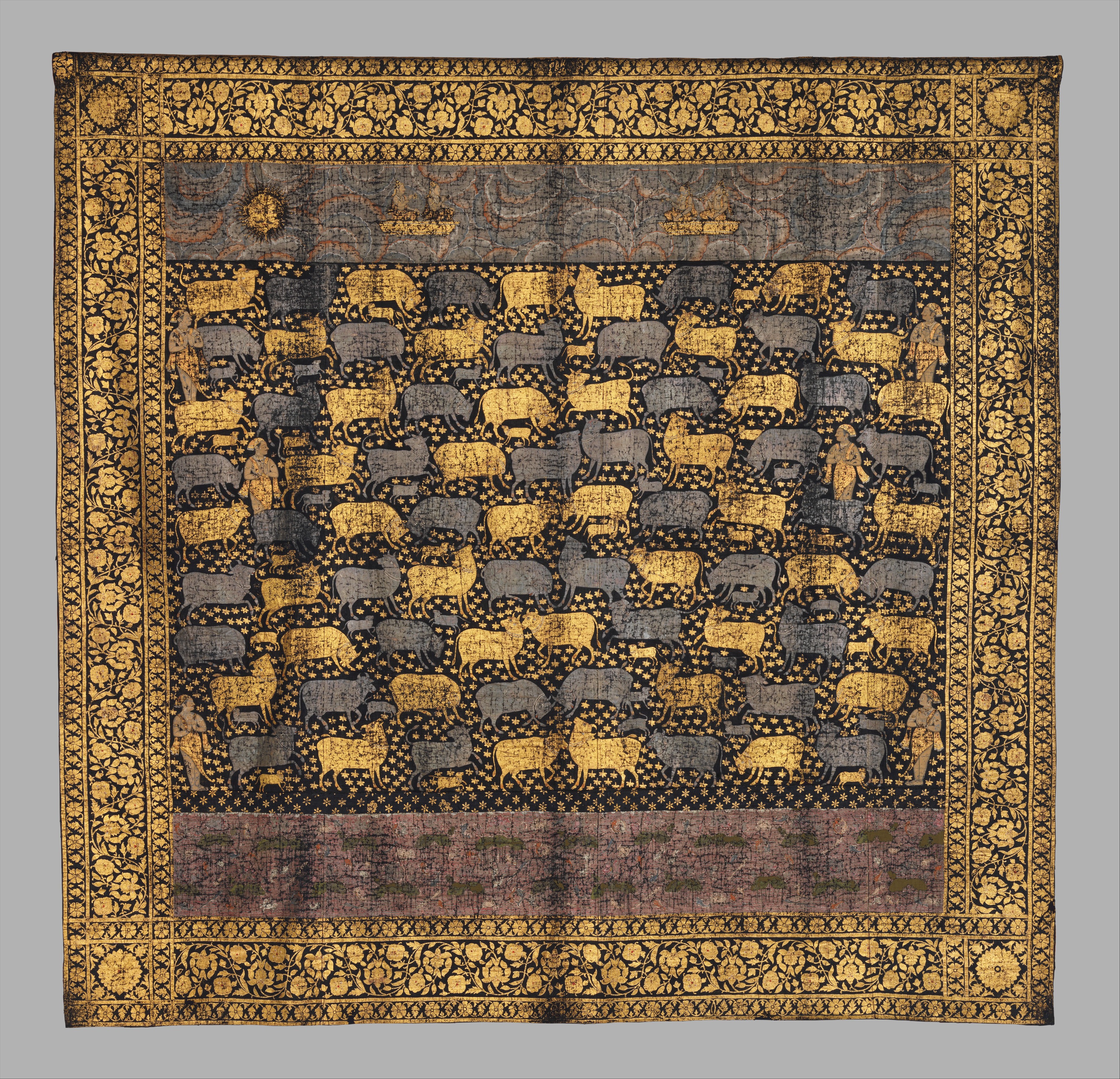
Large painted textiles known as pichhwais were created to hang behind the principal deity in Hindu temples, forming an elaborate backdrop for worship. This example was made for Gopashtami, the autumn festival celebrating Krishna's transition from tending calves to becoming a cowherd. Reflecting the occasion, the composition is filled with richly varied cows and playful calves roaming through a flower-strewn field, showing Krishna's role as the divine protector of cattle.
The deep indigo background, enriched with extensive gold and silver decoration, is characteristic of pichhwais produced for devotees of Shrinathji, a form of Krishna especially venerated within the Pushtimarg tradition. During this period, many members of the Shrinathji community relocated to the Deccan, where they continued to commission sumptuous textiles that combined devotional function with exceptional artistic refinement.
It is amazing, don't you think?
P.S. India's rich cultural heritage drew in artists from around the world. See how foreign artists depicted the beauty of India.