
 Claude Monet
At some point in his career, Claude Monet had essentially stopped painting the world and started painting a single pond. It would occupy him, almost exclusively, for the rest of his life.
The pond itself was Monet's own creation. After buying his house and garden at Giverny in 1890, he diverted a local river to feed a new water garden, over the objections of neighbors who suspected the wealthy Parisian's "aquatic plants" were more self-indulgence than science. Monet all but admitted as much: he told local authorities the garden was purely for visual pleasure and future painting motifs. Yet even he didn't immediately grasp what he'd built. By his own account, he planted the water lilies for pleasure alone, and only slowly realized (after living with the pond for years) that he'd stumbled onto the defining subject of his late career.
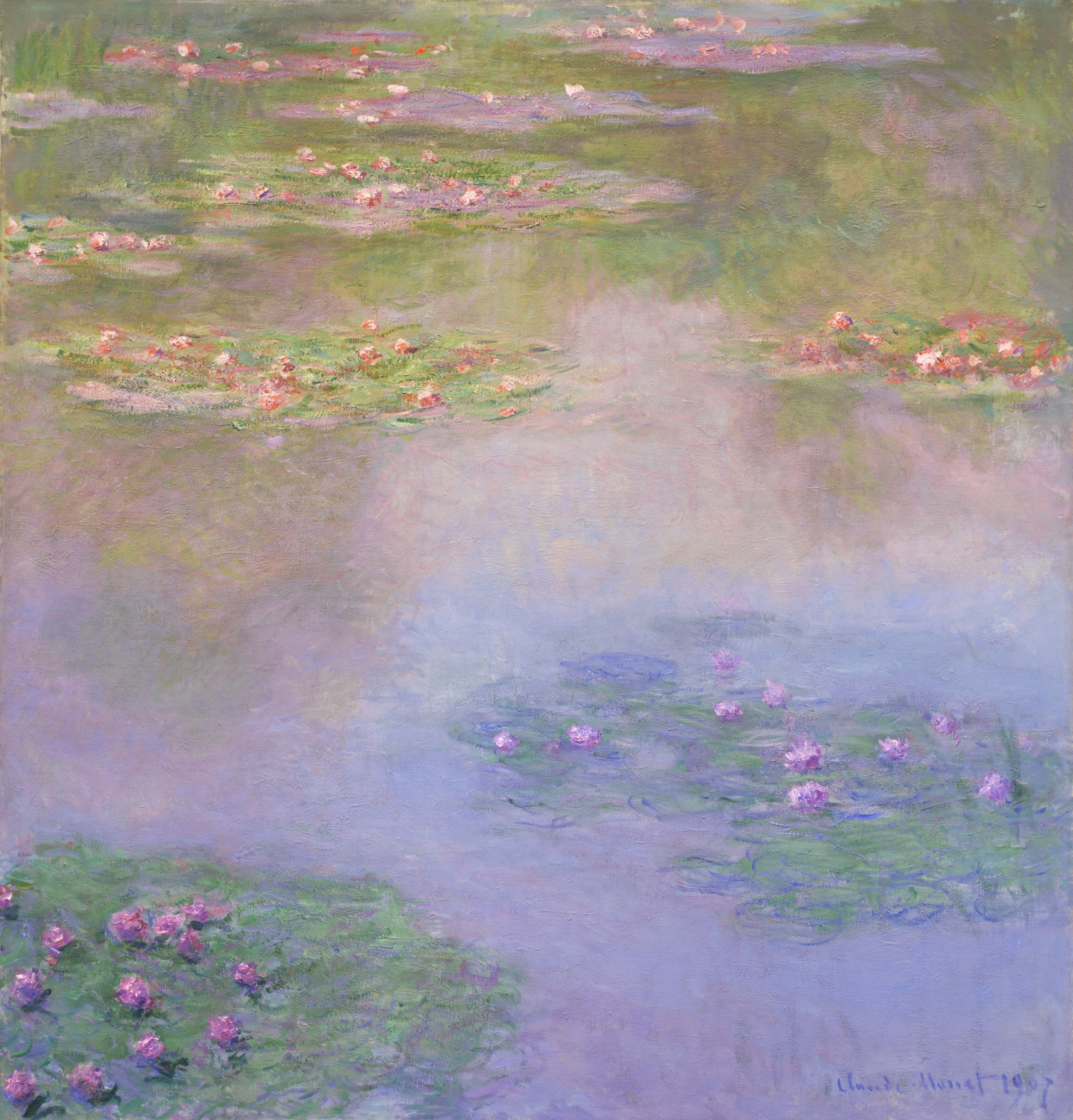
This particular painting belongs to a pivotal stretch, when Monet began stripping away everything that once anchored his lily-pond pictures: the banks, the shoreline, any fixed sense of perspective. What's left is simply water, filled edge to edge with color and the ghostly reflections of trees he never actually shows you.
It's tempting, looking at this canvas, to see where it's heading: toward the total immersion of Les Grandes Décorations, the panoramic water lily murals now encircling visitors at the Musée de l'Orangerie, and beyond that, toward the Abstract Expressionists who rediscovered Monet decades later and recognized one of their own. In different ways, Pollock, Rothko, and Joan Mitchell each walked through the door Monet quietly opened here, at the edge of a garden pond he built simply because he liked looking at it.
This masterpiece is featured in our brand-new Weekly Desk Calendar! We've just launched the presale, so you can now get all our 2027 calendars with a 15% discount. The presale is limited, so be sure to reserve your copy before they're gone!
P.S. The water lily paintings were not just reflections of what Monet saw in his garden, they were carefully planned compositions. Learn more about one of them!