
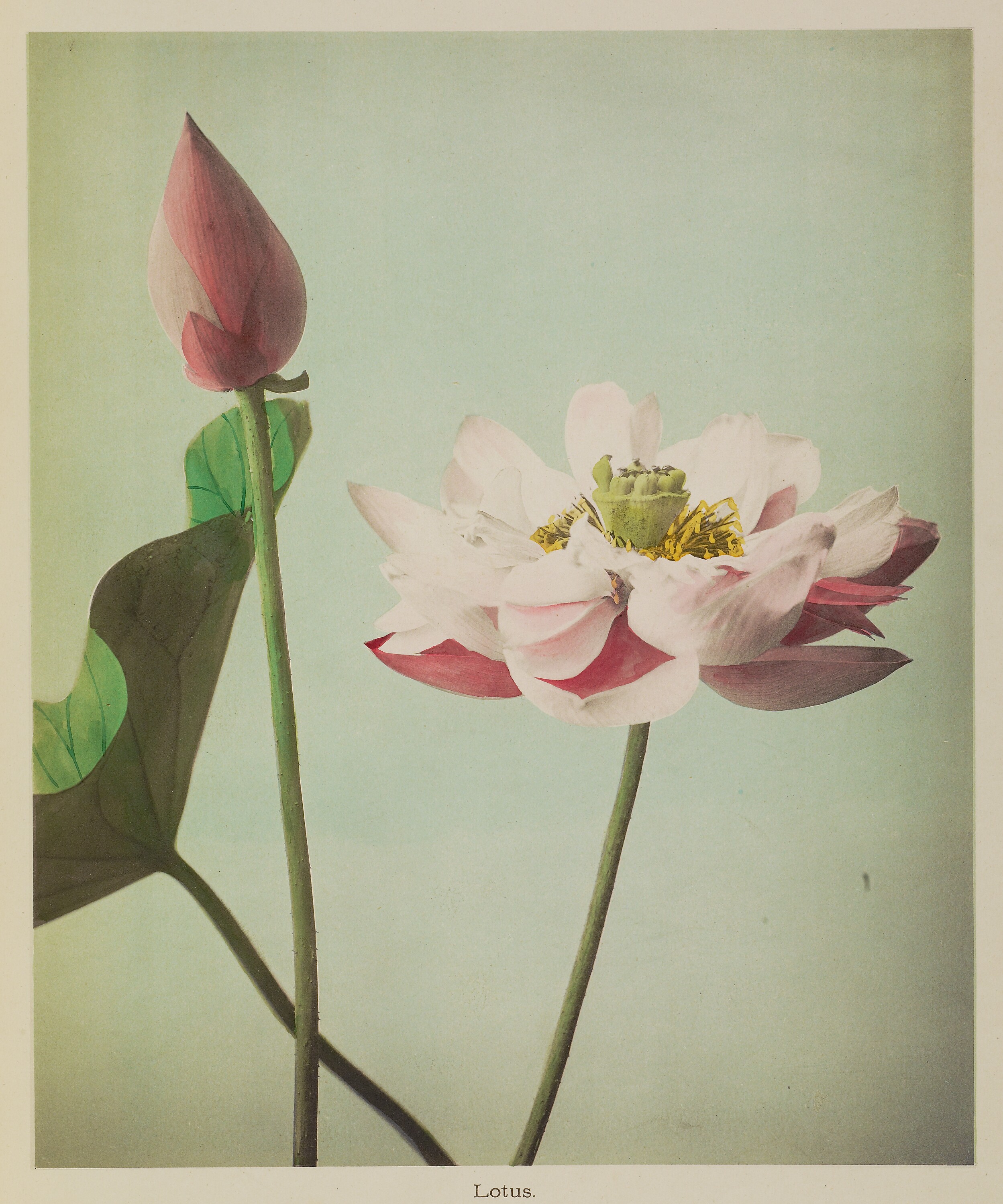
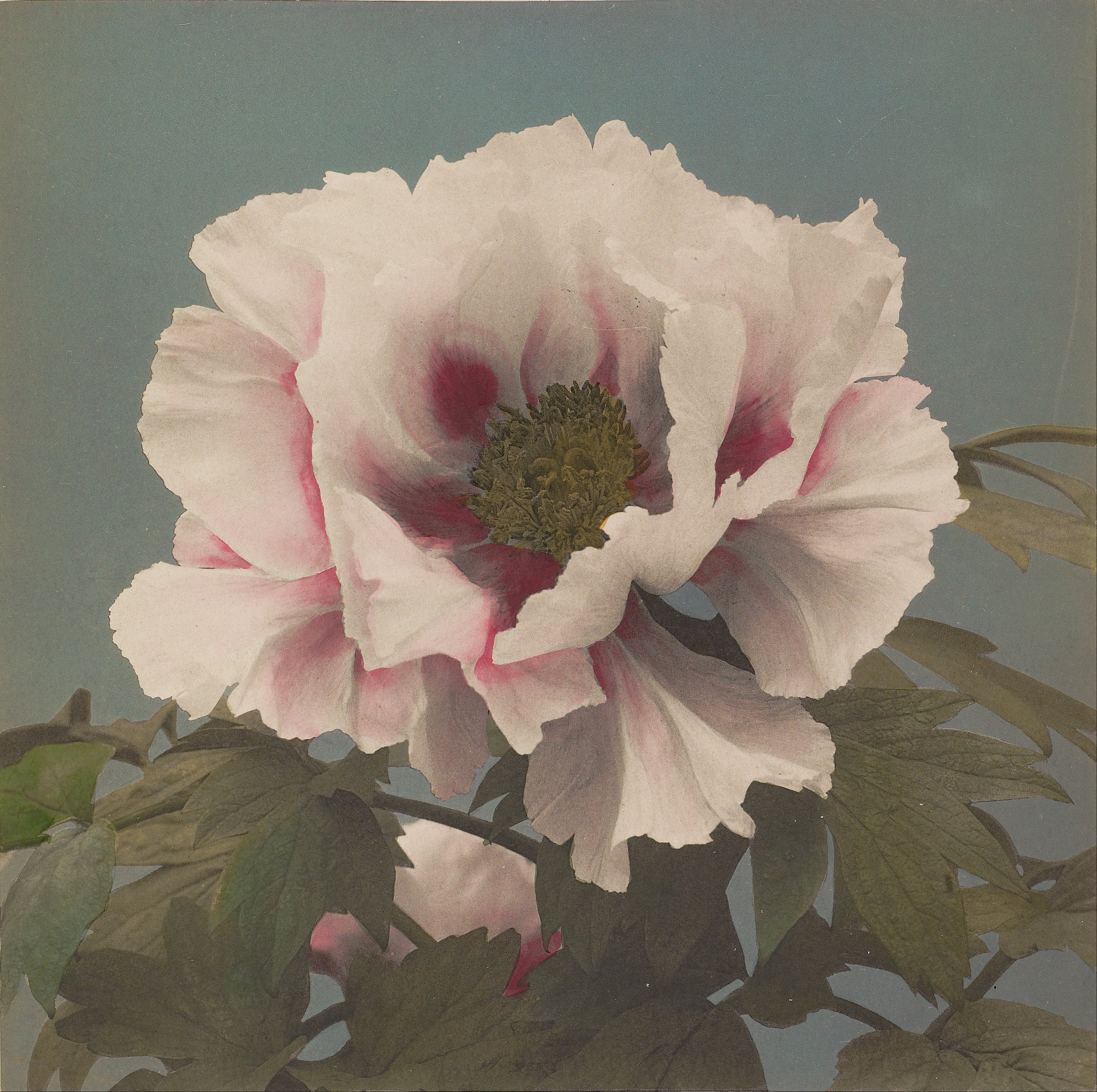
 Kazumasa Ogawa
In the 1890s, Kazumasa Ogawa, a Japanese photographer, figured out how to do something no one else in the world had managed: capture up to 25 distinct tones in a single printed image, at a time when six or eight colors were considered the outer limit anywhere else.
Ogawa, born in 1860 to one of Japan's last samurai families, had already lived an unlikely life by then—apprenticing as a teenage photographer, opening his own studio at 17, and sailing to America aboard the USS Swatara at 22, becoming the first Japanese citizen to study photography abroad. When he returned to Tokyo in 1884, he brought back more than technical training. He combined Western collotype printing (a mechanical process for reproducing images from glass negatives) with traditional Japanese hand-coloring techniques, inventing what he called the chromocollotype.
Between 1894 and 1896, Ogawa turned that invention toward flowers. Working in tight, isolated close-ups, he photographed native Japanese blooms. His 1896 portfolio Lilies of Japan remains his most celebrated work, presenting twelve exquisite lily specimens first in black and white, then reissued in full chromocollotype color as part of Some Japanese Flowers.
P.S. If you're captivated by the beauty of flowers, our Flowers in Art: 50 Postcards Set brings together stunning floral masterpieces from across the centuries and from around the world. They're perfect for sending heartfelt greetings to your loved ones! :)
P.P.S. Are you a fan of Japanese art? Take our quiz and find out!