
 Eva Auld Watson
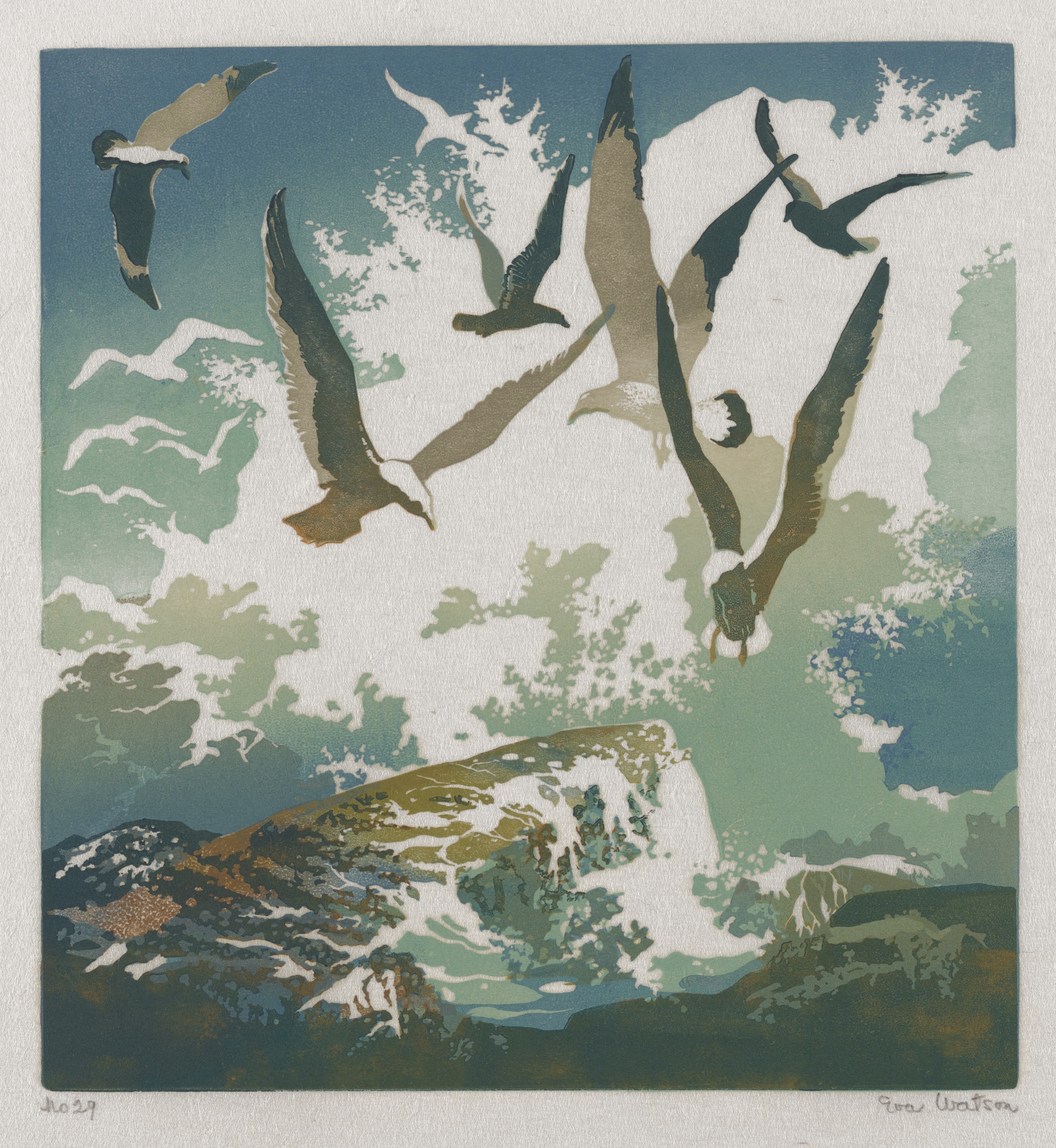
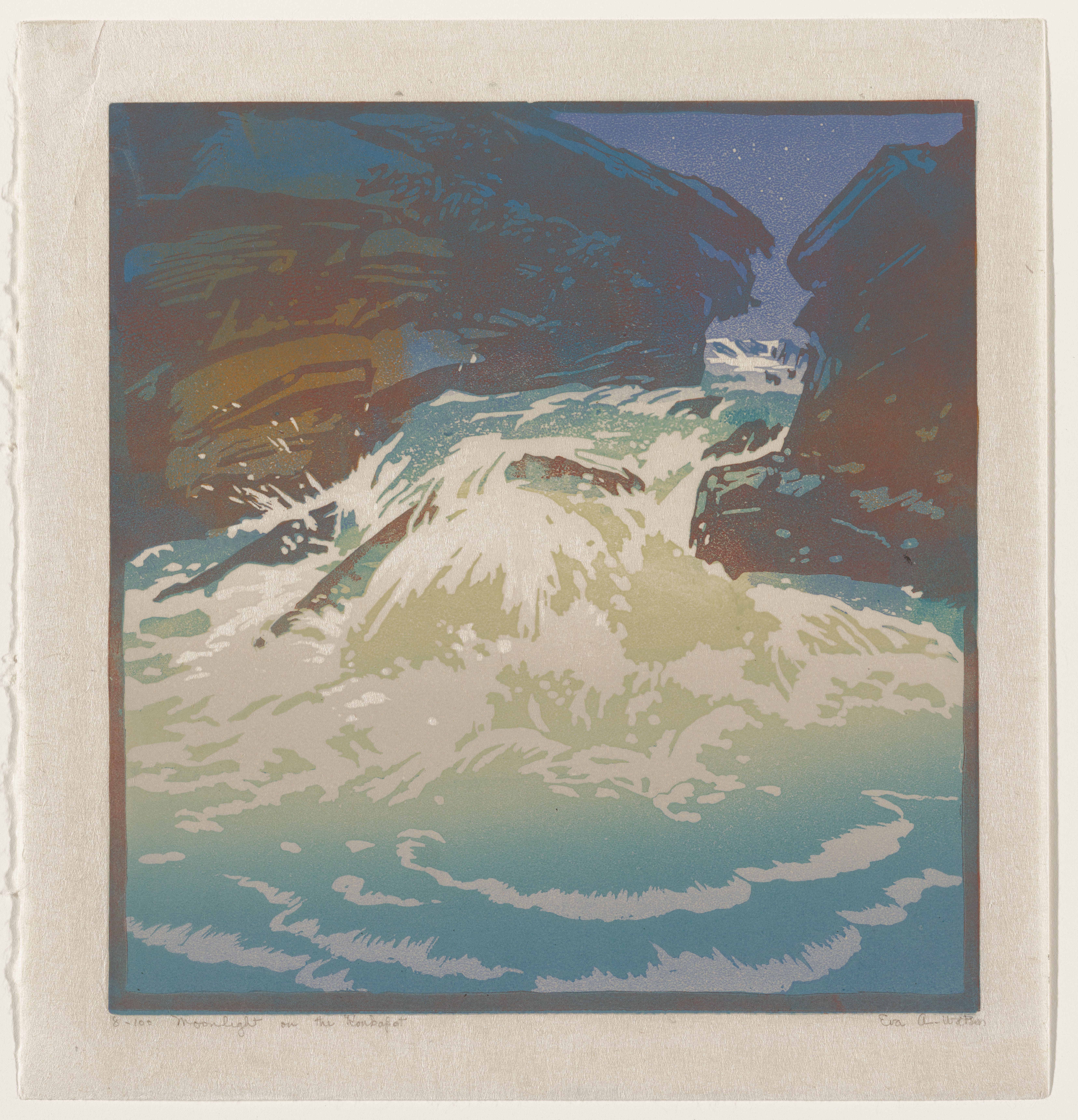
Eva Auld Watson was an American painter, printmaker, muralist, illustrator, and bookbinder who worked in linoleum rather than the woodblocks favored by most printmakers of her time, gluing sheets of Armstrong-brand linoleum to stiff board—a combination that let her achieve flatter, more uniform color than wood grain ever allowed. Gulls and Spray looks like it required a dozen separate carved blocks for its twelve colors; it actually used just four. Watson's trick was treating each block like a mixing palette, blending and graduating colors directly on its surface before printing, then pressing it onto paper still damp, letting the wet fibers soften and merge the colors further as they transferred. The result is truly beautiful!
P.S. Eva Auld Watson's colorful linocuts were inspired in part by the Japanese woodblock tradition. Compare her approach with Utagawa Hiroshige's Minowa, Kanasugi at Mikawashima (1857) and see how artists on opposite sides of the world transformed carved blocks into beautiful landscapes!
P.P.S. Birds have appeared in paintings, prints, metalwork, ceramics, and even entire rooms! Here are birds in art!