
 Nagasawa Rosetsu
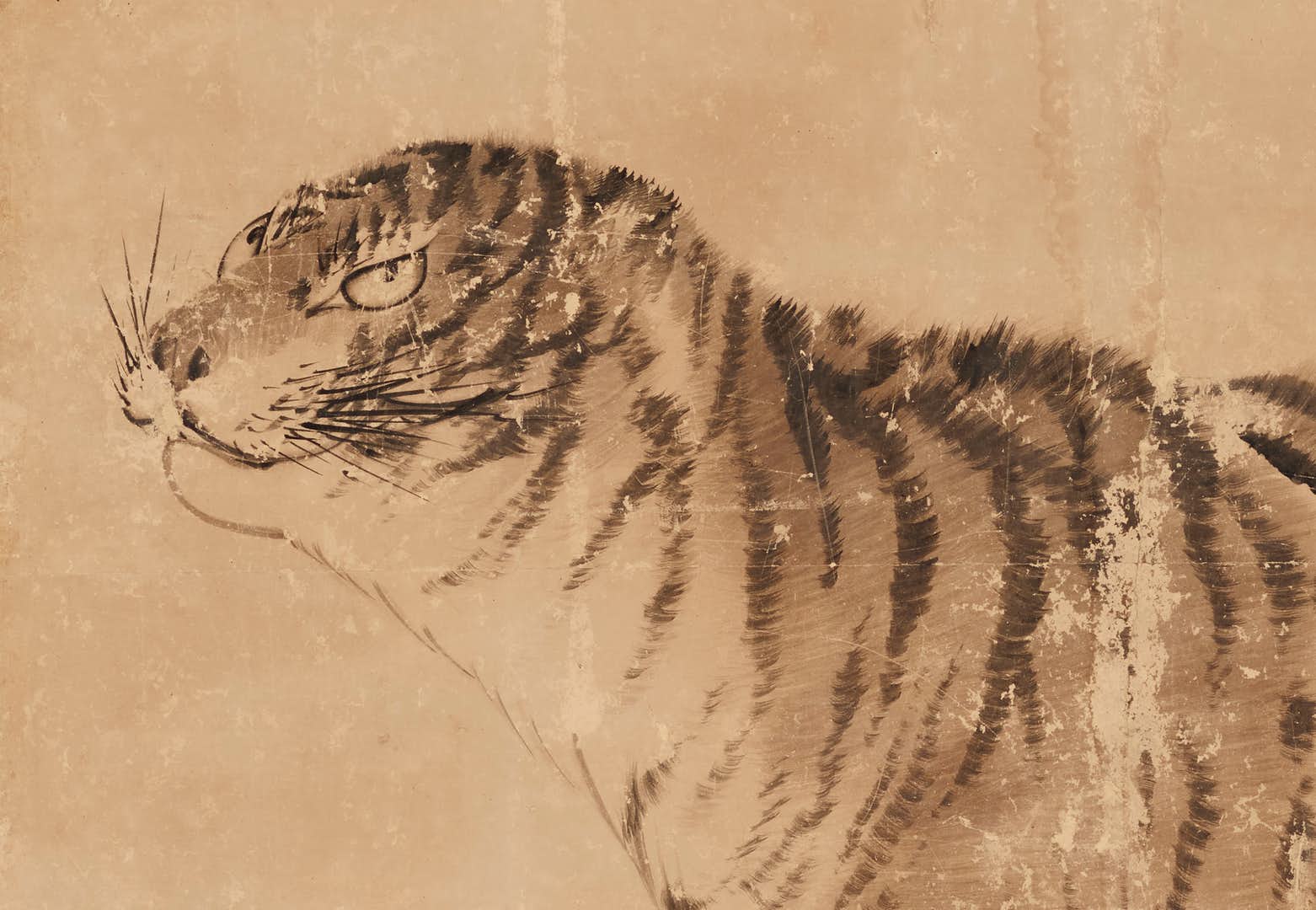
Nagasawa Rosetsu was one of the most inventive painters from Kyoto's Maruyama school. He was a master of contrast who could render a tiger with photographic precision on one panel and dissolve into loose, splattering ink on the next. Born into a family of low-ranking samurai, he had modest social standing but real ambition, and he found his way to the studio of Maruyama Ōkyo, the founder of the school and the most sought-after painter in Kyoto at the time.
Under Ōkyo, Rosetsu absorbed the naturalistic, closely observed style that defined the Maruyama approach, a hybrid of Chinese academic painting and direct study from life. He proved to be a prodigy: even contemporaries and later critics agree that his technical skill and imaginative range quickly outstripped his teacher's. That kind of talent doesn't always sit comfortably inside a hierarchical studio system, and at some point the relationship between master and pupil broke down. The exact cause of the rift isn't fully documented, but the split was decisive—Rosetsu left Ōkyo's studio and struck out as an independent artist.
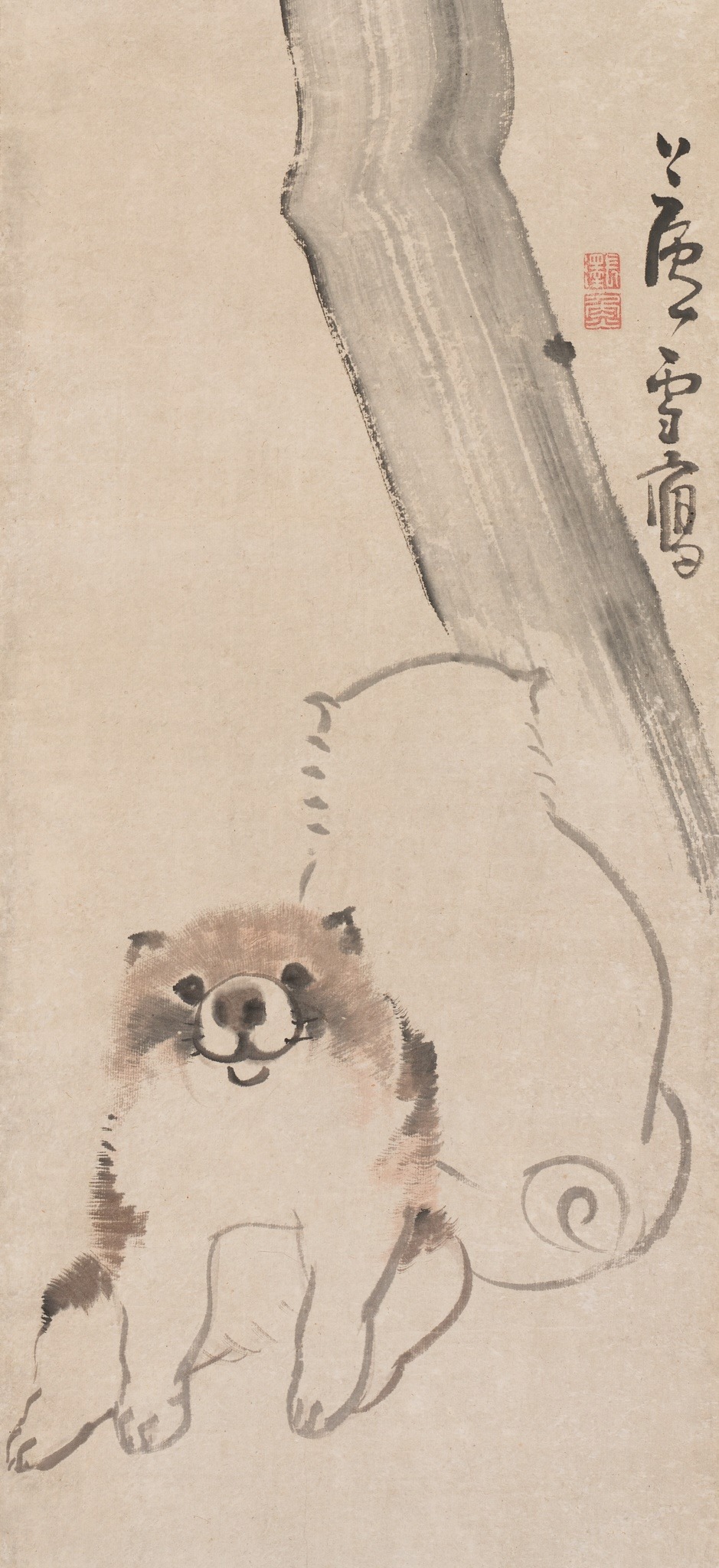
After the break, he found new footing under the patronage of the feudal lord of Yodo domain (just south of Kyoto), and he took on major commissions from Buddhist temples, including a well-known set of sliding-door and wall paintings for Muryō-ji and Jōjō-ji in Kushimoto (on the Kii Peninsula), where his more experimental tendencies in depicting animals rendered with startling scale with an ink used almost violently really came into their own. What's most important, though ... he painted a lot of puppies!
P.S. Here are some of the cutest dogs in art history! In our Animals in Japanese Art 50 Postcards Set, you can find more cuteness straight from Japan!