Egyptian Princess Arsinoe is freed from her prison on Pharos to lead a rebellion against Caesar. Tintoretto moves this scene of the action from Alexandria to a Venetian lagoon and lends satirical elements to this cloak-and-dagger story. A gondola, in which the escape is made, has a carved mask of a satyr at the bows. A noble knight is losing his balance as he indulges in a kiss that might be right out of a movie. Tintoretto has replaced a rope mentioned in a textual source of the story by a rope ladder. As a small cache of weapons in the gondola suggests, the knight has shot an arrow carrying a thin thread in through the prison tower window. This is done so that Arsinoe and her companion could pull up the rope ladder fastened to the thread and escape.

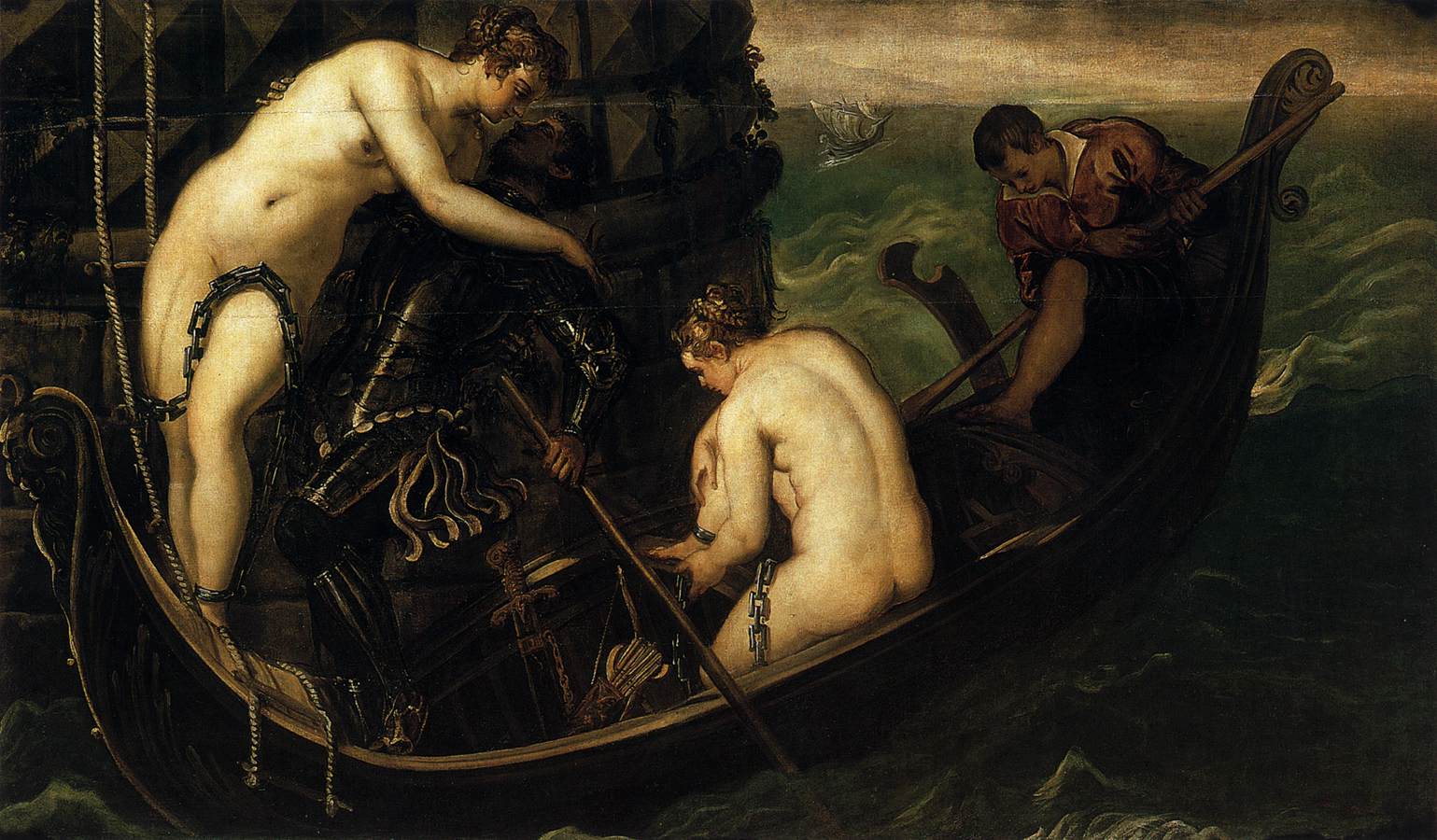
The Liberation of Arsinoe
oil on canvas • 153 x 251 cm
-
Tintoretto
1556