
 Edvard Munch
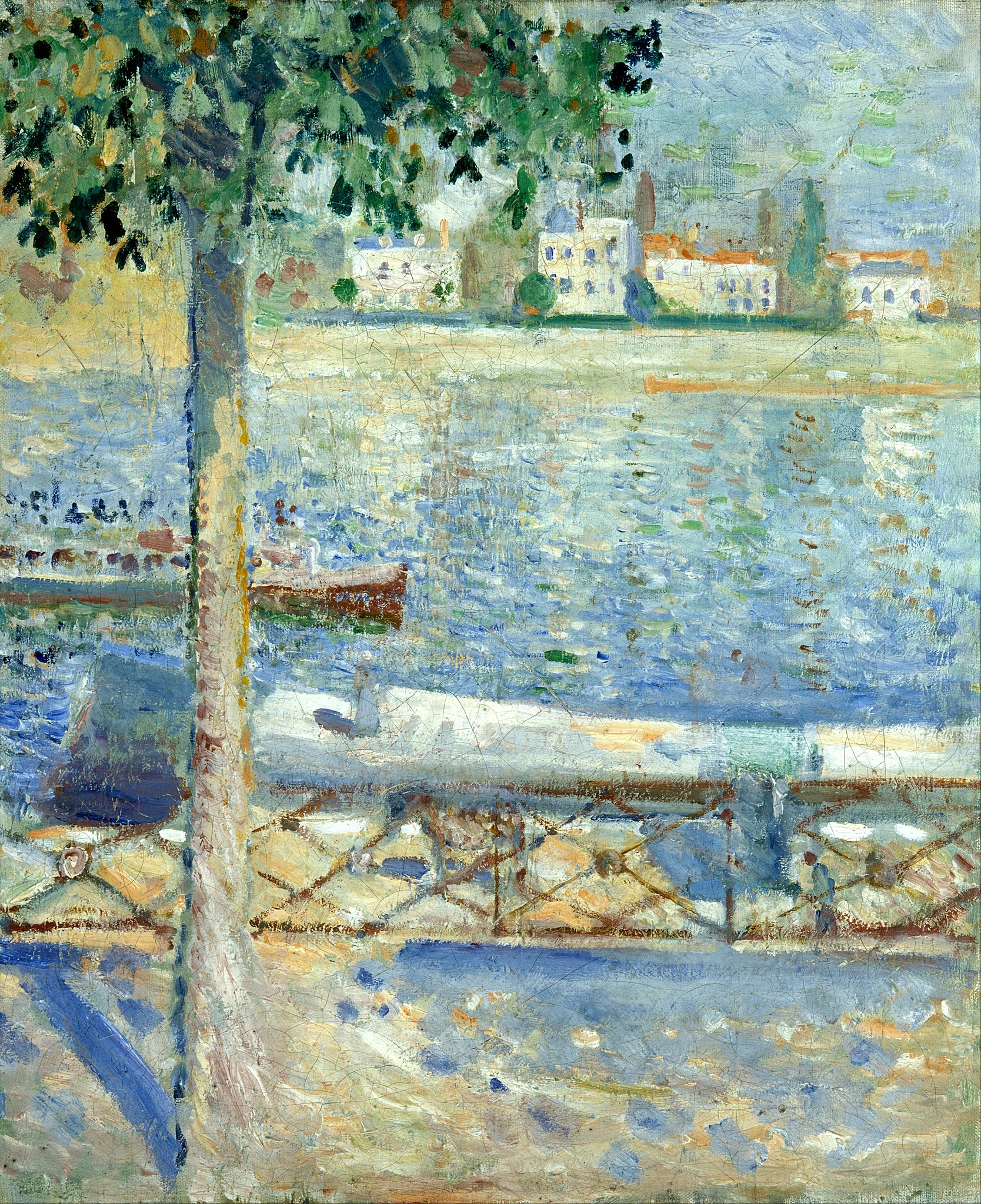
In 1890, the 27-year-old Edvard Munch stayed in Saint-Cloud, just outside Paris. Influenced by Impressionism and Neo-Impressionism, he painted the Seine River throughout the winter and spring, capturing it from various angles and at different times of day.
In today's work, Munch adopted the Impressionist approach. He emphasized the river's surface in an almost exaggerated manner, using bold visual effects. He structured the composition with strict parallel lines that guide the river and its banks, dividing the picture plane into horizontal bands of color. Only a few elements—such as the curved line leading to a boat at the pier, the foliage on a tree, and the tree trunk's shadow—disrupt these otherwise straight and controlled lines.
While Claude Monet had employed similar compositional techniques as early as the 1870s, the most striking parallels to Munch's painting appear in later works by Gustave Caillebotte and Alfred Sisley. This suggests that Munch was highly attuned to contemporary developments in the art world from early on.
At the same time, Munch incorporates aspects of Neo-Impressionism, particularly Pointillism—the method of applying color in small dots or touches. This technique gives the painting a smooth, dense, and unified surface.
P.S. Want to understand how artists like Monet, Sisley, and Munch changed the course of modern art? Explore it all in our French Impressionism Mega and Post-Impressionism 101 courses at DailyArt Courses ... now with 25% off!
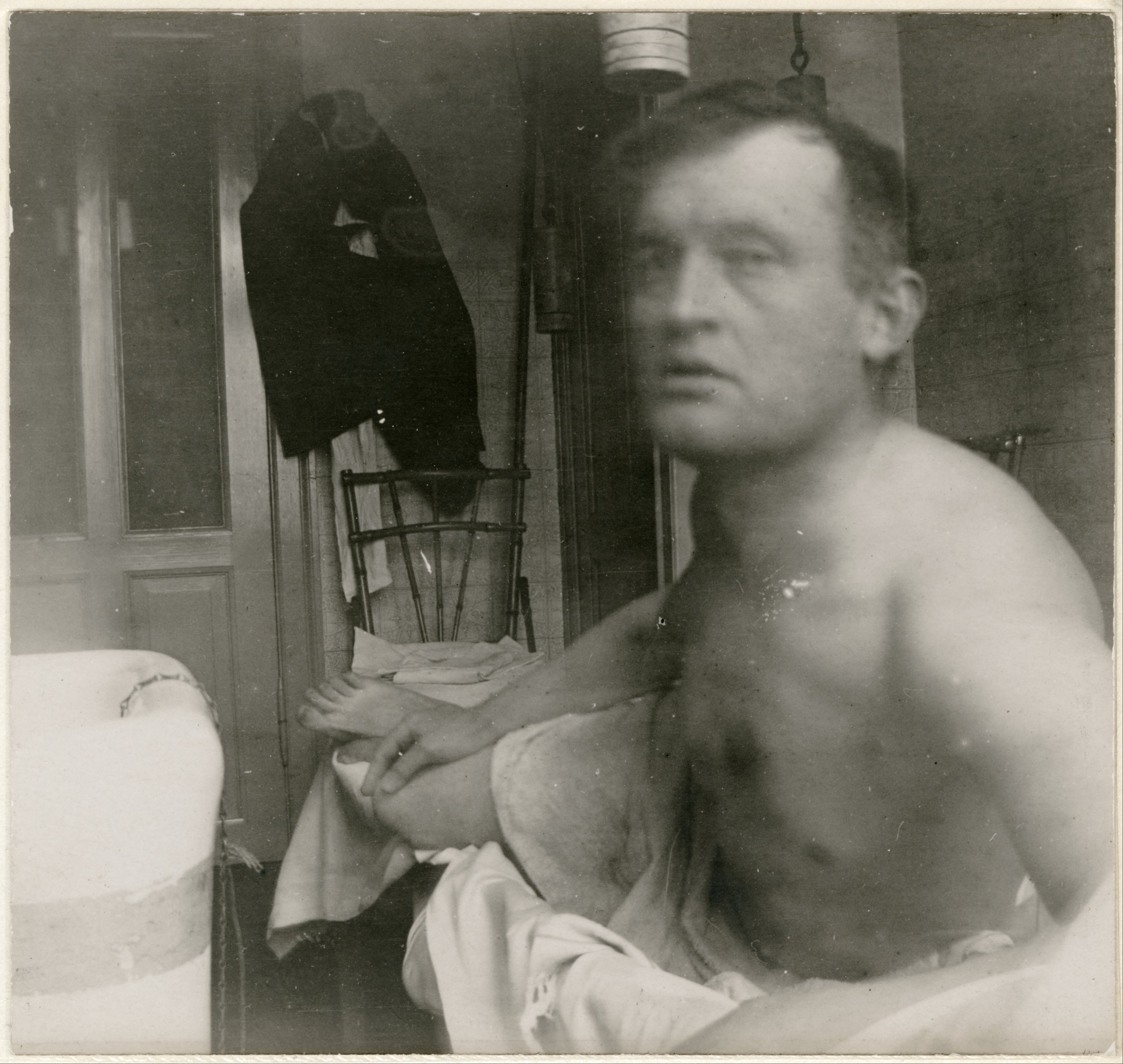
P.P.S. Did you know that Edvard Munch was fascinated by photography? After his death, he left behind over 180 prints. Discover Munch’s surprising photographic self-portraits.