
 Ustad Mansur
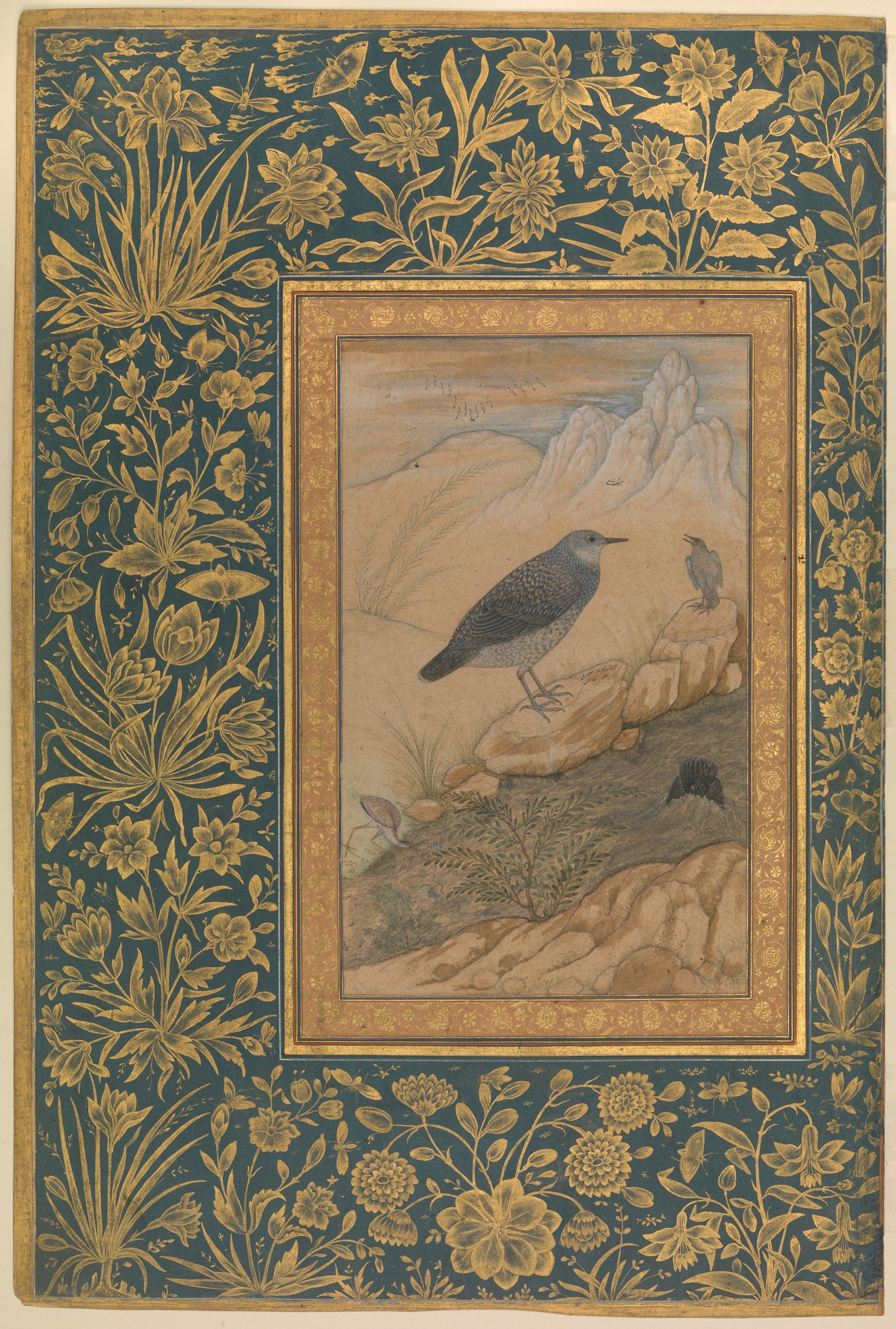
Ustad Mansur was a 17th-century Indian painter and naturalist who served as a Mughal court artist. He excelled at depicting plants and animals and was the earliest artist to depict the dodo in color, apart from being the first to illustrate the Siberian crane. Towards the end of the reign of Mughal Emperor Akbar, he gained the title of ustad (master), and during the reign of Mughal Emperor Jahangir, his masterpieces earned him the title of Nãdir-al-’Asr (Unequaled of the Age). Although he was largely known for his natural history illustrations, he also portrayed people in various manuscript illustrations.
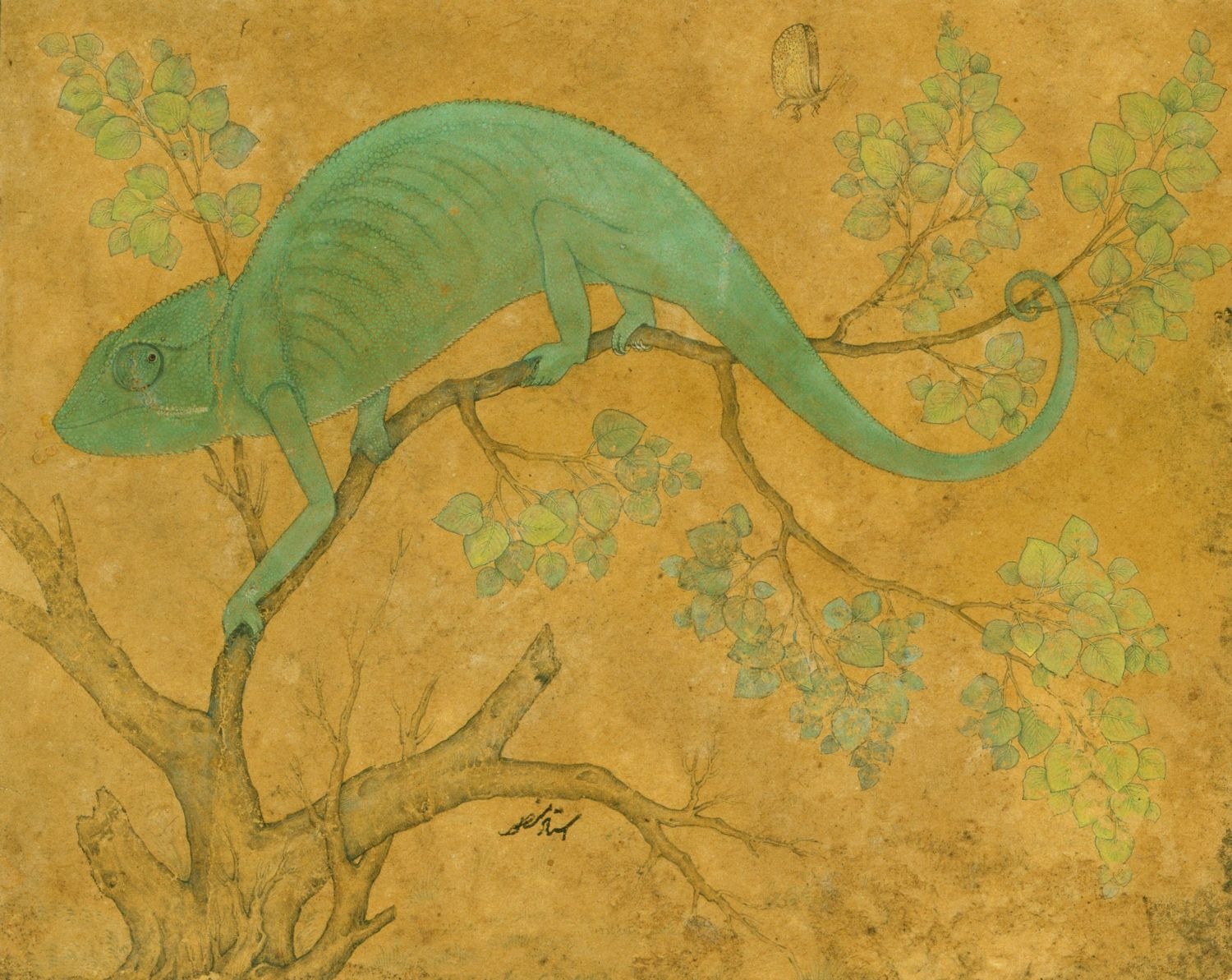
In this masterful work, Mansur expanded the color range across the creature and its surrounding foliage, emphasizing the chameleon's remarkable ability to blend into its environment. The muted, monochromatic branches serve as a contrast to the chameleon and the vibrant leaves it has visually merged with. At the time, Mansur was already working for Prince Salim (later Emperor Jahangir), and Mansur likely created this image to appeal directly to the young prince’s eye and curiosity.
P.S. See how Ustad Mansur painted other animals in our bestselling Animals 50 Postcards Set! :)
P.P.S. The Mughal Empire spanned modern-day India, Pakistan, and Afghanistan, and Mughal emperors were known as great patrons of the arts. Discover the amazing Mughal miniature paintings! For more Mughal art, see the articles below.