
 Unknown Artist
Have you heard of the Deccan paintings?
Known also as Deccani paintings, this term refers to the distinctive style of Indian miniature painting that flourished in the Deccan region of central India. It developed in the Muslim courts of the Deccan sultanates—Bijapur, Golconda, Ahmadnagar, Bidar, and Berar—following the fragmentation of the Bahmani Sultanate around 1520. The style reached its peak between the late-16th and mid-17th centuries, with a notable revival in the mid-18th century, centered in Hyderabad.
The sophistication of the earliest miniatures suggests the existence of a prior local artistic tradition, likely including mural painting, in which artists had been trained. While evolving alongside Mughal painting to the north, Deccan painting distinguished itself through its vivid color palettes, refined compositions, and a sensuous, opulent aesthetic. Unlike the Mughal focus on realism and documentation, Deccani art leaned toward the mystical and fantastical, charting an inward journey marked by imagination and symbolic richness.
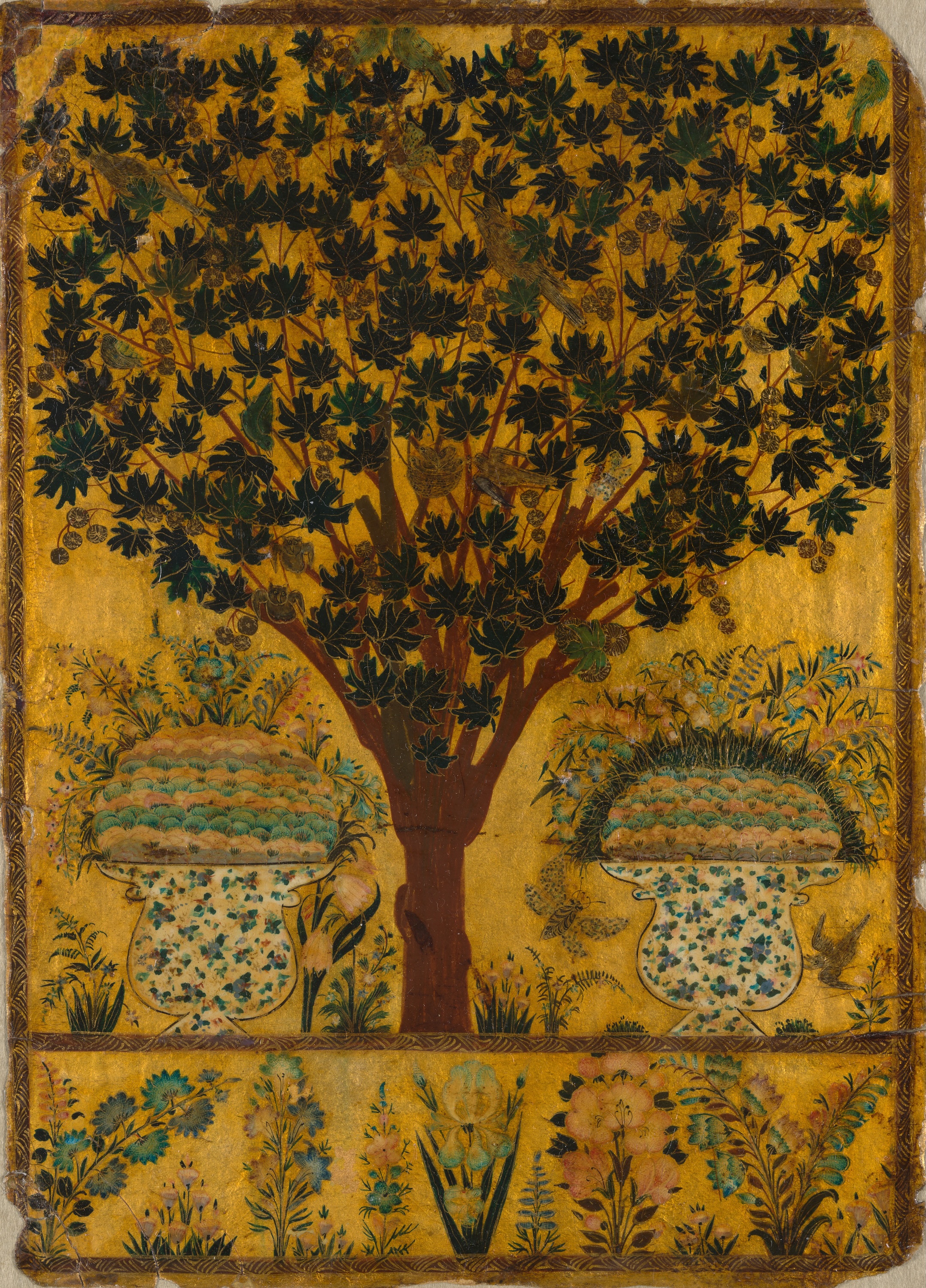
This richly decorated book cover, adorned with fantastical flowering scenes in lacquer, was originally created for a manuscript or album that has since been dispersed. The motif of vases brimming with blossoms is a well-known design from the Deccan region, while the flourishing trees are often interpreted as symbolic "Trees of Life." Also, take a closer look at the exaggerated scale of the birds and insects, typical of the Deccan paintings.
P.S. If you are looking for more beautiful artworks to enrich your everyday life, don't forget to check out our 2026 DailyArt Calendars, now with a -25% presale. :)
P.P.S. Do you need a break from work? Have fun with our quizzes! Can you guess when these artworks were made?