
 Paul Signac
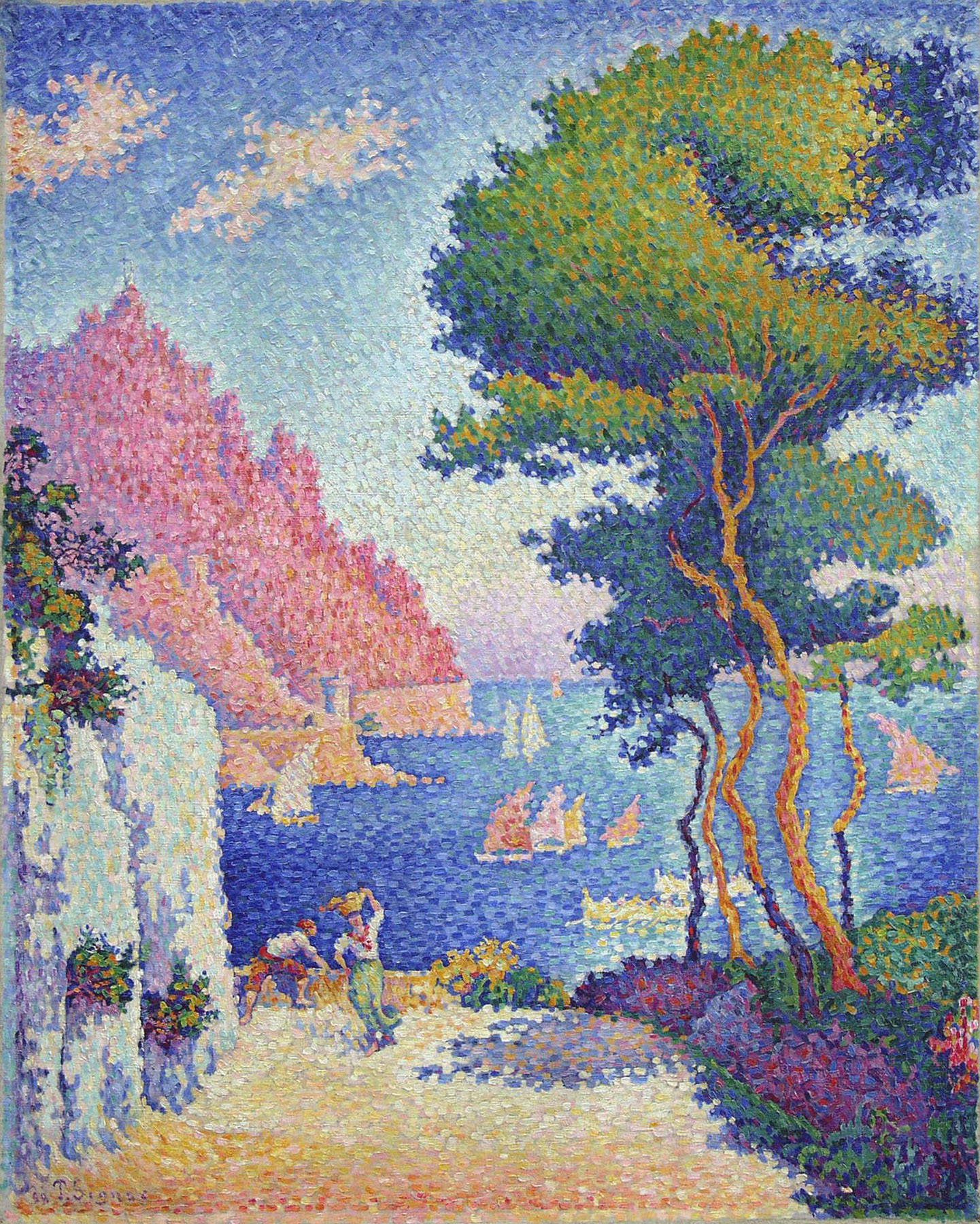
Noli, a small town on the Italian Riviera near Genoa, was reached by Paul Signac on foot from Saint-Tropez in the summer of 1896. Two years later, he painted his luminous view of the cape and its harbor, later recalling that he wanted to push “every corner of the canvas to the absolute extreme in terms of colour.”
Building on Impressionism and inspired by his friend Georges Seurat, Signac refined painting into a rigorous system of complementary dots. Seurat had called the method Divisionism, but it became better known as Pointillism.
In Capo di Noli, Signac orchestrates color and line with calculated precision, planning the effect carefully in the studio before applying it to canvas. The cliffs and sea serve less as a natural record than as a stage for pure color. This bold, non-natural use of paint left a lasting mark on modern art, profoundly shaping the Fauves in France and the Expressionists in Germany.
P.S. Sun, sea, and color—collect them all with our Landscapes 50 Postcards Set. The Black Friday Deals has already started in our Shop & Courses platform, so you can enjoy a 25% discount on EVERYTHING (now in one place!)
P.P.S. From Seurat and Signac to Mondrian, explore the best Pointillist landscapes!