
 Bill Traylor
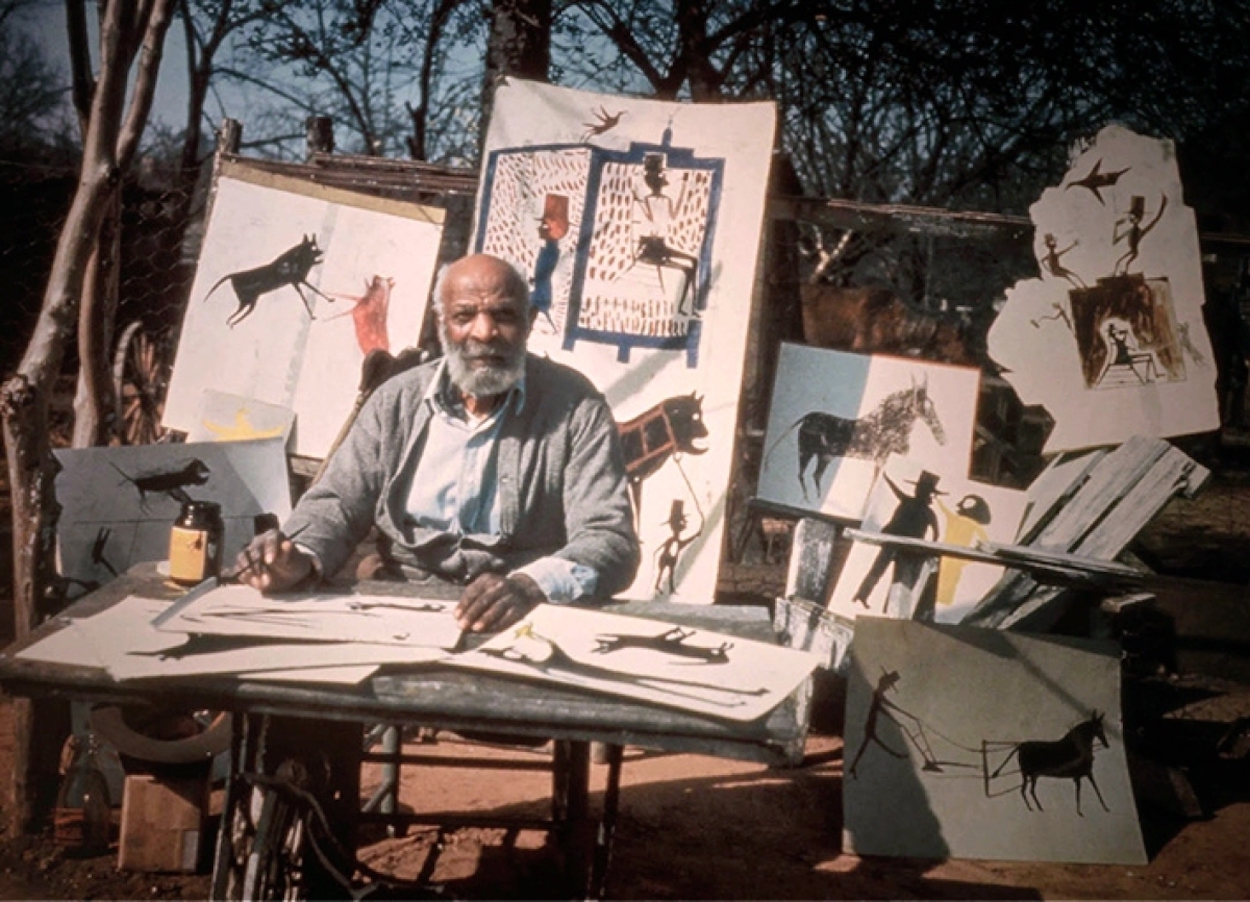
Born into slavery, Bill Traylor spent much of his life after the Emancipation Proclamation of 1863 working as a farm laborer in rural Alabama and later as a shoemaker and factory worker in Montgomery. In 1939, at approximately 85 years old (and without any formal artistic training) Traylor began creating drawings and works on paper using gouache and other materials. Although he continued making art until his death, his most prolific period lasted from 1939 to 1942, during which he produced a remarkable body of work that serves as a deeply personal record of his experiences, memories, and observations.
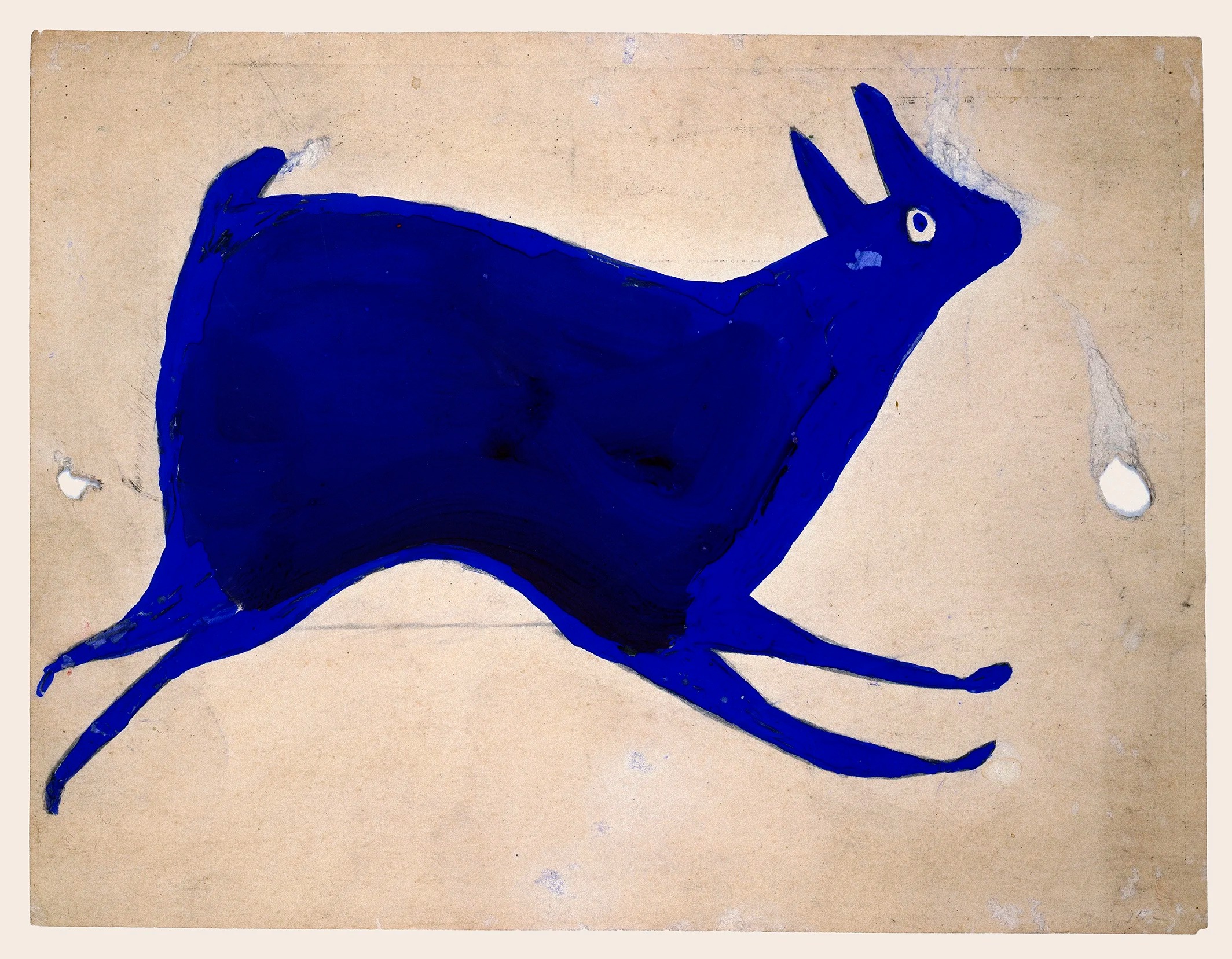
Three themes define Traylor’s practice: animals, figures, and dynamic narrative scenes he described as “exciting events.” Executed in pencil, black charcoal, and poster paints ranging from burnt sienna reds to deep lapis blues, these images blend motifs drawn from life in the American South with a strikingly formal approach to color, shape, and surface. Traylor distilled the world as he knew it into powerful, pared-down compositions that capture everyday life with moments of joy and exuberance, as well as tension and terror. In doing so, his work visually animates an era marked by Jim Crow segregation and the persistent violence and inequalities of the post-Reconstruction South.
Together, these works exemplify the core elements of Traylor’s artistic vision: simplified yet animated forms, carefully limited palettes, and the inventive use of vernacular materials, including found cardboard supports. Their apparent directness belies a subtle complexity and quiet subversiveness. Set against deliberately spare backgrounds, Traylor’s figures, animals, and narratives resist confinement to a specific historical or geographic moment, instead asserting an immediacy that feels strikingly contemporary.
P.S. Many of Bill Traylor’s drawings feature animals imbued with personality and life. This rabbit practically leap off the page! Bring that same energy to your desk or mailbox with our Animals 50 Postcards Set—50 charming and surprising creatures to inspire your everyday.
P.S. How well do you know African American art? Here are 13 Black folk artists from the American South you should know.