
 Claude Monet
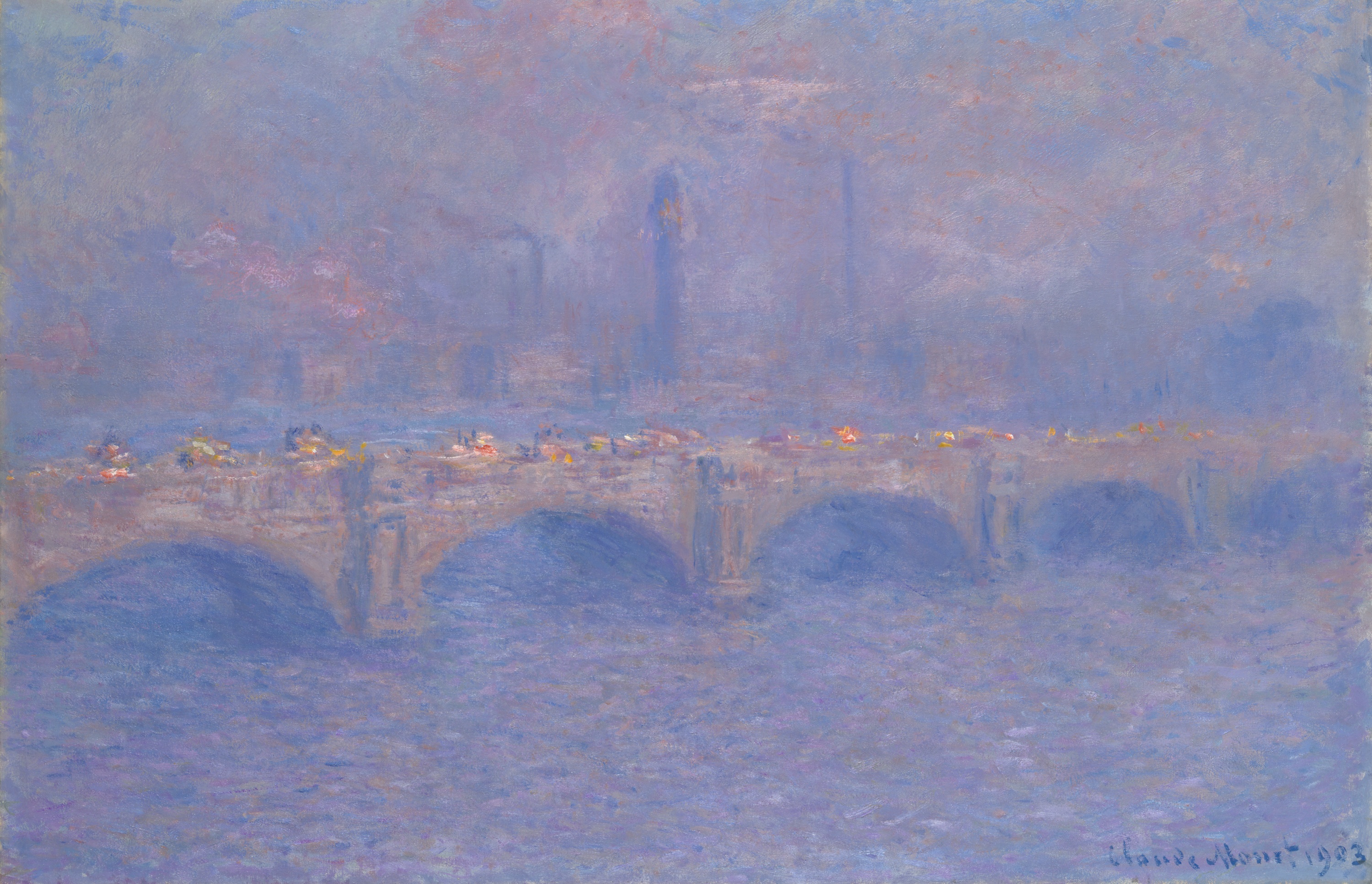
Claude Monet once observed that without its fog, “London wouldn’t be a beautiful city. It’s the fog that gives it its magnificent breadth.” During his work on the London Series, he followed a disciplined daily routine, rising early to paint Waterloo Bridge in the morning and turning to Charing Cross Bridge at midday and in the afternoon. He viewed both scenes from his fifth-floor room at the Savoy Hotel.
Although the Waterloo Bridge painting is dated 1903, it was most likely begun in 1900 and only dated later, when Monet considered it complete. He continued refining all of his London views (and he painted plenty of them) in his studio at Giverny, refusing to release any of them to his dealer until he was fully satisfied with them.
P.S. Monet’s careful process reminds us that Impressionism was never accidental—it was a deliberate, innovative rethinking of light and perception. In our French Impressionism Mega Online Course, we explore how Monet and his contemporaries transformed modern art.
P.P.S. If you enjoy stories about art—from forgotten artists to untold stories about the great master—subscribe to the DailyArt Magazine newsletter!