
 Arthur Hughes
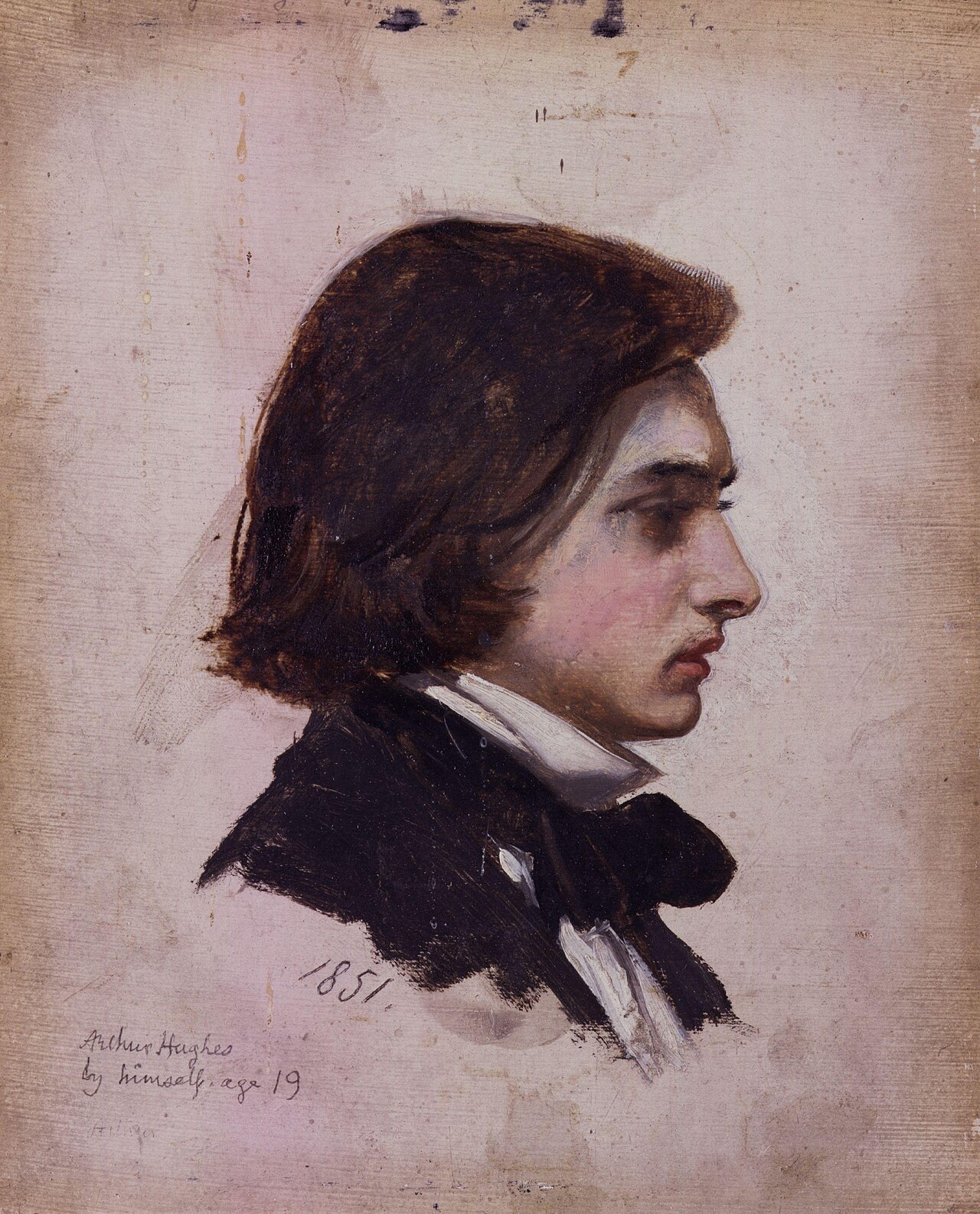
Although never an elected member of the Pre-Raphaelite Brotherhood, Arthur Hughes was closely aligned with the movement and exhibited alongside its artists. He collaborated with key members of the group on the Arthurian murals in the Union Hall of the Oxford University Debating Society. Following this project, Hughes continued to explore medieval subjects in his painting.
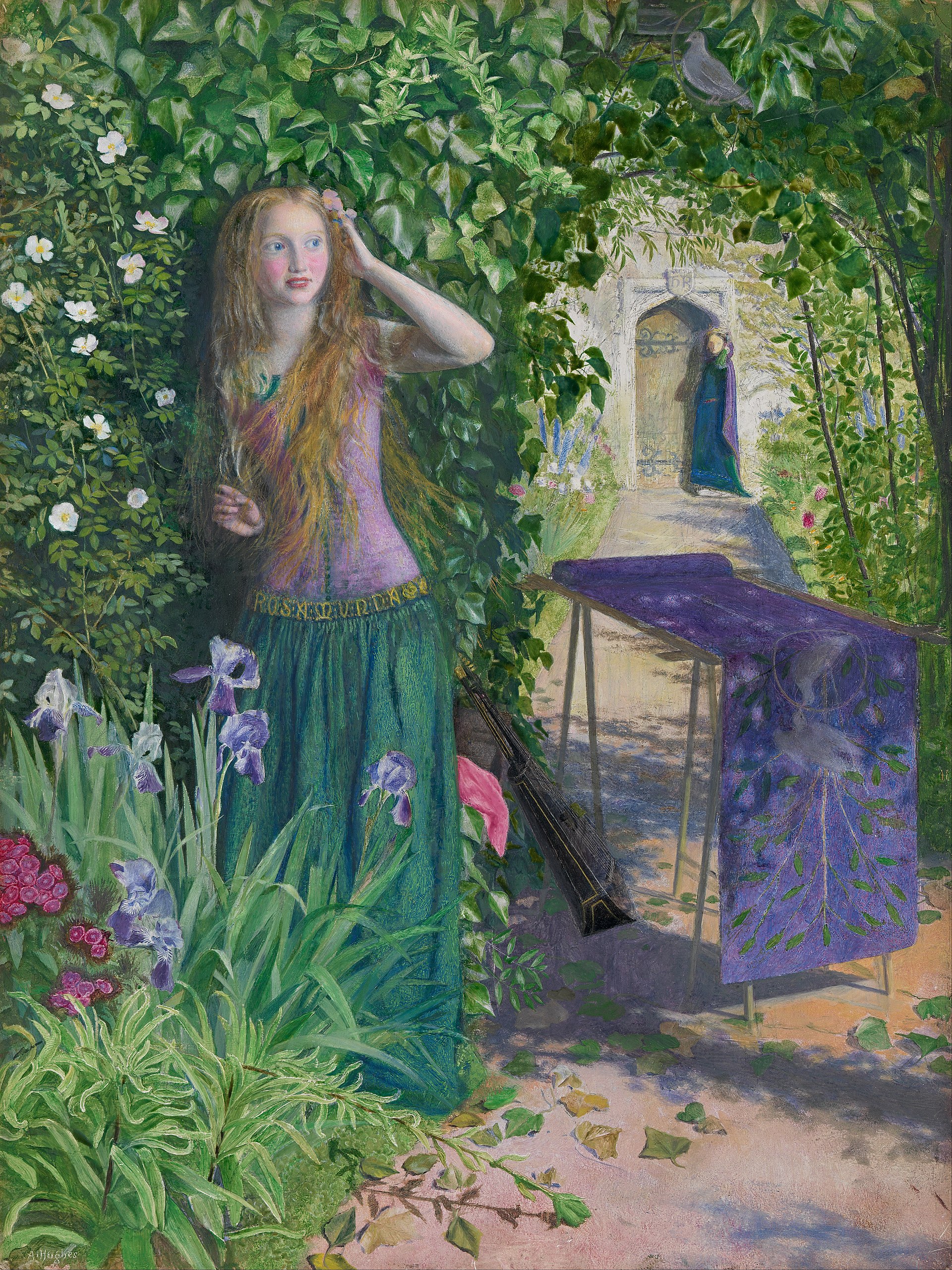
Fair Rosamund—the daughter of Walter de Clifford of the Fitz Pons family and mistress of Henry II of England—was a popular subject for 19th-century artists and poets. According to legend, Henry created a hidden garden for Rosamund at the royal residence in Woodstock, Oxfordshire, a retreat accessible only by navigating a maze. In 1176, the king’s wife, Eleanor of Aquitaine, is said to have discovered the secret garden and poisoned her rival. In Fair Rosamund, Hughes captures the dramatic instant when Eleanor, glimpsed in the background, has found the garden’s entrance.
The painting’s rich symbolism deepens the story’s emotional tension. Along the queen’s path, Hughes includes blue foxgloves—plants known as a source of powerful poison—foreshadowing Rosamund’s fate. The irises in the foreground carry similar associations: in Greek mythology, the goddess Iris guided the souls of women to the Elysian Fields, and purple irises were often planted on women’s graves. The flower also alludes to the fleur-de-lis, emblem of the French crown—an apt reference, since Eleanor had been queen of France before her marriage to Henry.
P.S. Here are 10 Pre-Raphaelites that you may not know. If you want to test your knowledge on this iconic group, here's our Pre-Raphaelite Brotherhood QUIZ!