
 Sarah Miriam Peale
The American painter Sarah Peale was born into art the way other people are born into farming or the priesthood. Her father, James Peale, was one of the era's great still-life and portrait painters, and her uncle was none other than Charles Willson Peale, founder of America's first great artistic dynasty. Sarah trained under her cousin Rembrandt Peale, and by 1824, she and her sister Anna Claypoole Peale would become the first women ever elected to the Pennsylvania Academy of the Fine Arts.
Sarah and her father, James, enjoyed a creative symbiosis in their work. Sarah often added finishing touches to James's canvases, and he, in turn, borrowed from her compositions—occasionally painting his own versions of her fruit arrangements. Art historian Ann Sue Hirshorn noted that Sarah's "vital paintings of melons, grapes, and peaches" shared her father's lavish, inventive approach to nature's bounty, both of them mining the same rich vein of subject matter throughout the 1820s.
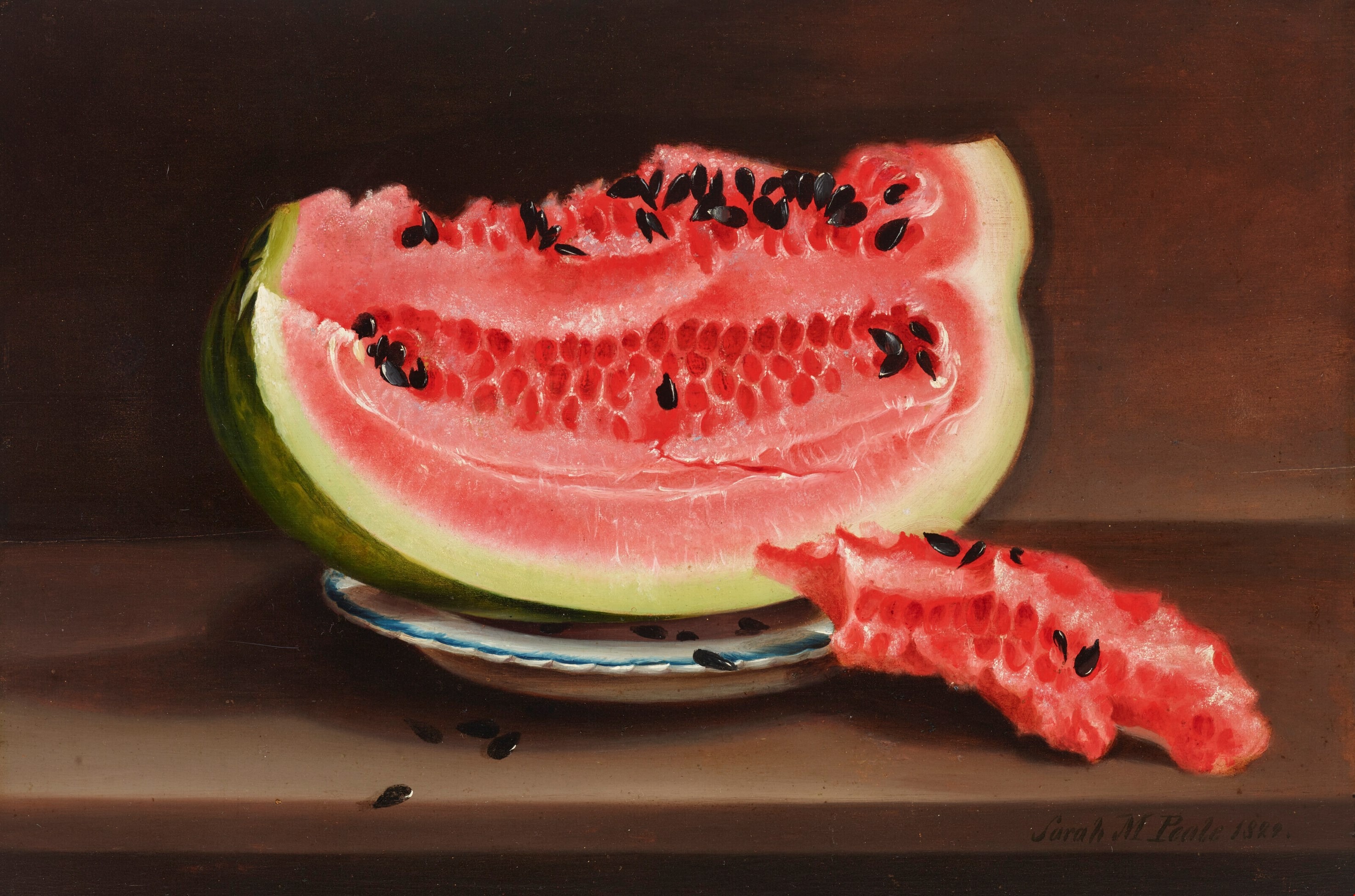
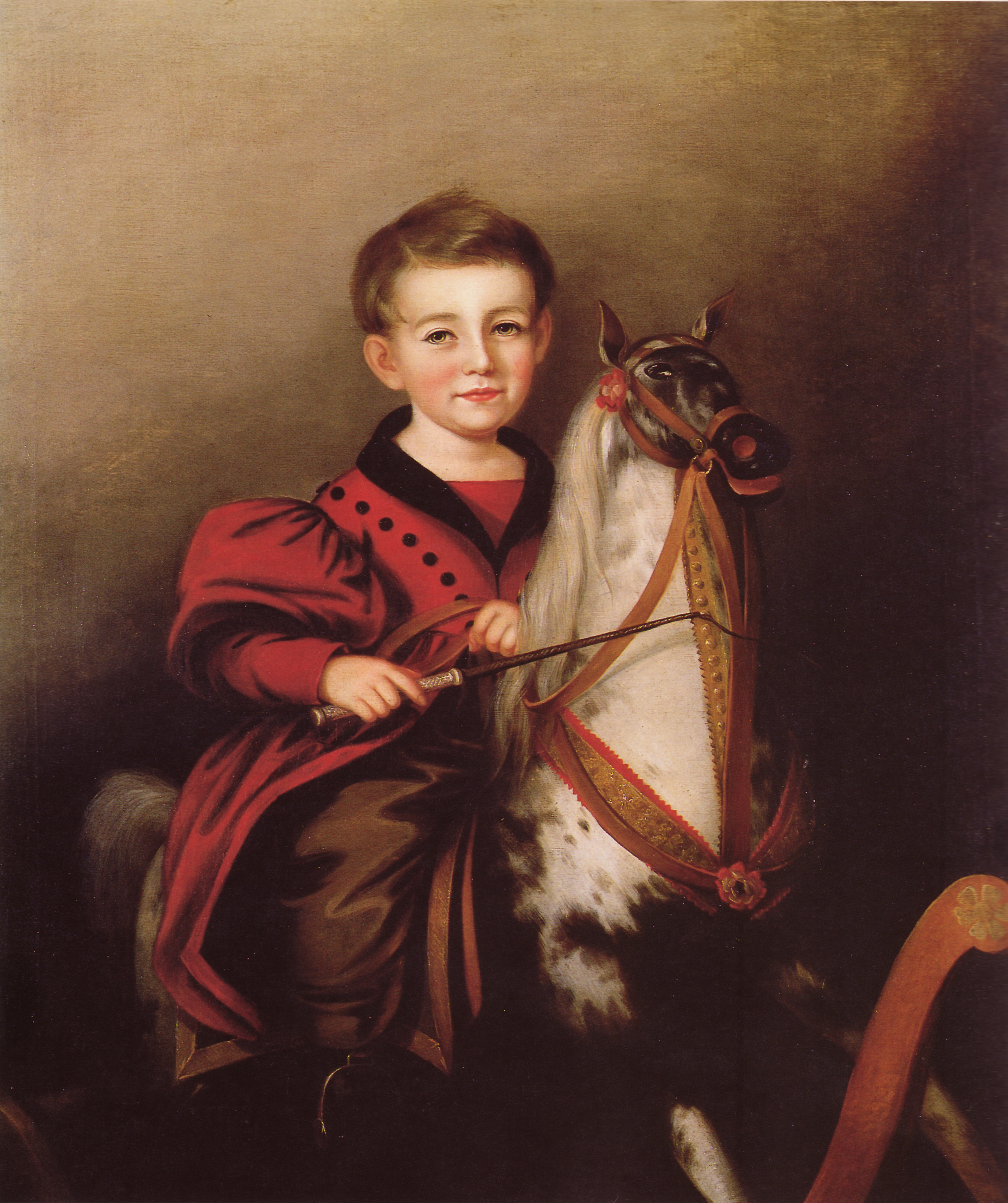
The watermelon itself, split open to reveal its glistening red flesh and black seeds against dark, dramatic shadow, shows Sarah's confident handling of texture and light. These skills that would soon make her a portraitist in high demand, one who beat out established rivals like Thomas Sully for major commissions. Sarah was the first woman in America to support herself entirely through painting.
P.S. Sarah Peale loved painting delicious-looking watermelons—take a look at her other work featured in our Food & Drinks 50 Postcards Set, now 25% off! :)
P.P.S. Read more about the Peale family, the first US artistic family!