
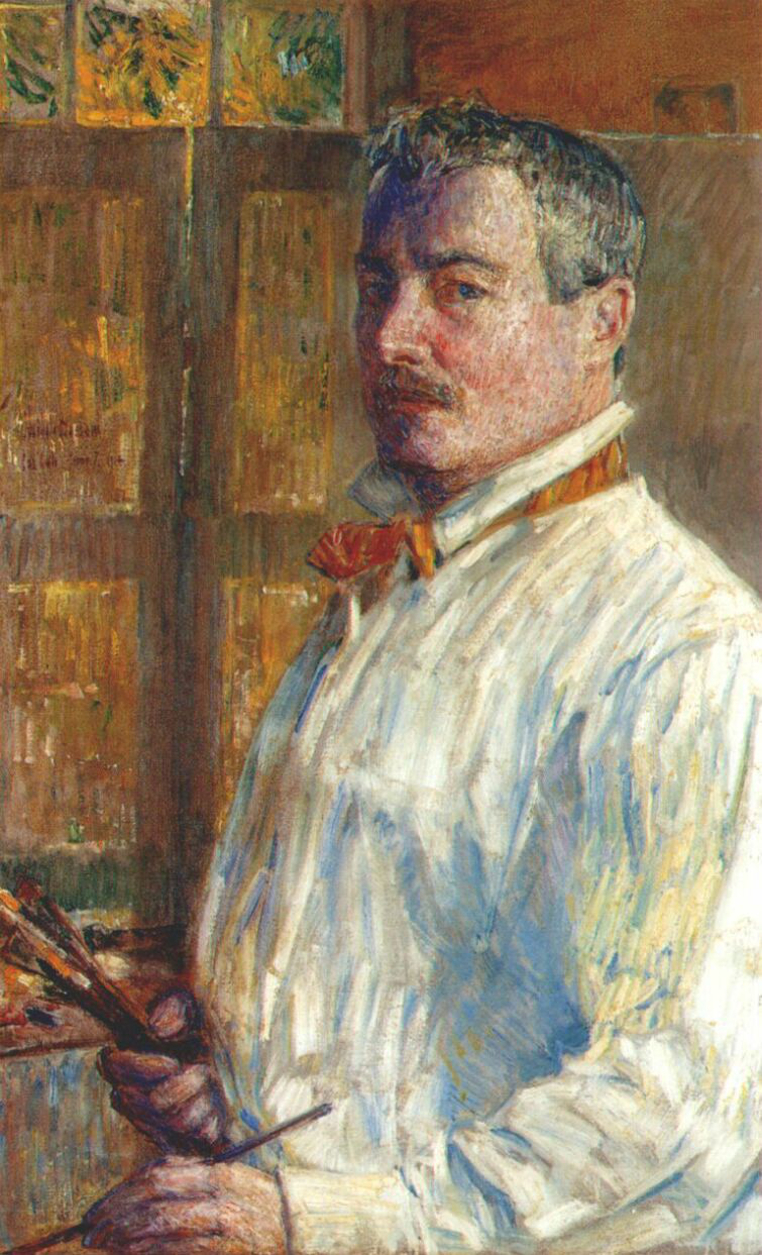
 Frederick Childe Hassam
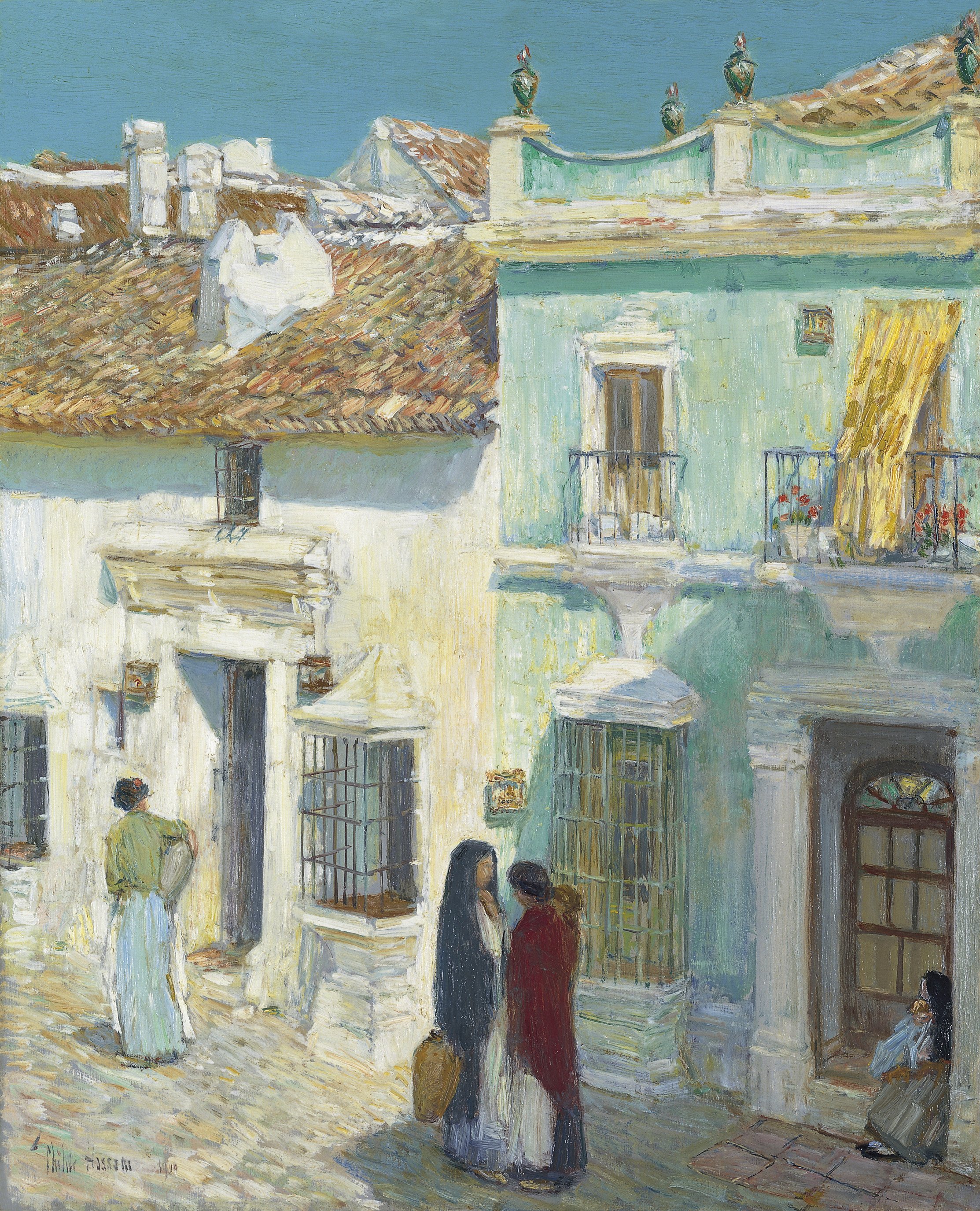
An American Impressionist painter, Frederic Childe Hassam had never painted in oil while actually in Spain, and at 51 he set out specifically to fix that, spending the autumn of 1910 touring Madrid, Toledo, Córdoba, Seville, and Ronda with his wife before sailing home from Gibraltar. The resulting oils, shown the following year at New York's Montross Galleries alongside pastels and watercolors from the same trip, split the critics: one called it the most important American exhibition ever held, while others found the show wildly uneven. The six Spanish oils, though, dubbed the "Spanish set" by the press, were the one unanimous success—praised as the perfect "portraits of places." This particular view was likely painted right from Hassam's window at the Hotel in Ronda, a modest English-run inn facing the church of La Merced across a tree-lined plaza. Hassam favored elevated, looking-down vantage points his entire career, whether the city was Boston, Paris, or, here, a whitewashed corner of 20th-century Andalusia.
The set's restraint was, pointedly, read as an absence: critics kept noting that Hassam skipped the theatrical flicker of light and the blazing, saturated color of Spain's biggest living painter, Sorolla. One reviewer joked that despite Hassam's admiration for "Señor Bastida," he was "not that sort of an impressionist." Sorolla apparently agreed to disagree: he attended the show in person and reportedly offered a brief, approving "très bien" on his way past Hassam's work.
P.S. Discover the art of Childe Hassam in 10 paintings!
P.P.S. Don’t miss our calendar presale; only a limited number of copies are available now with 15% off!